
Lieferung heute & morgen

Qualitätsgarantie

Willkommens-Angebote freischalten: KOSTENLOSE Lieferung | Bis zu 80 % RABATT | Kostenlose 30-Tage-JoyPlus-Testphase
App herunterladen
A wall shelf is more than just storage space. It creates order, adds a decorative touch, and makes use of vertical space that would otherwise go unused. However, the selection is vast, and not every shelf lives up to its promise. The wrong choice of material or inadequate mounting can quickly lead to frustration. This guide will help you identify the crucial features and find a wall shelf that is both functional and durable.
Many products look appealing at first glance but reveal their weaknesses only after a short period of use. Watch out for these three common flaws to avoid a poor investment:
To avoid the problems mentioned above, you should check three key aspects before buying. These determine the durability, safety, and suitability of your new shelf.
The material is the foundation for both stability and aesthetics. Each has specific properties:
The specified maximum load capacity is a critical value that must not be exceeded. This is inextricably linked to the mounting system:
Ensure that the included anchors and screws are suitable for your wall type. For drywall (plasterboard), you will need special hollow-wall anchors, which often need to be purchased separately.
Think carefully about what you want to use the shelf for. A small decorative wall shelf in the living room has different requirements than a deep wallboard for binders in the home office. Measure the available space precisely and consider the depth of the shelf so that it doesn't protrude into the room and become a tripping hazard. For the kitchen, models with integrated hooks or rails can be particularly practical.
Here are some recommendations tailored to different needs and living situations.
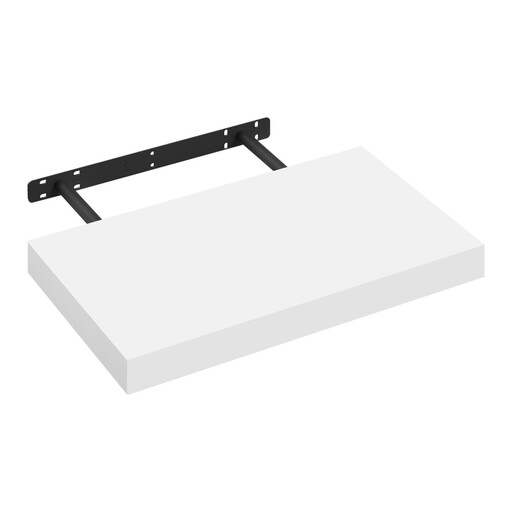
Why this model is a great fit: Perfect for students or a first apartment. This compact floating shelf offers a clean, modern look with no visible brackets. It's versatile for small spaces like the bathroom, hallway, or beside the bed to stylishly store the essentials.
The E1-grade MDF construction with a moisture-resistant surface prevents rapid swelling. The concealed metal bracket ensures a stable installation without unsightly, wobbly brackets.
The invisible mounting creates a clean, floating aesthetic. The matte surface is easy to clean and resistant to fingerprints.
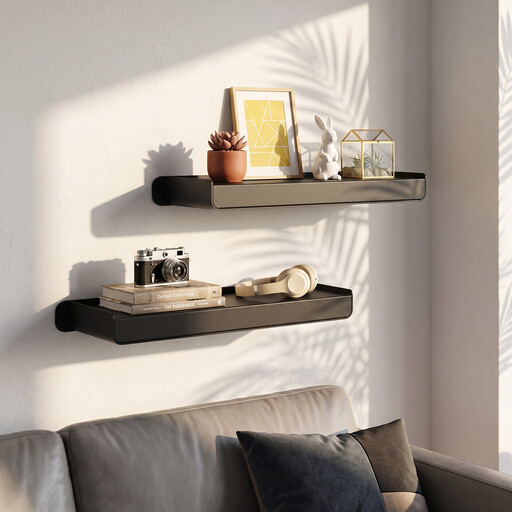
Why this model is a great fit: For anyone who views a shelf not just as storage, but as a design object. The minimalist aluminium design, which the manufacturer states won the German Design Award 2022, makes a clear statement in modern living spaces.
The shelf is crafted from solid aluminium, which prevents any sagging. The specified load capacity of up to 20 kg (44 lbs) provides security for books or heavy decorative objects. A rubber pad protects the wall.
High-quality, rustproof, and waterproof material. The award-winning, minimalist design integrates seamlessly into sophisticated interiors and serves as a decoration in itself.
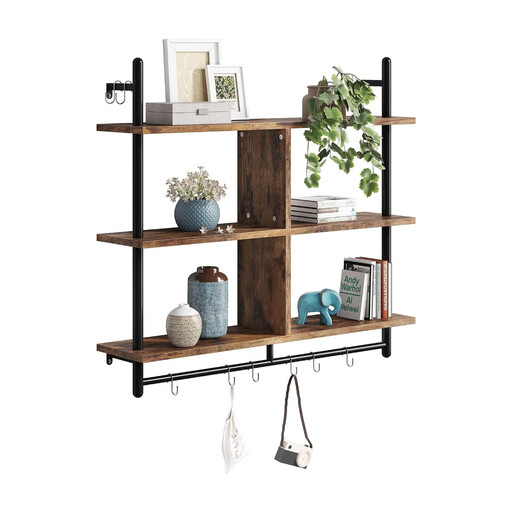
Why this model is a great fit: Perfect for anyone who needs a lot of storage and loves the rugged industrial look. With three large tiers, this ladder shelf offers ample space for books, plants, or kitchen utensils, becoming a striking focal point in its own right.
The construction of metal pipes and solid wood boards is designed for stability and load distribution. Unlike a single shelf board, this structure effectively resists sagging, even under heavier loads.
Provides a great deal of storage space across three tiers while also being a decorative element. The combination of a metal frame and wood boards ensures high durability and a timeless industrial charm.
We've compiled a complete, up-to-date list of products that fully meet these strict selection criteria and German safety regulations.
1. How do you safely mount a wall shelf on different wall types? For solid walls like concrete or solid brick, the standard anchors provided are usually sufficient. For drywall or hollow walls, you must use special hollow-wall anchors (e.g., toggle or expansion anchors) to ensure a secure hold. Always check the condition of your wall before you start drilling. Using a spirit level is essential to ensure the shelf hangs straight.
2. What is the typical load capacity of a floating shelf, and how can you prevent sagging? The load capacity of a floating shelf varies greatly depending on its size, material, and mounting system. Smaller models often support 5-10 kg, while more robust designs can hold 15 kg or more. To prevent sagging, never exceed the manufacturer's specified maximum load. Distribute the weight evenly and place heavy items like books closer to the mounting points.
3. Which material is best suited for a bathroom or kitchen shelf? For humid areas like bathrooms and kitchens, water-resistant materials are crucial. Shelves made of rustproof metal (aluminium, powder-coated steel), glass, or plastic are a safe choice here. If you prefer a wooden shelf, ensure it is solid wood with a protective lacquer finish or high-quality MDF board with a surface explicitly declared as moisture-resistant.