
Lieferung heute & morgen

Qualitätsgarantie

Willkommens-Angebote freischalten: KOSTENLOSE Lieferung | Bis zu 80 % RABATT | Kostenlose 30-Tage-JoyPlus-Testphase
App herunterladen
A well-chosen wall shelf not only creates valuable storage space but can also define a room as a central design element. Whether you want to utilise an empty wall, display your favourite books, or create order in the kitchen, the selection is vast and the decision can be challenging. This guide is designed to help you understand the key functional and aesthetic aspects, enabling you to make an informed choice for your home. We will present objective criteria and a selection of models that meet a variety of needs.
Before you decide on a model, a few fundamental considerations are helpful. Material, load capacity, and style are the three most important factors that determine your shelf's function and durability.
The material influences not only the look but also its suitability for different rooms.
The intended use determines the required load capacity. A wall-mounted bookshelf must support significantly more weight than a shelf for light decorative items. Always check the maximum load capacity specified by the manufacturer. Stability also depends on correct installation. Ensure the included anchors and screws are suitable for your wall type (e.g., drywall, brick, concrete), or purchase appropriate mounting hardware.
The design should integrate harmoniously into your living concept.
Here is a selection of wall shelves that stand out for their design, materials, and functionality.
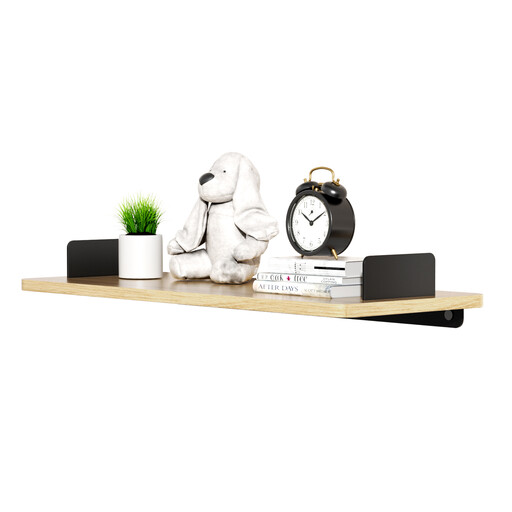
What Makes This Product Stand Out This set combines solid rubberwood shelves with sturdy aluminium alloy brackets. Its minimalist design has been honoured with the Muse Design Award and the French Design Award. The combination of materials creates a modern yet warm impression.
Advantages
Who Is It For? For users seeking a robust yet stylish floating shelf that integrates seamlessly into various living areas like the living room, kitchen, or bathroom, and who value award-winning design.

What Makes This Product Stand Out Crafted entirely from aluminium, these shelves embody a purist and modern interior style. The design was honoured with the German Design Award 2022. A thoughtful detail is the grey rubber pad on the back, which protects the wall.
Advantages
Who Is It For? Ideal for lovers of minimalism who are looking for a durable, low-maintenance storage solution with clean lines for modern living spaces, offices, or high-humidity areas.

What Makes This Product Stand Out This two-tier industrial-style wall shelf combines a wrought iron pipe frame with robust particleboard panels. Its standout feature is the 8 included S-hooks, which transform the shelf into a multifunctional organisational tool.
Advantages
Who Is It For? For anyone who appreciates the urban industrial look and is looking for a practical all-in-one solution for the kitchen, coffee bar, bathroom, or living room that offers both storage and hanging options.
The models featured here already cover a broad spectrum. However, if you are looking for more specialised solutions, particularly for the kitchen, you can find more alternatives in our wall-mounted storage category.
? Discover more models in our Wall-Mounted Kitchen Storage Cabinet section here
1. How high should a wall shelf be hung? As a general rule, shelves should be mounted at eye level (approx. 150–160 cm) if they are primarily for decorative purposes. For functional use, such as above a desk or kitchen counter, the height depends on practicality and the clearance needed below.
2. What is the difference between a wall shelf and a floating shelf? A floating shelf is a subtype of a wall shelf. The key difference lies in the mounting: with a floating shelf, the hardware is hidden within the wall or the shelf board itself, creating the illusion that it is floating. A classic wall shelf has visible brackets or supports.
3. How do you securely mount a heavy bookshelf to the wall? For a wall-mounted bookshelf, secure anchoring is crucial. Always use anchors and screws that are appropriate for your wall type (e.g., hollow-wall anchors for drywall, expansion anchors for concrete) and rated for the total weight (shelf plus contents). Ideally, the screws should be anchored into the structural studs within the wall. Always follow the manufacturer's installation instructions.