
Lieferung heute & morgen

Qualitätsgarantie

Willkommens-Angebote freischalten: KOSTENLOSE Lieferung | Bis zu 80 % RABATT | Kostenlose 30-Tage-JoyPlus-Testphase
App herunterladen
A wall shelf is an excellent way to transform unused wall space into valuable storage or a stylish display area. However, the sheer number of options can quickly become overwhelming. Many products overpromise and underdeliver, leading to disappointment. Before you make a decision, it's crucial to understand the most common pitfalls to avoid buyer's remorse and find a solution that is both functional and durable.
Focusing solely on design often means that crucial functional aspects are overlooked. Here are three typical problems that can arise after your purchase:
To avoid these problems, you should check three key parameters before buying. These will largely determine the stability, durability, and functionality of your new shelf.
The material is the foundation for both stability and aesthetics. Each has specific advantages and disadvantages:
The specified maximum load capacity is a critical figure, especially if you're planning a wall-mounted bookshelf. However, this rating is only valid when the shelf is correctly installed on a suitable wall.
Always check if the included mounting hardware is suitable for your wall type. For drywall, you will need special hollow-wall anchors.
To make your decision easier, we've curated a selection of products based on different user profiles and requirements.
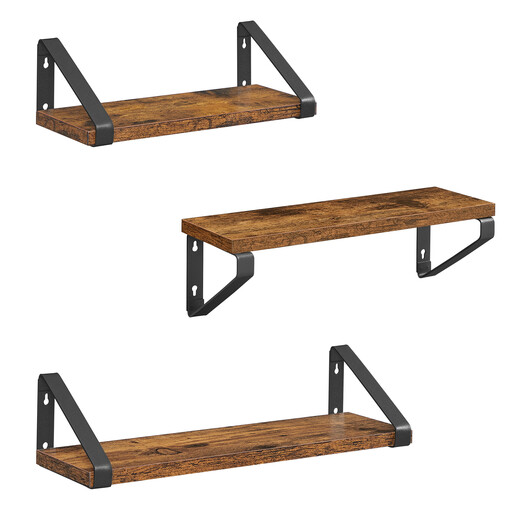
Why it's a great fit: This set includes three shelves in different sizes, allowing for flexible arrangements in various rooms. It's a cost-effective solution for anyone looking to combine storage and decoration on a limited budget.
The combination of particleboard and a sturdy steel frame ensures reliable stability. Each shelf holds up to 5 kg, bypassing the problem of wobbly, low-cost constructions.
Flexible set of 3 for custom arrangements; trendy industrial look thanks to the combination of a wood-effect finish and black metal.
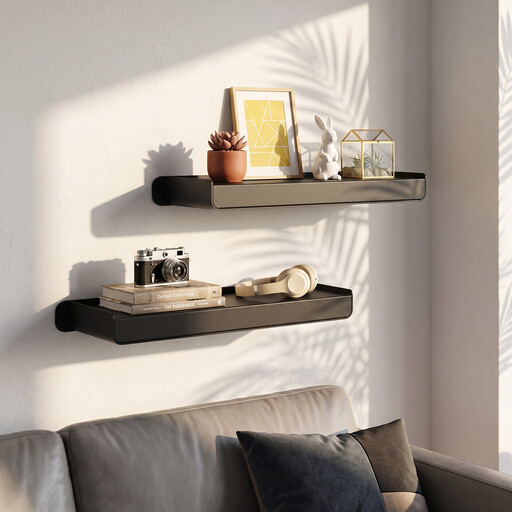
Why it's a great fit: For those who want to make a statement. The minimalist design and high-quality material make this shelf a decorative object in its own right. It's ideal for modern living concepts where quality and aesthetics are paramount.
Instead of using moisture-sensitive engineered wood, this shelf is made from rust-proof aluminium. This guarantees durability, even in the bathroom. The high load capacity of up to 20 kg is a reliable figure.
Winner of the German Design Award 2022; crafted from robust, waterproof aluminium with a rubber pad to protect the wall.
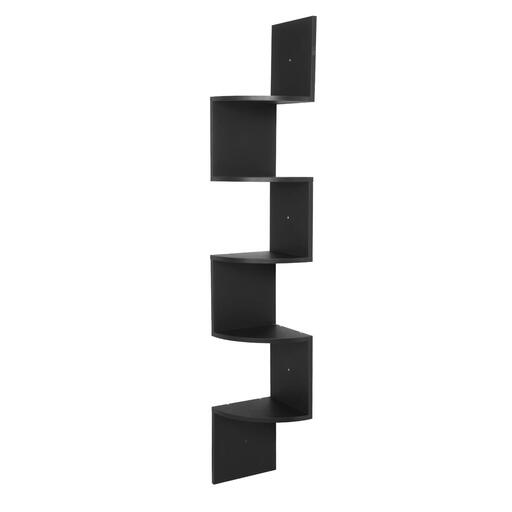
Why it's a great fit: This shelf is the ideal solution for small rooms or unused corners. It makes optimal use of vertical space, creating ample storage on five tiers for books, plants, or decor without taking up valuable floor space.
It solves the problem of "dead corners" where standard shelves are unsuitable. The clever zigzag design provides high intrinsic stability where simple corner boards often feel unstable.
Smart 5-tier design for utilising room corners; high total load capacity of approx. 15 kg with a compact footprint.
We have compiled a complete, up-to-date list of products specifically for the kitchen area that meet these strict selection criteria and safety requirements.
For mounting on plasterboard (drywall), you should use special hollow-wall anchors. These expand behind the board to provide a secure hold. Pay attention to the anchor manufacturer's load capacity specifications and compare them with the total weight of the shelf and its contents. For very heavy loads, it is advisable to screw the shelf directly into the wall's underlying structure (studs).
The main difference lies in the mounting method. A floating shelf uses a concealed bracket that disappears inside the shelf board, creating the impression that the shelf is floating on the wall. A classic bracket shelf is attached with visible supports or angle brackets. The choice is mostly a matter of aesthetics, although visible brackets often allow for a higher load capacity.
Yes, this is possible if the material has been properly treated. A solid wood wall shelf should be sealed with a water-repellent lacquer or oil. For MDF shelves, a seamless, high-quality coating is crucial to prevent moisture from penetrating. Good room ventilation is also important to ensure longevity.