
Lieferung heute & morgen

Qualitätsgarantie

Willkommens-Angebote freischalten: KOSTENLOSE Lieferung | Bis zu 80 % RABATT | Kostenlose 30-Tage-JoyPlus-Testphase
App herunterladen
A wall shelf is more than just a storage surface. It creates order, utilises vertical space, and adds decorative accents. However, the selection is vast, and not every shelf lives up to its product photos. Before you make a decision, it's important to know the typical weaknesses that often only become apparent after the purchase.
As your Joybuy Product Recommendation Officer, I'll help you separate the wheat from the chaff. In this guide, I'll show you what to look for to find a sturdy, durable, and suitable solution for your home.
Many shelves look appealing at first glance but quickly turn out to be a poor investment. Pay special attention to these three points to avoid disappointment:
To find a suitable and durable hanging shelf, you should check three key technical parameters. These will give you an objective basis for your decision.
The material determines not only the look but also the longevity and where the shelf can be used.
The sturdiest mounting system is useless if it doesn't match the wall.
The load capacity is usually given in kilograms (kg). Consider what you want to place on the shelf:
Measure the available space accurately and also consider the depth of the shelf. A wall board for books should be at least 20 cm deep, while 15 cm is often enough for spices or small decorative objects.
Here are some recommendations tailored to different needs and living situations.
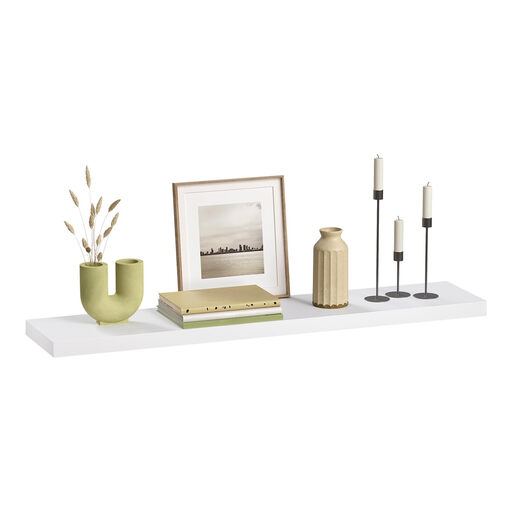
Why it's a great fit: Ideal for anyone looking for a simple, functional, and cost-effective solution. The minimalist design in white blends seamlessly into almost any room concept, whether in the living room, bedroom, or hallway. The generous 110 cm length offers plenty of storage space.
The shelf is made from E1-grade MDF and features a sturdy metal bracket. The specified load capacity of 13 kg is a realistic figure for a floating shelf of this type, providing peace of mind during planning.
The matte, moisture-resistant surface is easy to clean. The concealed mounting system ensures a clean, modern look without visible brackets.
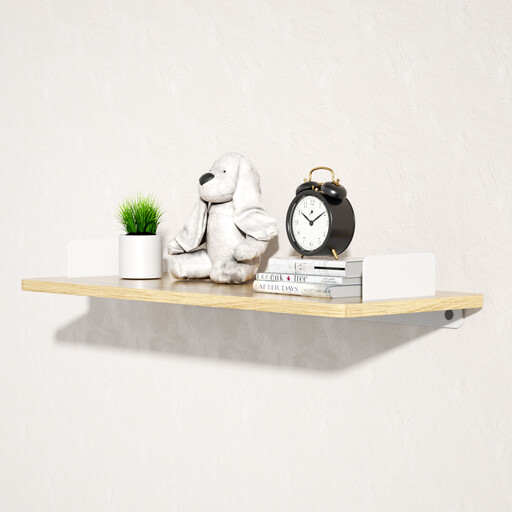
Why it's a great fit: For those who see a shelf not just as storage, but as a design object. The combination of rustic brown solid wood and modern white metal brackets creates a stylish contrast that becomes an eye-catcher in living rooms or offices.
The shelf board is made of FSC-certified solid rubberwood, ensuring high material quality. The robust aluminium alloy brackets and the specified load capacity of up to 44 lbs (approx. 20 kg) provide excellent stability.
The visible brackets serve as a design element while also preventing items from sliding off. The material is water- and rust-resistant, making it durable.
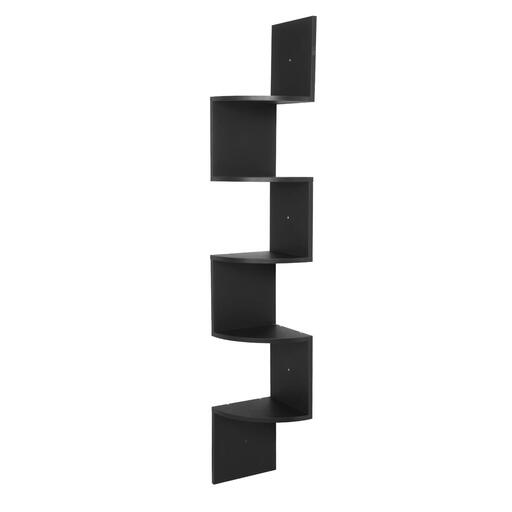
Why it's a great fit: Perfect for making the most of unused corners in small apartments, hallways, or bathrooms. The zigzag design is not only space-saving but also an interesting visual accent that enlivens empty corners and creates storage for books, plants, or decor.
The product is made from E1-grade MDF wood. Crucially, the manufacturer clearly states that the shelf is not suitable for plasterboard walls. This transparency helps to avoid the most common installation error from the outset.
The integrated, concealed hanging system provides a clean look. With five tiers, it offers a lot of storage in a small footprint. The maximum load capacity is approx. 15 kg.
We've compiled a complete, up-to-date list of products that fully meet these strict selection criteria and UK safety regulations.
For mounting on plasterboard or drywall, you need special anchors. Use hollow-wall anchors (e.g., metal or plastic toggle bolts) that expand behind the board to provide a secure hold. Always check the load capacity of both the anchors and the shelf, and load the shelf less heavily than you would on a solid wall.
For standard paperbacks, a shelf depth of 15-20 cm is sufficient. For larger books, coffee table books, or binders, you should plan for a depth of at least 23-25 cm to ensure the books don't overhang and the shelf remains stable.
Yes, it's possible, provided the shelf is suitable for damp environments. Look for a high-quality, seamlessly sealed surface (e.g., PVC foil or PU lacquer) that prevents moisture from penetrating the MDF board. Shelves with open, uncoated edges are unsuitable for the bathroom as they would quickly swell up.