
Lieferung heute & morgen

Qualitätsgarantie

Willkommens-Angebote freischalten: KOSTENLOSE Lieferung | Bis zu 80 % RABATT | Kostenlose 30-Tage-JoyPlus-Testphase
App herunterladen
Walls offer untapped potential. In many apartments and houses, floor space is limited, yet vertical surfaces often remain empty. A well-chosen wall shelf not only creates valuable storage space but can also serve as a stylish element of your wall decor. Whether for books, plants, or kitchen utensils, making the right choice is crucial for both function and aesthetics.
This guide is designed to help you make an informed decision. We'll introduce various types of wall shelves, provide practical selection tips, and showcase a selection of models suited for different needs and spaces.
Choosing the right shelf depends on several factors. Consider the following points to find a solution that is both practical and visually appealing.
The material determines not only the look of the shelf but also its durability and load-bearing capacity.
The intended use is crucial. A wall-mounted bookshelf must have a higher load capacity than a purely decorative shelf.
Before purchasing, check the manufacturer's specified maximum load capacity per shelf. Heavy items like books or full binders require a higher capacity than light decorative objects. Also, ensure the included mounting hardware is suitable for your wall type (e.g., concrete, drywall). If in doubt, it's best to use special anchors and screws appropriate for your specific wall.
Here is a selection of wall shelves that stand out for their design, functionality, and versatility.
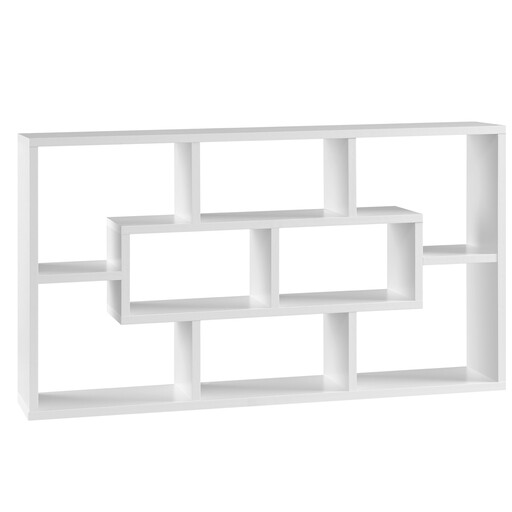
Why It Stands Out: With its vertical design, this shelf makes optimal use of a room's height. The eight staggered compartments offer a structured yet dynamic storage solution.
Advantages:
Who Is It For? Ideal for users looking for a minimalist yet functional solution for the living room, bedroom, or hallway. It works perfectly as a wall-mounted bookshelf or for displaying decorative objects.
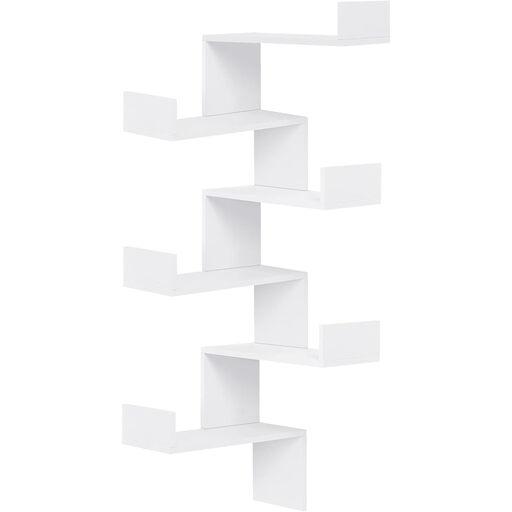
Why It Stands Out: The S-shaped design makes this corner shelf a real eye-catcher. It transforms unused corners into practical and decorative storage space.
Advantages:
Who Is It For? Perfect for anyone seeking a stylish, space-saving solution for empty corners in the living room, study, or even the bathroom.
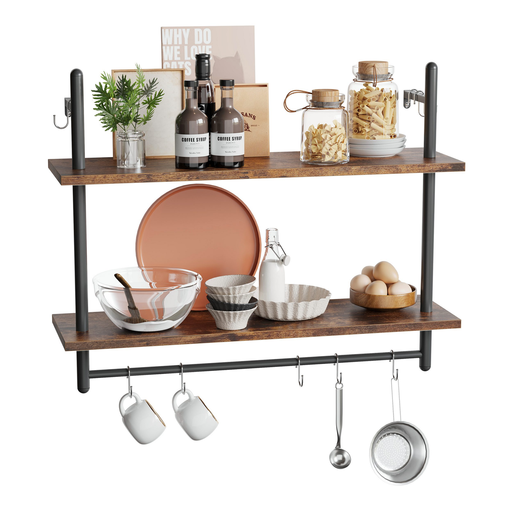
Why It Stands Out: This shelf combines the rugged aesthetic of industrial design with high functionality. The two tiers are complemented by eight S-hooks, making it especially versatile.
Advantages:
Who Is It For? For fans of the industrial style who are looking for a practical and durable storage solution with added benefits. It fits perfectly in kitchens, bathrooms, and even bars or cafés.
The models featured above require wall mounting with screws. If you're looking for a drill-free alternative, for instance, to organise spices in the kitchen, adhesive shelves could be a suitable option.
? Discover our selection of Adhesive Wall Spice Racks here.
1. How high should a wall shelf be hung? As a general rule, shelves should be mounted at eye level (approx. 150–170 cm) or aligned with other dominant elements in the room (e.g., the top of a door or window frame). Above a sofa or desk, ensure there is enough headroom (at least 25–40 cm of clearance).
2. What is the difference between a hanging shelf and a floating shelf? The term hanging shelf is an umbrella term for any shelf attached to the wall. A floating shelf is a specific type of hanging shelf where the mounting hardware (brackets, supports) is hidden from view, either within the wall or the shelf itself. This creates the impression that the shelf is "floating" on the wall.
3. How do you securely mount a wall shelf? A secure installation depends on the wall type and the correct mounting hardware. For solid concrete or brick walls, use the included anchors and screws. For drywall (plasterboard), special hollow-wall anchors are required to ensure sufficient load-bearing capacity. Before drilling, use a stud finder or cable detector to check for electrical wires or water pipes in the wall.