
Lieferung heute & morgen

Qualitätsgarantie

Willkommens-Angebote freischalten: KOSTENLOSE Lieferung | Bis zu 80 % RABATT | Kostenlose 30-Tage-JoyPlus-Testphase
App herunterladen
A wall shelf is more than just a storage surface. It creates order, utilises vertical space, and can be a central design element in your home. However, the selection is vast, and not every shelf lives up to its product description. Many buyers are frustrated by sagging boards, unsuitable mounting hardware, or finishes that quickly become unsightly.
This guide will help you navigate the typical pitfalls. We focus on the crucial features that distinguish a good wall shelf from an unsuitable one, so you can make an informed decision that suits your living space and requirements.
Before you decide on a model, you should be aware of the most common problems that often only become apparent after the purchase.
To avoid these mistakes, you should focus on three core technical aspects. These determine the durability, safety, and functionality of your new shelf.
The material is the foundation for stability and appearance. Each has specific advantages and disadvantages.
The type of installation determines the stability and appearance.
Measure not only the available space on the wall but also the items you want to place on the wall shelf.
Instead of a generic list, we present models tailored to clearly defined user profiles and their specific requirements.
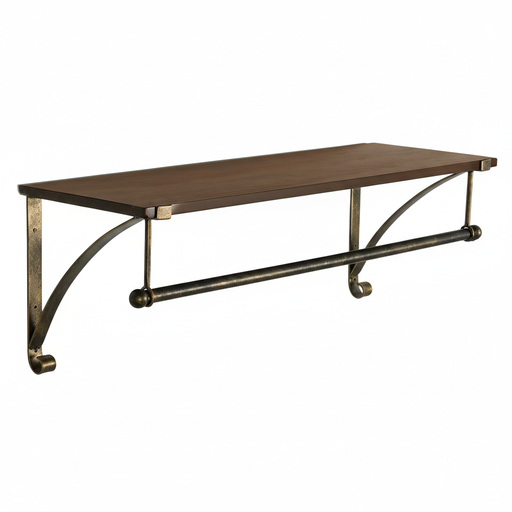
Why This Fits Their Persona: Ideal for those who need to maximise utility from a single wall space in small flats or entrance areas. It combines a shelf for accessories with a rod for clothes, solving two storage problems at once.
It bypasses the impractical design trap by offering a clear dual function. The solid wood and metal construction suggests greater robustness compared to purely decorative shelves.
Combined function (shelf and garment rod); space-saving wall-mounted design.
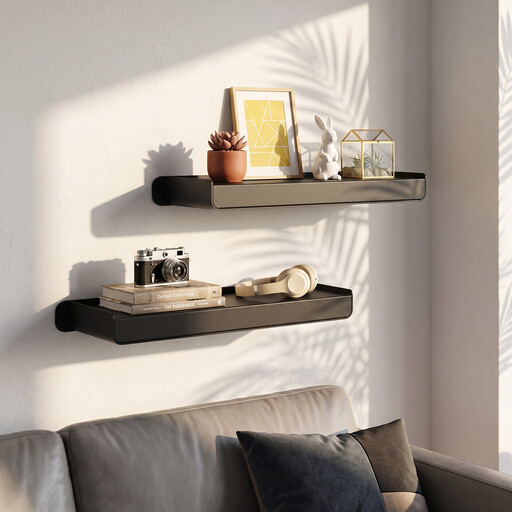
Why This Fits Their Persona: Perfect for lovers of a modern, uncluttered style. The minimalist aluminium design blends seamlessly into contemporary living or office spaces and serves as a stylish decorative element.
It avoids the trap of inferior materials by using robust aluminium. The specified load capacity of approx. 20 kg (44 lbs) also addresses the problem of unstable floating shelves.
Minimalist, award-winning design (German Design Award 2022, according to the manufacturer); rust-resistant and stable aluminium construction.
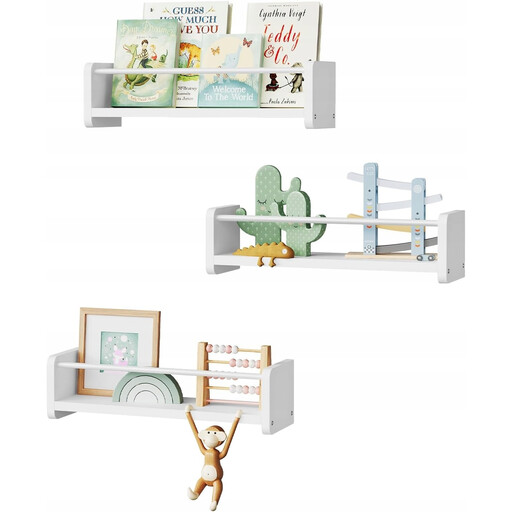
Why This Fits Their Persona: Suitable for users looking for a flexible and cost-effective solution for various rooms. The set of 3 can be distributed and arranged as needed in the kitchen, children's room, or living room.
It counters the instability trap with the additional metal rail, which not only serves as a design element but also increases stability and can prevent items from falling off.
Flexible set of 3 for variable arrangement; metal rail for added stability and as a fall guard.
We have compiled a complete, real-time list of products that fully satisfy these strict selection criteria and UK safety regulations.
Special anchors are required for mounting on plasterboard walls (drywall). Do not use standard plastic plugs. Hollow-wall anchors made of metal or plastic (e.g., toggle bolts or expansion anchors) are the right choice here. They expand behind the plasterboard, distributing the load over a larger area. Always check the load capacity specified by the anchor manufacturer.
The ideal depth depends on the type of books. For most paperbacks, a shelf depth of 15 to 20 cm is sufficient. For larger hardcovers, art books, or binders, you should plan for a depth of at least 25 to 30 cm to ensure the items stand securely and do not overhang.
Yes, but the choice of material is crucial. In damp environments like a kitchen or bathroom, you should use materials that are resistant to moisture and easy to clean. Recommended are metal shelves (aluminium or powder-coated steel), glass, or plastic. If you prefer a wooden shelf, make sure it is solid wood with a water-repellent surface treatment (e.g., lacquer) or an engineered wood specifically designed for humid rooms.