
Lieferung heute & morgen

Qualitätsgarantie

Willkommens-Angebote freischalten: KOSTENLOSE Lieferung | Bis zu 80 % RABATT | Kostenlose 30-Tage-JoyPlus-Testphase
App herunterladen
A wall shelf might seem like a simple purchase. It creates storage, showcases your decor, and makes optimal use of empty walls. However, the selection is vast, and not every shelf lives up to its product photos. Many buyers end up frustrated with sagging shelves, inadequate mounting hardware, or low-quality materials that quickly become an eyesore. Before you make a decision, it's crucial to understand the most common pitfalls to find a durable and fitting solution for your home.
Post-purchase disappointment often stems from three recurring issues that can be avoided with a closer look beforehand:
To ensure your new wall shelf is both functional and durable, you should carefully examine three core parameters. These will help you objectively assess a product's quality.
The choice of material affects not only the look but also the durability and where it can be used.
The mounting system is the foundation of any wall shelf.
Different models are suited for different purposes and interior styles. Here are some recommendations tailored to specific user profiles.
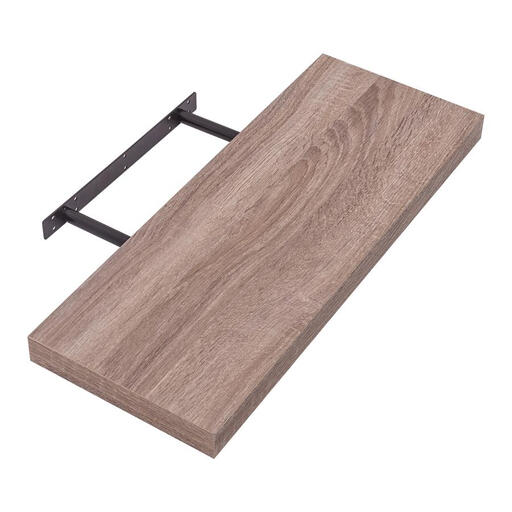
Why this model is a good fit: Ideal for anyone looking for a simple, functional, and cost-effective solution for displaying decor, CDs, or paperbacks. Its minimalist design as a floating shelf blends discreetly into almost any room.
The shelf uses a concealed metal T-bracket, which provides a more stable mounting than simple rod systems. The surface is described as moisture- and scratch-resistant, reducing the risk of rapid wear on the E1-grade MDF board.
Offers a clean, floating look with no visible brackets. The 3.8 cm thick board also appears solid and high-quality.
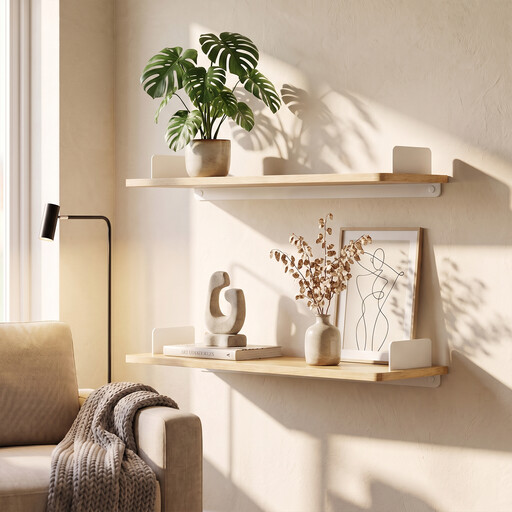
Why this model is a good fit: For users seeking a decorative shelf that is a design object in itself. The combination of wood and metal, along with its award-winning design (Muse Design Award, according to the manufacturer), makes it a statement piece.
According to the manufacturer, the shelf board is made of FSC-certified solid rubberwood, which avoids the material pitfall. The visible metal brackets provide a stable and well-defined mounting with a stated load capacity of up to 20 kg.
Combines the stability of visible brackets with a modern, award-winning aesthetic. The solid wood material promises excellent durability.
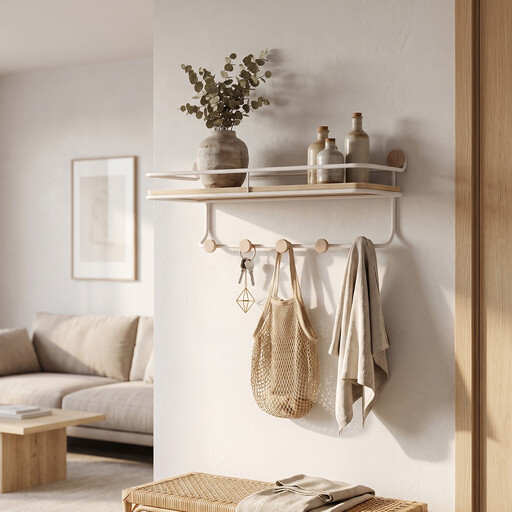
Why this model is a good fit: Perfect for the entryway, bathroom, or kitchen, where more than just a storage surface is needed. The combination of a hanging shelf and a hook rail creates organisation in a small footprint.
The solid wood and powder-coated steel construction is designed for stability. An integrated guardrail prevents items from falling off the shelf. The clear 20 kg load capacity specification inspires confidence in its strength.
Combines storage surface and hanging options in one product. The guardrail offers added security for items placed on it.
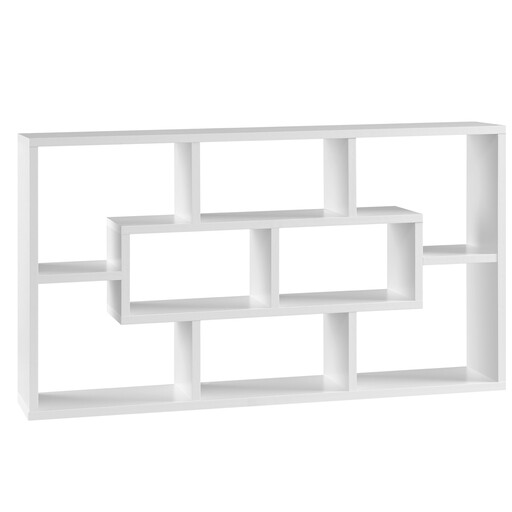
Why this model is a good fit: Anyone needing to store many books, CDs, or collectibles will find a structured solution here. The vertical design makes use of wall height and functions like a compact bookshelf without taking up any floor space.
The product description clearly states the material (FSC-certified E1 wood with melamine foil), which is noted as being abrasion-resistant and water-repellent. Furthermore, an exact load capacity per compartment (5 kg) is specified, which sets realistic expectations and prevents overloading.
With eight compartments, it offers maximum organised storage within a small footprint. Despite its size, the floating design looks modern and light.
We have compiled a complete, up-to-date list of products that fully meet these strict selection criteria and safety standards.
The load capacity depends on two factors: the stability of the shelf itself and, more importantly, the type of your wall. The manufacturer's specification usually refers to a solid concrete or brick wall. For a hollow or drywall wall, the capacity is significantly lower. Always use special hollow-wall anchors for these walls and load the shelf to only about 50-70% of its stated maximum capacity.
Yes, it is possible, but it requires special fasteners. Standard wall plugs do not provide sufficient grip in plasterboard. Instead, use metal hollow-wall anchors (e.g., toggle bolts or expansion anchors) that secure themselves behind the board. Before purchasing, check if the shelf's mounting system is compatible with such anchors.
In rooms with high humidity, such as bathrooms and kitchens, you should choose materials that are moisture-resistant. Good options include solid wood shelves with a protective lacquer or oil finish, powder-coated metal, or high-quality MDF boards with a water-repellent melamine resin coating. Avoid shelves with a simple paper or foil coating, as they will quickly swell when exposed to moisture.