
Lieferung heute & morgen

Qualitätsgarantie

Willkommens-Angebote freischalten: KOSTENLOSE Lieferung | Bis zu 80 % RABATT | Kostenlose 30-Tage-JoyPlus-Testphase
App herunterladen
A wall shelf is more than just a storage surface. It's a design element that creates space and adds character to empty walls. But the selection is vast, and not every product lives up to its advertising promises. Before you make a decision, it's crucial to understand the common pitfalls that often only become apparent after the purchase. This guide will help you separate the wheat from the chaff and find a wall shelf that is both functional and durable.
Many buyers focus solely on design, overlooking critical technical details. This often leads to disappointment and unnecessary expenses. Pay special attention to these three points:
To avoid a bad purchase, you should base your decision on objective criteria. The following three parameters are crucial for the quality and longevity of your wall shelf.
The material determines not only the look but also the stability and lifespan.
The mounting system is the foundation of your shelf.
Think carefully about what you need the shelf for. A shelf with hooks in the entryway serves a different purpose than a slim, modern wall shelf in the living room. The depth of the shelf board is also critical: 15 cm is sufficient for paperbacks, while 25–30 cm is needed for larger coffee table books or binders.
Here are some recommendations tailored to different user profiles and requirements.
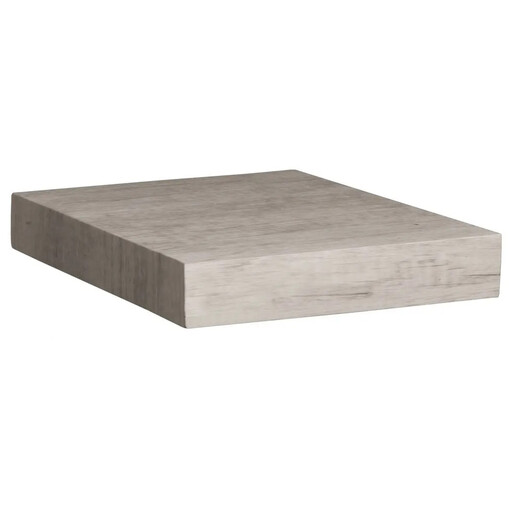
Why This Fits Their Persona: Ideal for anyone looking for a simple, stylish, and affordable solution for small decorative items. The compact, square design fits perfectly in modern apartments, offices, or hallways without being obtrusive.
This shelf avoids the trap of misleading load capacity. With a clearly defined weight limit of 12 kg, it is transparently designed for its intended use as a decorative shelf and doesn't create false expectations.
Compact dimensions (23.5 x 23.5 cm) for flexible placement. The lacquered MDF material provides a smooth, easy-to-clean surface in a neutral grey tone.
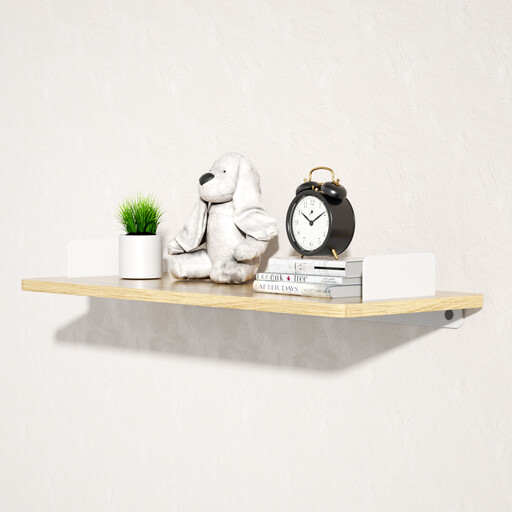
Why This Fits Their Persona: Perfect for users who value high-quality materials, excellent design, and high functionality. This shelf is not just storage, but a statement piece for the living room, office, or bathroom.
It avoids the trap of inferior materials by using FSC-certified solid rubberwood and a high-quality aluminum alloy. The stated load capacity of up to 20 kg (44 lbs) is reliable for a floating shelf of this type.
The combination of solid wood and metal is waterproof and rust-resistant. According to the manufacturer, the design has won the Muse Design Award and the French Design Award.
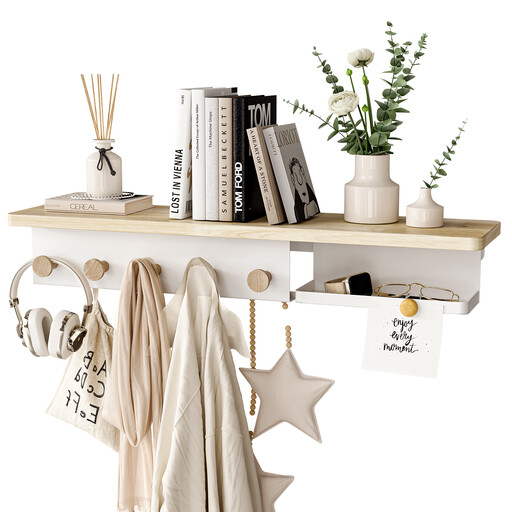
Why This Fits Their Persona: The perfect choice for anyone needing maximum functionality in a small space. Ideal for the entryway, kitchen, or bathroom to keep clothes, keys, towels, and decorative items organized.
This shelf avoids the trap of an inflexible design. By integrating front and rear hooks as well as small storage compartments, it offers a thoughtful, multifunctional solution that goes far beyond a simple wall board.
Innovative design with hooks on the front and back. Made from FSC-certified rubberwood and powder-coated metal, making it water- and rust-resistant. Supports up to 20 kg (44 lbs).
We have compiled a complete, up-to-date list of products that fully meet these strict selection criteria and safety standards.
How do you securely mount a wall shelf on different wall types? Secure mounting depends on your wall. For drywall (plasterboard), use special hollow-wall anchors. For brick or concrete walls, expansion anchors are the right choice. Always check the condition of your wall and, if necessary, buy appropriate, high-quality mounting hardware from a DIY store if the included parts are not suitable.
What is the difference between a floating shelf and a shelf with brackets? A floating shelf has an invisible mounting system, which gives it a sleek, minimalist look. It is well-suited for modern interiors. A shelf with brackets (visible supports) often has a higher load capacity and fits well with industrial or classic styles. The choice is a matter of aesthetics and the required stability.
What load capacity do I need for a wall-mounted bookshelf? The weight of books is often underestimated. As a rule of thumb, you can expect about 10–15 kg per meter of shelf space for paperbacks. For a wall-mounted bookshelf, you should therefore choose a model with a load capacity of at least 15 kg per shelf board. For heavy coffee table books or binders, an even higher load capacity is advisable.