
Lieferung heute & morgen

Qualitätsgarantie

Willkommens-Angebote freischalten: KOSTENLOSE Lieferung | Bis zu 80 % RABATT | Kostenlose 30-Tage-JoyPlus-Testphase
App herunterladen
A wall shelf seems like a straightforward purchase. It's meant to create storage, complement your decor, and make smart use of unused wall space. But reality often tells a different story: the shelf sags after a short time, the surface swells up in the bathroom, or the included wall plugs are useless for local wall types.
As a Joybuy Product Recommendation Officer, I analyse product information and user feedback daily. In doing so, the same problems consistently emerge. Before you make a decision, you should know the three most common pitfalls that lead to frustration and unnecessary expense.
To avoid a buying mistake, it's important to look beyond the design and focus on the technical specifications. These three points are crucial for long-term satisfaction.
The choice of material affects not only the look but also the durability and where the shelf can be used.
The type of mounting is a key factor in determining how much weight a shelf can hold.
Before buying, always check the specified maximum load capacity and compare it with your intended use. Always plan for a safety margin.
Measure the available space carefully before choosing a model. A single wall board can create a focused accent, while a shelf set offers more design flexibility. Sets of multiple, coordinated shelves allow you to create a custom and functional wall display.
Based on the criteria above, we have selected a few products for different needs and profiles.
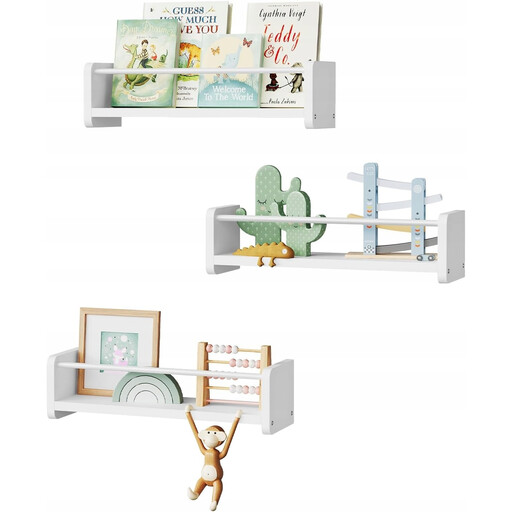
Why This Fits Their Persona: This set is ideal for individuals looking for a flexible and cost-effective solution for various rooms. Whether in the living room, kids' room, or kitchen—the three shelves can be arranged individually to provide quick storage space.
The integrated metal bar not only serves as a design element but also reinforces the structure and prevents sagging. The complete mounting kit for two different installation methods reduces the risk of compatibility issues.
Flexible shelf set with two mounting options. The metal reinforcement provides additional stability for a specified load capacity of up to 5 kg per shelf.
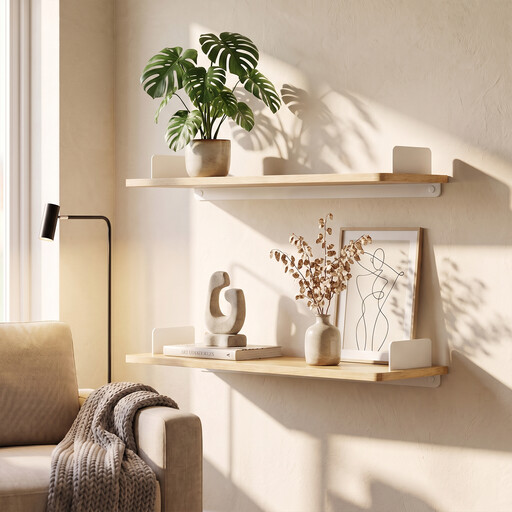
Why This Fits Their Persona: For users who value high-quality materials and an appealing design. The shelf combines FSC-certified solid rubberwood with aluminium brackets, serving as both a functional and decorative element.
This shelf avoids the material trap by using lacquered solid wood, which is more resistant to warping than simple fibreboard. The sturdy metal brackets ensure that the high specified load capacity of up to 20 kg (44 lbs) is reliably achieved.
High-quality, FSC-certified solid wood. High load capacity of up to 20 kg, suitable as a wall-mounted bookshelf. The brackets also prevent items from sliding off.
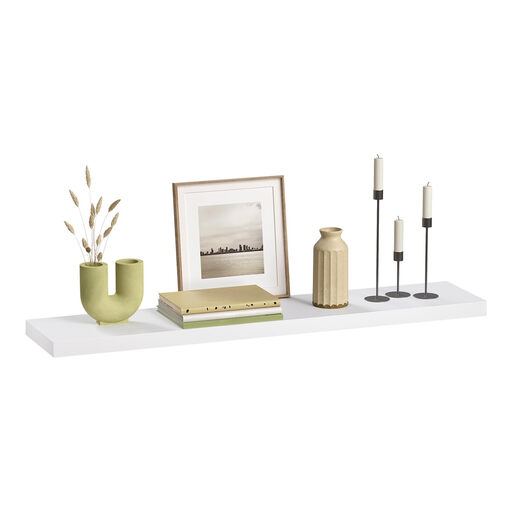
Why This Fits Their Persona: Perfect for anyone who wants a long, continuous surface with a clean, floating look. At 110 cm wide, this wall board offers plenty of space for books, decor, or pictures without appearing bulky.
The product description clearly states that it is E1-class MDF with a moisture- and warp-resistant surface. This allows for an informed decision regarding its use in different rooms. The concealed metal bracket is designed for stable wall mounting.
Large continuous length of 110 cm. The invisible mounting creates a modern floating shelf look. The specified load capacity is up to 13 kg.
We've compiled a complete, up-to-date list of products that fully meet these strict selection criteria and applicable safety requirements.
Drywall (plasterboard) requires special fasteners, as standard plugs won't hold. Use hollow-wall anchors made of metal or plastic (also known as drywall anchors). These expand behind the board and distribute the load over a larger area. Be sure not to exceed the anchor's maximum load capacity, which is typically much lower than for a solid wall.
The load capacity depends on the shelf, the mounting hardware, and the wall. One meter of books weighs an average of 10 to 15 kg. For a wall-mounted bookshelf, a load capacity of at least 15-20 kg per linear meter should be planned for. Shelves with visible, sturdy wall brackets anchored into a solid wall are a more reliable choice for this purpose compared to lightweight floating shelves.