
Lieferung heute & morgen

Qualitätsgarantie

Willkommens-Angebote freischalten: KOSTENLOSE Lieferung | Bis zu 80 % RABATT | Kostenlose 30-Tage-JoyPlus-Testphase
App herunterladen
A wall shelf is more than just a storage surface. It creates order, showcases your favourite items, and utilises vertical space without taking up valuable floor area. However, the sheer number of options can quickly become overwhelming. Many products look good at first glance but soon prove to be a poor investment. Before you decide on a model, you should be aware of the typical pitfalls that can lead to wobbly structures and damaged walls.
This guide will show you what really matters when making your selection and how to find a functional, durable wall shelf that perfectly suits your needs.
The market is flooded with options, but not every shelf lives up to the promises made in its product images. Pay special attention to these three common problems:
To avoid these mistakes, you should examine three core parameters. These will help you objectively assess the quality and suitability of a wall shelf.
The material determines not only the look but also the durability and where the shelf can be used.
The type of mounting is the foundation of your shelf.
Check whether the dimensions of the shelf are suitable for its intended purpose.
Based on these criteria, we have identified several products that offer a well-designed solution for specific user profiles.
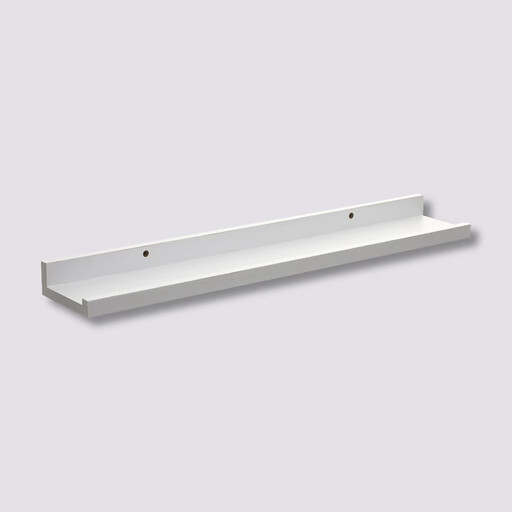
Why This Fits Their Persona: Ideal for anyone looking for a simple and affordable solution to stylishly display picture frames, small plants, or decorations. The minimalist design fits into almost any room without being obtrusive.
The clear specification of a 3.0 kg maximum load capacity prevents the overloading trap. It is designed purely as a decorative shelf, which makes its function unmistakable.
Slim, unobtrusive design. A shallow depth of 10 cm makes it ideal for narrow hallways or small walls. FSC-certified MDF material.
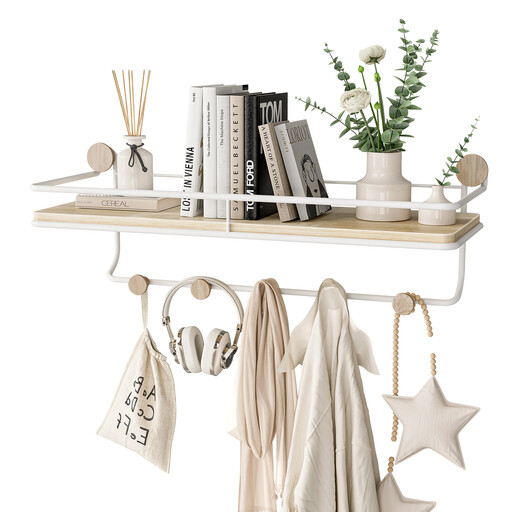
Why This Fits Their Persona: Perfect for the entryway, kitchen, or bathroom. This shelf combines a storage surface with 5 sturdy hooks, offering a solution for storage and organisation in one place.
The construction of FSC-certified rubberwood and powder-coated steel is designed for a higher load. The specified load capacity of 20 kg (44 lbs) is realistic for its intended purpose (jackets, bags).
Combination of a shelf and a coat rack. The front protective ledge prevents items from falling off. Water-resistant and rust-proof materials.
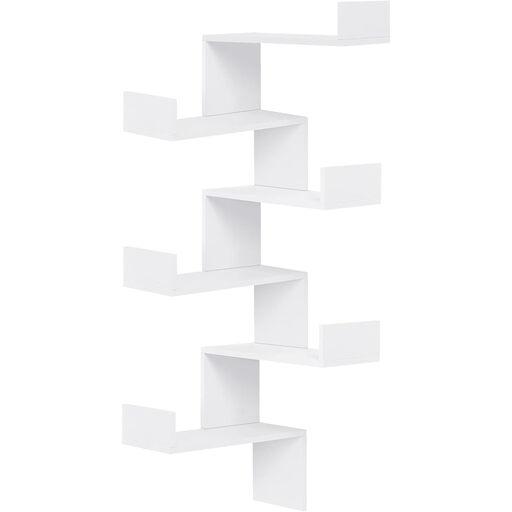
Why This Fits Their Persona: For anyone wanting to transform unused corners into valuable storage space. This corner shelf offers plenty of room on six tiers for books, plants, or decor, becoming a design element in itself.
This shelf solves the "improper dimensioning" problem by being specifically designed for a 90-degree corner. The specified load capacity per tier (approx. 10 kg) provides a clear guideline for use.
Maximum space utilisation through corner mounting. Six tiers provide generous storage within a small footprint. Modern S-shape design.
We've compiled a complete, up-to-date list of products that fully meet these strict selection criteria and German safety regulations.
Yes, installation on a plasterboard wall (drywall) is possible but requires special care. Standard wall plugs will not provide a secure hold. You need special hollow-wall anchors (e.g., toggle bolts or metal expansion anchors) that anchor themselves behind the board. Note that the maximum load capacity on a plasterboard wall is significantly lower than on a solid wall. Always check the manufacturer's instructions, as some heavy shelves are explicitly not recommended for this type of wall.
A secure installation is crucial. Always use a spirit level to align the drill holes perfectly horizontally. Drill the holes, insert the appropriate wall plugs for your wall type, and screw the metal bracket on tightly. Then, slide the shelf board onto the bracket and secure it, if applicable, with the small screws from below. Only load the shelf once you are certain that the bracket is firmly attached to the wall without any play.
The ideal depth depends on the books you plan to store. For most paperbacks, a depth of 15 to 20 cm is sufficient. For larger hardcovers, coffee table books, or ring binders, you should plan for a depth of at least 25 cm to ensure the items stand securely and do not hang over the edge.