
Lieferung heute & morgen

Qualitätsgarantie

Willkommens-Angebote freischalten: KOSTENLOSE Lieferung | Bis zu 80 % RABATT | Kostenlose 30-Tage-JoyPlus-Testphase
App herunterladen
A wall shelf is more than just a storage surface. It creates order, adds decorative accents, and utilizes vertical space that would otherwise go unused. However, the selection is vast, and not every model lives up to what the product images promise. Certain weaknesses in material and construction often mean that a supposed bargain quickly turns out to be a bad purchase.
As a Joybuy Product Recommendation Officer, I see it as my mission to provide you with objective criteria so you can make an informed decision. This guide will show you the most common pitfalls and what to look for when choosing a durable and functional wall shelf.
Many buyers focus primarily on design, overlooking crucial technical details. This often leads to three typical problems:
bathroom shelf or kitchen wall shelf, these quickly swell due to moisture, the veneer peels off, and the appearance suffers.wall shelf set systems, may look stylish but offer little usable storage space for standard books or larger decorative objects due to their shape or shallow depth.To avoid these problems, you should check three core aspects before buying. These are crucial in determining the longevity and functionality of your new wall shelf.
The material is the foundation for stability and durability. The most common options have specific pros and cons:
white wall shelf or black wall shelf with a matte finish is often made of MDF.wooden wall shelf made of oak, pine, or acacia offers a natural look and high stability. It is ideal for a vintage wall shelf or country-house style. Look for an oiled or lacquered surface for protection against moisture.metal wall shelf is often designed in an industrial wall shelf style and is characterized by a high load capacity. Powder-coated surfaces offer protection against rust.The stability of a shelf depends on two factors: the construction of the shelf itself and its anchoring in the wall.
wall board for light decor needs less load capacity than a wall bookshelf intended to hold heavy art books.floating shelf. A metal rail is mounted on the wall, onto which the shelf is slid. The result is a minimalist look, but stability heavily depends on the quality of the rail and the wall condition.The shape of the shelf should suit its purpose. A narrow hanging shelf is ideal for the hallway, while a corner wall shelf makes optimal use of unused corners in the living room or office. Before buying, measure not only the available space on the wall but also the items you plan to place on it.
Here are some recommendations tailored to different needs and living situations that meet the quality criteria mentioned.
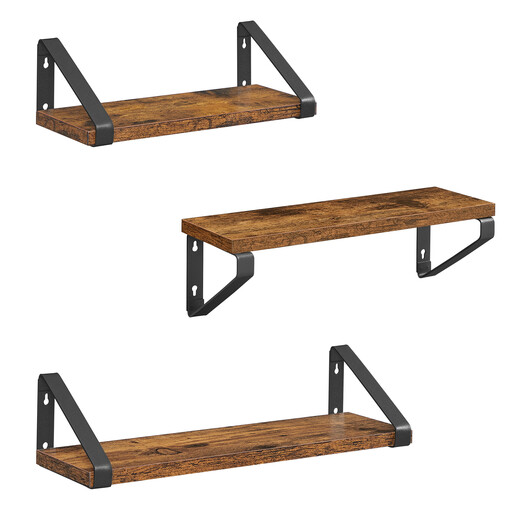
Why This Fits Their Persona: Ideal for a first apartment or a quick, cost-effective redesign. The set of three shelves in different sizes offers flexible decoration options for the living room, bathroom, or hallway.
The combination of particle board and a sturdy steel frame provides greater stability than shelves made only of board. The specified load capacity of 5 kg per shelf is a realistic figure for decorative objects and small items.
Complete set with three sizes for a flexible arrangement. The vintage look with a wood finish and black metal brackets complements many interior styles.
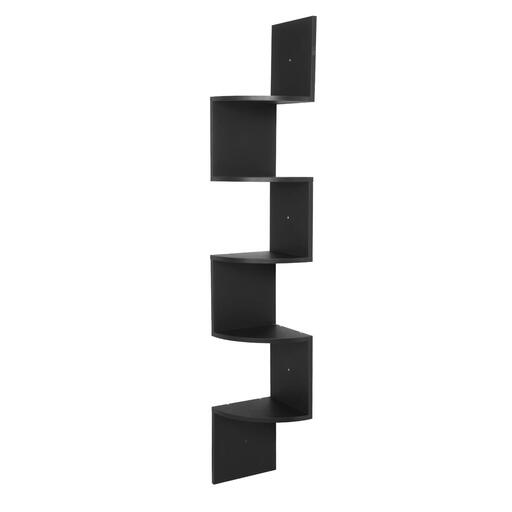
Why This Fits Their Persona: Perfect for anyone looking to fill otherwise hard-to-use corner space in a practical and stylish way. The modern zigzag design is an eye-catcher and offers plenty of space on five tiers.
The material, made from E1-grade MDF boards, is of higher quality than simple particle board. The zigzag construction ensures high inherent stability. The manufacturer also clearly states that the shelf is not suitable for drywall, which prevents installation errors.
Maximum space utilization in corners with five storage surfaces. The invisible mounting system creates a floating look. The total load capacity of approx. 15 kg is impressive for a corner shelf.
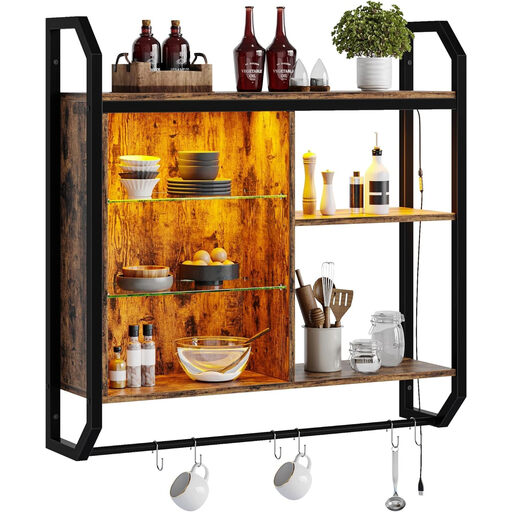
Why This Fits Their Persona: A multifunctional solution for the kitchen, bar, or living room. This shelf not only offers ample storage but also additional features like a towel rack, hooks, and integrated lighting.
The industrial-style construction from solid steel pipes ensures extremely high stability and a total load capacity of up to 68.5 kg. This effectively counteracts the problem of low load capacity and unstable mounts. The material combination is designed for durability.
Integrated LED lighting with 20 colors creates ambiance. Height-adjustable glass shelves, a towel rack, and S-hooks offer maximum flexibility for use as a spice rack, coffee bar, or bookshelf.
We have compiled a complete, up-to-date list of products that fully meet these strict selection criteria and safety standards.
1. How high should a wall shelf be hung? A general rule is to mount it at eye level, about 150 to 160 cm (59 to 63 inches) above the floor. However, this can vary. Above a sofa, there should be enough headroom (about 25-30 cm or 10-12 inches above the backrest), while a shelf above a desk should be positioned so that it is easily accessible without obstructing the workspace.
2. What kind of wall anchors do I need for my wall shelf? The choice of anchor depends on your wall. For solid walls like concrete or solid brick, standard expansion anchors are suitable. For drywall made of plasterboard, special hollow-wall anchors (e.g., toggle bolts or metal anchors) are mandatory, as regular anchors will not hold. Always check the shelf manufacturer's recommendations and the load-bearing capacity of your wall.
3. Can I install any wall shelf in the bathroom? No, not every material is suitable for the high humidity in a bathroom. Choose models made of stainless steel, glass, plastic, or specially sealed MDF or solid wood. Untreated particle board or wood will swell quickly and should be avoided in damp rooms. Look for product descriptions that explicitly state suitability for bathroom use.