
Lieferung heute & morgen

Qualitätsgarantie
App herunterladen
Kategorien
A wall shelf is designed to optimise vertical storage space and provide a structured display for your items. Choosing the right model depends on several technical parameters, including material composition, load capacity, mounting type, and the specific requirements of its intended location. A careful analysis of these factors is crucial for finding a functional and durable solution.
The decision to purchase a wall-mounted shelf should be based on an evaluation of objective criteria. The following aspects are essential for both functionality and safety.
The choice of material directly impacts the shelf's load capacity, durability, and aesthetic appeal.
The maximum load capacity is a critical parameter, specified by the manufacturer in kilograms (kg). It depends on both the shelf material and the design of the mounting brackets.
Additional features can enhance the utility of a wall shelf. These include integrated LED lighting systems, controllable via remote for ambient lighting, or adjustable shelves that allow for flexible customisation to the height of the stored objects.
The following products have been selected based on their technical specifications and functional design for specific applications.
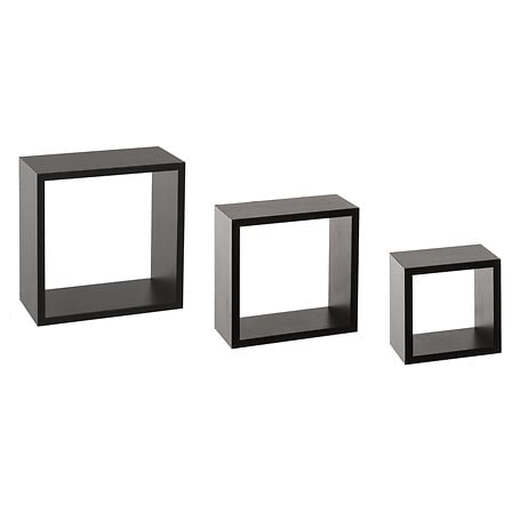
Product Feature Analysis: This set consists of three cube-shaped shelves of varying sizes, crafted from E1-grade MDF. The material ensures a low overall weight (total weight 0.640 kg) and a smooth, black finish. With a depth of 9 cm, the cubes are primarily designed for displaying small decorative objects, collectibles, or paperbacks. The modular design allows for a flexible arrangement on the wall.
Advantages:
Who it's for: This set is suitable for users looking for a flexible and decorative storage solution for the living room, bedroom, or hallway. It is ideal for stylishly showcasing small items without visually overwhelming the wall.
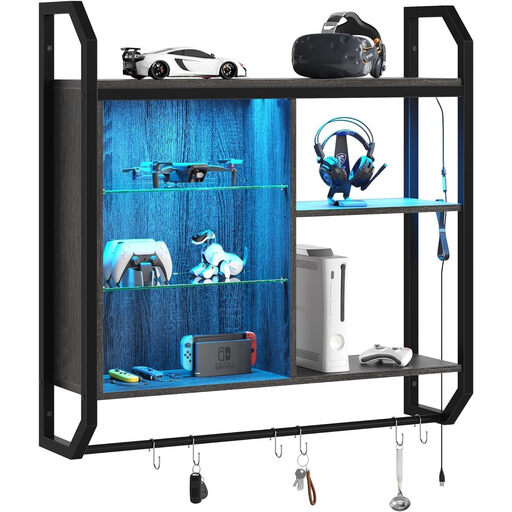
Product Feature Analysis: This wall-mounted shelf combines a steel tube frame with P2-grade particle board shelves and two adjustable glass shelves. The overall construction has a stated load capacity of up to 68.5 kg. A standout feature is the integrated RGB LED light strip with 20 colours and 22 modes, controlled by a remote. With a width of 84 cm, it offers ample space and, thanks to its robust build, is also suitable as a wine rack or coffee bar.
Advantages:
Who it's for: This shelf is aimed at users seeking a functional and atmospheric solution for a gaming room, a modern living room, or a home bar. The combination of storage and ambient lighting makes it a multifunctional furnishing element.
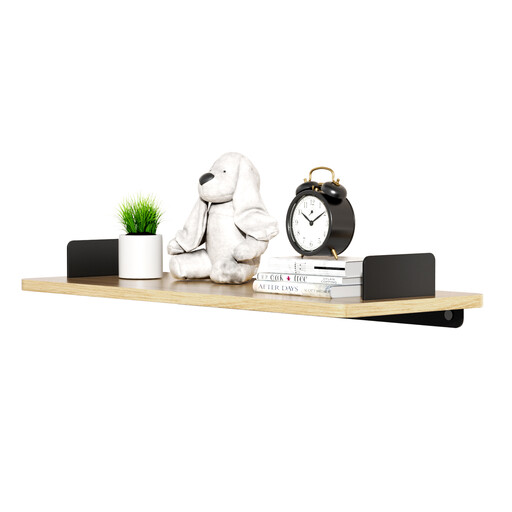
Product Feature Analysis: This floating shelf is crafted from solid rubberwood and mounted with aluminium alloy brackets. According to the manufacturer, the maximum load capacity is up to 20 kg, qualifying it for storing books or heavier kitchen utensils. The wood is FSC-certified and finished with a water-resistant lacquer coating. The manufacturer states the design has been recognised with the Muse Design Award and the French Design Award.
Advantages:
Who it's for: This shelf is an excellent choice for users who need a sturdy wall-mounted bookshelf or a durable wall-mounted kitchen shelf. It appeals to those who value natural materials, high load capacity, and an award-winning design.
The models featured cover specific use cases. For a broader selection, especially if you are looking for a black wall shelf or other specific designs, our main category offers more variants to meet different design and functional requirements.
Discover more black wall shelves here
1. How high should a wall shelf be mounted? The mounting height depends on its intended use and the room's environment. As a general guideline, a decorative shelf in a living area is often mounted at eye level (approx. 150-160 cm). Above a piece of furniture like a sofa or desk, a clearance of at least 20-30 cm should be maintained to ensure a harmonious look and not restrict headroom.
2. What is the difference between a wall shelf and a floating shelf? A floating shelf is a type of wall shelf. The defining difference lies in the mounting method: on a floating shelf, the hardware is concealed within the shelf and the wall. This creates the impression that the shelf is "floating". A classic wall shelf, on the other hand, uses visible brackets or supports for attachment.