
Lieferung heute & morgen

Qualitätsgarantie

Willkommens-Angebote freischalten: KOSTENLOSE Lieferung | Bis zu 80 % RABATT | Kostenlose 30-Tage-JoyPlus-Testphase
App herunterladen
Empty walls offer potential, but often the spark of inspiration or necessary storage space is missing. A well-chosen wall shelf can solve both problems: it creates order for books, collectibles, or everyday items while adding a stylish accent to the room. However, given the variety of designs, materials, and functions, making a choice can be a challenge.
This article serves as a guide. We will introduce different types of wall shelves and provide practical tips to help you find the right model for your living room, hallway, or any other room. Our goal is to provide you with a solid basis for making an informed decision, so you can discover a functional and aesthetically pleasing solution for your walls.
Before you decide on a model, a few considerations can simplify the selection process. The following points will help you narrow down the options and find a shelf that meets both your practical and visual requirements.
The material of a shelf significantly shapes its appearance and durability.
The style of the shelf should harmonise with your existing decor. A minimalist floating shelf blends discreetly into the room, while a striking decorative shelf can become a central focal point.
Think carefully about what you want to place on the shelf and where it will hang.
The type of mounting affects not only the look but also the stability. A floating shelf creates a light, minimalist impression with its concealed bracket. This involves mounting a support plate to the wall, onto which the shelf is then slid.
Other models are attached with visible brackets or through a suspension system integrated into the back. Always check the condition of your wall before purchasing. Solid concrete or brick walls generally offer more support than drywall. The maximum load capacity specified by the manufacturer should not be exceeded to ensure safety.
Here, we present three different wall shelves that are suitable for various applications due to their design and functionality.
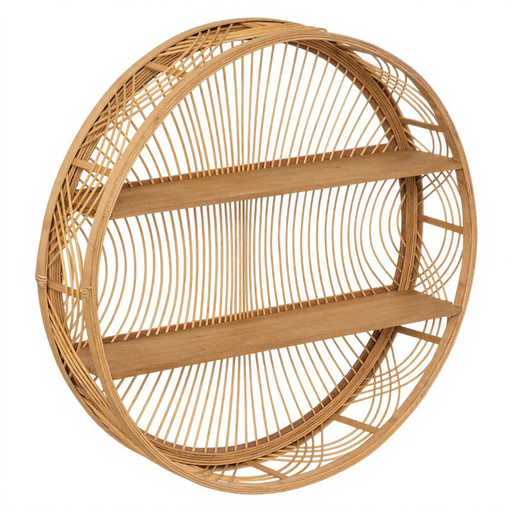
Why it stands out: The Inacio wall shelf distinguishes itself from classic designs with its round shape and combination of natural materials. The bamboo structure and the two fir wood shelves give it a handcrafted character, making it a decorative element.
Advantages:
Who is it for? This decorative shelf is ideal for individuals looking for a functional piece of furniture with a strong decorative character. It is perfect for stylishly displaying light items such as small plants, picture frames, or souvenirs in the living room or bedroom.
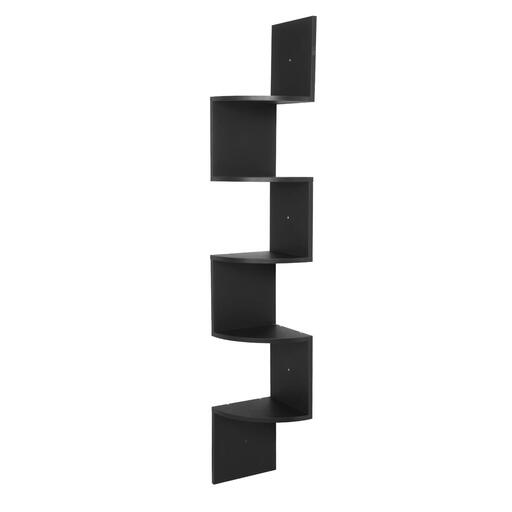
Why it stands out: This corner shelf from WOLTU makes optimal use of unused corners with its clever zigzag design. With five tiers, it offers plenty of storage in a small footprint and looks modern and tidy thanks to its black colour and invisible mounting.
Advantages:
Who is it for? This shelf is an excellent choice for anyone looking to create maximum storage in small rooms. It works well as a wall-mounted bookshelf or for organising collections in an otherwise empty corner. Please note the manufacturer's advice that this shelf is not suitable for mounting on drywall.

Why it stands out: The SoBuy wall-mounted coat rack is an all-in-one multifunctional solution for the entryway. It combines a wall shelf with a clothes rail, five hooks, and three foldable baskets, offering thoughtful organisation for jackets, accessories, and small items.
Advantages:
Who is it for? This wall shelf for the hallway is the ideal solution for families or individuals who need a space-saving yet comprehensive coat rack for their entryway. It helps maintain order and keep all essential items within easy reach.
View the SoBuy Wall-Mounted Coat Rack
The models presented cover a range of needs, but the world of wall decor is far more extensive. If you are looking for more inspiration or need a different type of shelf for your home, you can find more options in our extensive collection.
Discover a diverse selection in our Family Wall Decor for Living Room category.
1. How high should a wall shelf be hung? A general recommendation is to mount the shelf at eye level, which is about 150 to 160 cm (59 to 63 inches) above the floor. If the shelf hangs above a piece of furniture like a sofa or a dresser, a distance of 20 to 30 cm (8 to 12 inches) should be maintained to achieve a harmonious overall look. Ultimately, the ideal height depends on the size of the room and its intended use.
2. What is the difference between a wall shelf and a wall board? The terms are often used interchangeably. Traditionally, a wall shelf (or hanging shelf) refers to a system with multiple tiers or a more complex structure. A wall board, on the other hand, is typically a single, often thicker, shelf board that is frequently mounted as a floating shelf and has a more minimalist character.
3. How do you securely mount a floating shelf? A floating shelf is mounted with a concealed bracket consisting of a metal plate with two or more rods. This plate is screwed firmly to the wall. The shelf, which has corresponding holes, is then slid onto the rods. For a secure installation, it is crucial to use the appropriate wall anchors for your specific wall type (e.g., concrete, brick, drywall) and not to exceed the shelf's maximum load capacity.