
Lieferung heute & morgen

Qualitätsgarantie

Willkommens-Angebote freischalten: KOSTENLOSE Lieferung | Bis zu 80 % RABATT | Kostenlose 30-Tage-JoyPlus-Testphase
App herunterladen
A wall shelf is an excellent way to transform unused vertical space into storage and a display area. However, the sheer number of options can quickly become overwhelming. Many buyers only realise after installation that their new shelf doesn't live up to the product description's promises. Before you make a decision, you should be aware of the most common pitfalls that lead to disappointment and unnecessary expense.
The three most common problems when choosing a wall shelf are:
To avoid these problems, you should focus on a few crucial technical parameters. These will help you objectively assess a shelf's quality and suitability.
The material determines not only the look but also the durability and intended use of the shelf.
The type of installation is critical for stability.
Measure the available space accurately and consider what you want to place on the shelf.
Here are some recommendations tailored to different needs and living situations.
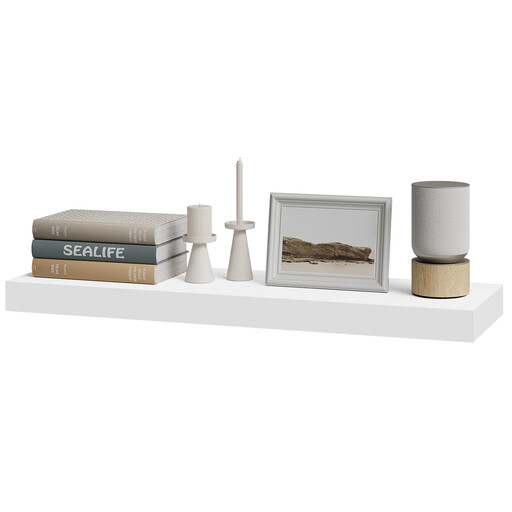
Why This Fits Their Persona: Ideal for anyone looking for a functional and unobtrusive solution. The simple white design fits almost any interior style, and the integrated drawer provides discreet storage for small items like keys or charging cables.
The PVC veneer protects the MDF board from moisture and scratches, thus avoiding the problem of unsuitable materials for everyday use. The clear assembly instructions help prevent instability when correctly mounted on a suitable wall.
Material: E1 grade MDF with PVC veneer. Special Feature: Integrated, smooth-running drawer with a pull-out stop. Load Capacity: Up to 10 kg according to the manufacturer when mounted on a solid wall.
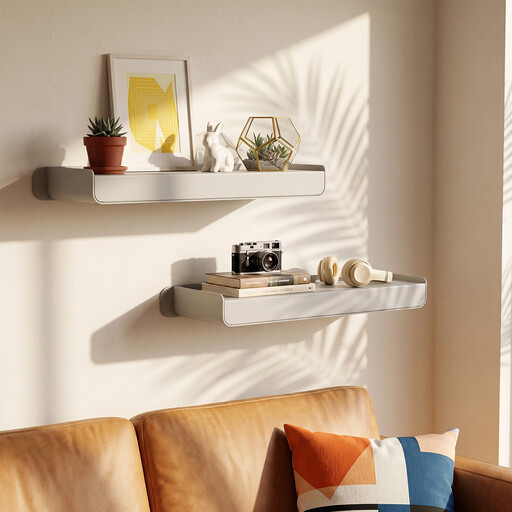
Why This Fits Their Persona: For users who value high-quality materials and a minimalist, award-winning design. This shelf is not just for storage but is a deliberate design element for modern living spaces.
The material (aluminium) is naturally rustproof, waterproof, and stable. It completely bypasses the trap of unsuitable materials and is a safe choice for any room, including the bathroom and kitchen. The high stated load capacity of 20 kg is due to the robust material.
Material: High-performance aluminium. Special Feature: Winner of the German Design Award 2022; rubber pads on the back to protect the wall. Load Capacity: Up to 20 kg according to the manufacturer.
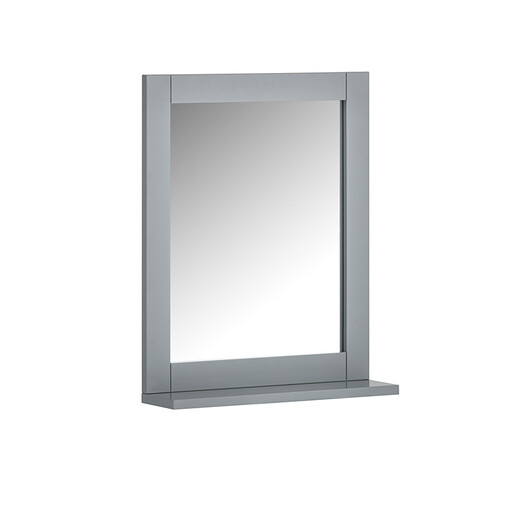
Why This Fits Their Persona: Perfect for small bathrooms where every centimetre counts. This product combines a mirror, shelf, and a small cabinet into one compact, wall-mounted unit, creating functionality without taking up any floor space.
As an explicit piece of bathroom furniture, the material (painted MDF) is designed for a humid environment and is more resistant than a standard MDF shelf. It solves a specific space problem rather than just being a generic shelf.
Material: Painted MDF. Special Feature: Combination of a mirror and shelf space. Dimensions: Compact size of 40 x 49 x 10 cm, ideal for niches or small walls.
We've compiled a complete, up-to-date list of products that fully meet these strict selection criteria and safety regulations.
1. What is the real maximum load capacity of a wall shelf? The load capacity stated by the manufacturer is a guideline determined under ideal conditions (usually on a solid concrete wall). The actual load-bearing capacity depends critically on three factors: the condition of your wall, the quality of the anchors and screws used, and correct installation. For drywall, you should always use special hollow-wall anchors and be more cautious with the load.
2. Which material is suitable for a wall shelf in the bathroom? For the humid climate of a bathroom, waterproof or at least moisture-resistant materials are essential. Shelves made of metal (aluminium, stainless steel, powder-coated steel), plastic, or glass are recommended. If you prefer a wood or MDF shelf, make sure it is sealed with a water-repellent paint or a robust veneer.
3. Can I mount a floating shelf on a drywall? Yes, mounting a floating shelf on drywall is possible but requires special care. You must use special hollow-wall anchors (e.g., toggle bolts or metal expansion anchors) that spread out behind the board to provide support. Ideally, mount the shelf where the wall's substructure (metal or wooden studs) is located. Note that the load capacity on drywall will be lower than on a solid wall. It's better to load such shelves with light decorative items rather than heavy books.