
Lieferung heute & morgen

Qualitätsgarantie

Willkommens-Angebote freischalten: KOSTENLOSE Lieferung | Bis zu 80 % RABATT | Kostenlose 30-Tage-JoyPlus-Testphase
App herunterladen
A wall shelf is more than just a storage surface. It creates order, utilises vertical space, and adds a decorative touch. But the sheer number of options can be overwhelming. Many models overpromise and underdeliver, leading to frustration instead of satisfaction. As your Joybuy Product Recommendation Officer, I'll help you identify the critical features and navigate the common pitfalls of purchasing a wall shelf.
Before you choose a model, you should be aware of the most common problems, which often only become apparent after installation.
To avoid a bad purchase, focus on three objective parameters that determine durability and functionality.
The material determines the shelf's robustness and where it can be used.
The sturdiest bracket is useless on the wrong type of wall. Before buying, check the composition of your walls (concrete, brick, drywall).
Define the shelf's purpose. A purely decorative wall shelf has different requirements than a kitchen wall shelf intended to hold spices, oils, and cookbooks. Pay attention to the shelf depth: at least 20 cm is recommended for books, while 15 cm is often sufficient for purely decorative items.
Here are a few models tailored to specific user profiles that meet the criteria mentioned above.
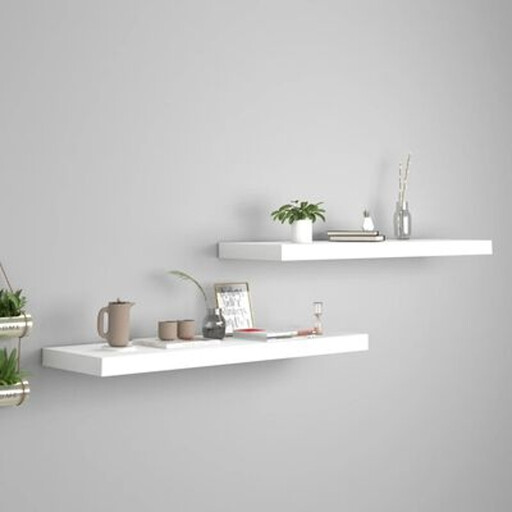
Why This Fits Their Persona: Ideal for anyone seeking a clean, modern aesthetic without a large investment. Perfect for a first apartment or for decorating empty walls with lightweight decorative objects, pictures, or small plants.
This product avoids the trap of an unclear load capacity by stating a realistic 10 kg capacity. The construction, made of MDF with an internal metal frame, is transparently and honestly declared for this price point.
Delivered as a set of two, offering excellent value for money. The invisible mounting system provides a clean, floating look that blends seamlessly into many interior design styles.
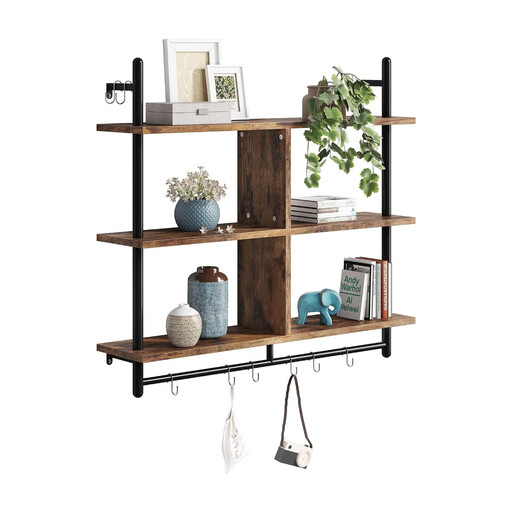
Why This Fits Their Persona: For those looking for a statement piece with character. The combination of metal pipes and wood-style planks embodies the urban industrial look and serves as a functional focal point in a living room, kitchen, or home office.
This shelf avoids the pitfall of unstable mounts with its visible and robust frame construction. The material combination of metal and engineered wood is clearly stated and is designed for stability, not a delicate appearance.
Offers generous storage space on three levels for books, plants, and decor. The open ladder structure creates an airy feel, and the visible hardware enhances its authentic workshop charm.
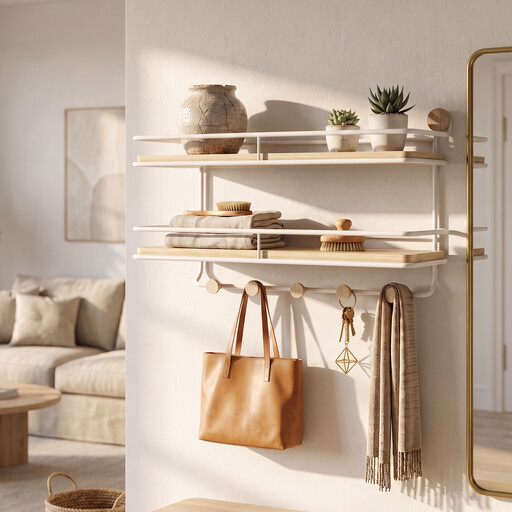
Why This Fits Their Persona: The perfect solution for anyone needing maximum function in a small space. Ideal for an entryway to organise keys, mail, scarves, and jackets, or for the kitchen as a holder for spices and tea towels.
It avoids the trap of inferior materials by using FSC-certified rubberwood and powder-coated steel. The visible brackets provide reliable stability, while the guardrail prevents items from falling off.
Combines two shelves with five hooks and a guardrail into a space-saving, all-in-one solution. The material combination of real wood and metal is both visually appealing and designed for durability.
We have compiled a complete, up-to-date list of products that fully meet these strict selection criteria and rigorous safety standards.
1. How high should a wall shelf be hung? The ideal height depends on its intended use. As a rule of thumb, a decorative shelf should be mounted at eye level (approx. 150–160 cm or 59–63 inches). Above a sofa or bed, maintain a clearance of 20–30 cm (8–12 inches) from the top of the furniture. In the kitchen or bathroom, it should be hung so that items are easily accessible.
2. Will a floating shelf hold on a drywall wall? Yes, but with limitations and the right hardware. You need special hollow-wall anchors (e.g., toggle bolts or metal expansion anchors) that expand behind the plasterboard for support. However, the load capacity is significantly lower than on a solid wall. This combination is not recommended for heavy items like a complete collection of books. Always check the anchor manufacturer's specifications.
3. What is the difference between MDF and solid wood for wall shelves?Solid wood is a natural product that is very robust and durable. It can be sanded down and refinished if needed, but it is generally heavier and more expensive. MDF (Medium-Density Fibreboard) is an engineered wood product with a very smooth and dense structure. It is dimensionally stable and more affordable. The surface is usually painted or coated with a laminate, which makes it easy to clean but difficult to repair if damaged.