
Lieferung heute & morgen

Qualitätsgarantie

Willkommens-Angebote freischalten: KOSTENLOSE Lieferung | Bis zu 80 % RABATT | Kostenlose 30-Tage-JoyPlus-Testphase
App herunterladen
A cluttered entryway, jackets draped over chairs, and keys that constantly go missing—a wall shelf with hooks promises a simple and stylish solution. It combines storage space with hanging options, creating order in a compact footprint. However, the market is flooded with products whose quality only becomes apparent after purchase. Many buyers are frustrated by sagging shelves, bent hooks, or mounting hardware that is unsuitable for standard walls.
As your Joybuy Product Recommendation Officer, I'm here to help you identify the common pitfalls. This guide will show you the objective criteria that matter, so you can find a durable and functional solution for your home.
Before you make a decision, you should be aware of the weaknesses that often only surface during daily use.
To avoid a bad buy, focus on three verifiable features.
The choice of material is crucial for the longevity and stability of your shelf.
A white wooden wall shelf can be made from either lacquered solid wood or coated MDF boards. The quality of the surface seal is critical to prevent wear and moisture damage.
The specified maximum load capacity is only half the story. Stability largely depends on the wall condition and the included mounting hardware.
A good entryway shelf needs to do more than just look good.
Here are some products that are suitable for different needs based on objective features.
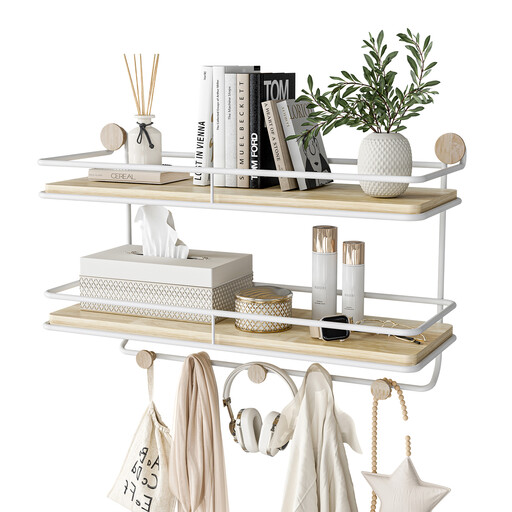
Why This Fits Their Persona: Ideal for users seeking an all-in-one solution for their hallway. The combination of two shelves and five hooks provides space for jackets, bags, keys, and decor without looking cluttered.
The shelf is made of FSC-certified solid rubberwood and powder-coated steel. This combination of materials prevents the swelling of particleboard and the bending of hooks.
Two shelf levels with a protective rail that prevents items from falling off. The load capacity is rated by the manufacturer at up to 20 kg (44 lbs).
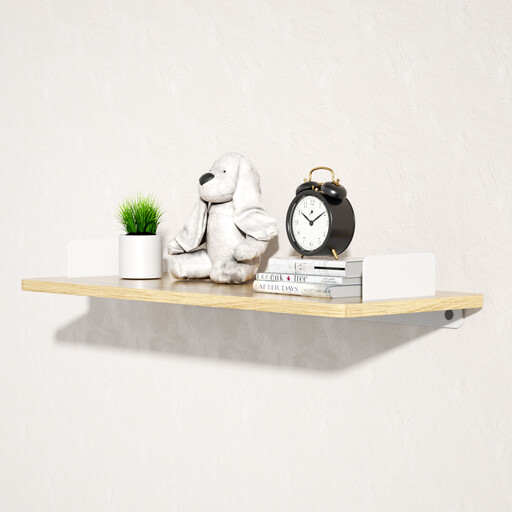
Why This Fits Their Persona: For users who prioritise aesthetics. This shelf is an alternative when hooks are not needed, but high-quality wall organisation is desired. It is suitable for displaying books, plants, or pictures in the living room or office.
The shelf is crafted from FSC-certified solid wood (rubberwood) and the brackets from an aluminium alloy. This ensures stability and a premium feel that goes beyond a simple "wood-look."
The minimalist design has won the Muse Design Award and the French Design Award. According to the manufacturer, the materials are water- and rust-resistant.
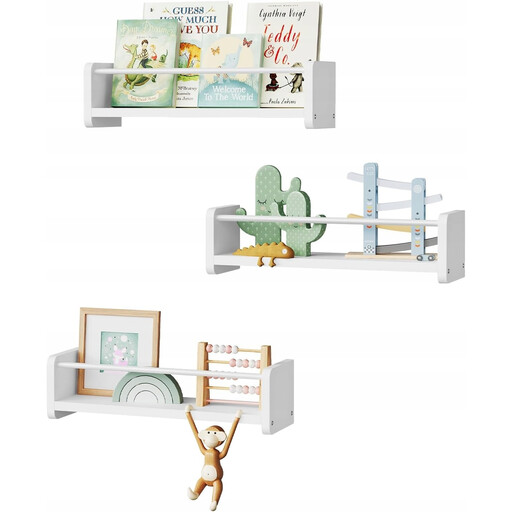
Why This Fits Their Persona: This set of 3 is ideal for small rooms or alcoves. The shelves can be arranged flexibly to make the most of the available space. The metal rod can also be used with S-hooks (sold separately) to hang light items like keys or scarves.
The MDF board construction is reinforced by a metal rod, which increases stability and prevents sagging. The flexible installation bypasses the problem of a rigid, impractical design.
Two mounting options (rod on top or bottom) allow for customisation based on use. The set offers good value for money for flexible storage solutions.
If you need a different type of wall organisation, we have compiled a list of products that also meet strict selection criteria.
1. How do you securely mount a wall shelf with hooks to the wall? Safety depends on the wall type. For concrete or brick walls, use the included anchors and screws. For drywall (plasterboard), special hollow-wall anchors are essential to ensure sufficient load capacity. Use a spirit level to align the shelf correctly and tighten the screws firmly but not excessively to avoid damaging the material.
2. What are the most durable materials for a wooden coat rack shelf? Solid wood such as oak, acacia, or rubberwood is the most durable, as it is robust and can withstand moisture with proper care (lacquer or oil). High-quality, thicker MDF boards (Class E1) with a durable melamine or lacquer coating are a good and more price-stable alternative. Avoid uncoated or thin particleboard, especially in an entryway.
3. How much weight can a floating shelf with a hook rail support? The load capacity varies greatly depending on the model, material, and especially the wall mounting. Manufacturer specifications (e.g., 5 kg to 20 kg) usually refer to an optimal installation on a solid wall. As a rule of thumb, distribute the weight evenly and hang the heaviest items (e.g., winter coats) as close to the mounting points as possible. For safety reasons, do not exceed the specified maximum load.