
Lieferung heute & morgen

Qualitätsgarantie

Willkommens-Angebote freischalten: KOSTENLOSE Lieferung | Bis zu 80 % RABATT | Kostenlose 30-Tage-JoyPlus-Testphase
App herunterladen
Wall storage creates extra space without taking up floor space. Whether you need a wall shelf for the living room, a row of hooks for the hallway, a spice rack for the kitchen or a mirrored bathroom cabinet, the right solution depends largely on your wall type, the weight it needs to hold and how it is fitted.
Many disappointing purchases, however, are caused not by the design but by unclear product information. Check these three common pitfalls before you buy:
First, think about how much weight you actually need to store. Keys, towels or kitchen utensils are much lighter than books, jars of food or winter coats.
Look out for the following information:
A wall organiser with several hooks is not automatically suitable for heavy bags. On plasterboard walls, you’ll need suitable cavity wall plugs or to fix the product to supporting studs. When fitting to tiled walls, it’s best to drill into the grout or use a fixing system designed for the surface.
In bathrooms and kitchens, moisture, steam and cleaning products are important considerations. Stainless steel, aluminium or coated metal may be suitable for these rooms. Even so, don’t assume that a product described as ‘rust-resistant’ is completely immune to damage.
Wood-based materials and solid wood are also suitable for living spaces. If the surface is painted, check whether it can be wiped clean with a damp cloth. A kitchen shelf above the hob should not be fitted too close to heat sources or splashing water.
Measure the available wall space before placing your order. Consider more than just the width and height. Check:
A row of hooks in the hallway should not stick out into the walkway. A kitchen roll holder needs to be positioned so you can change the roll easily. For rented homes, drill-free fitting may be a good option, provided the surface and the weight it needs to hold are suitable.
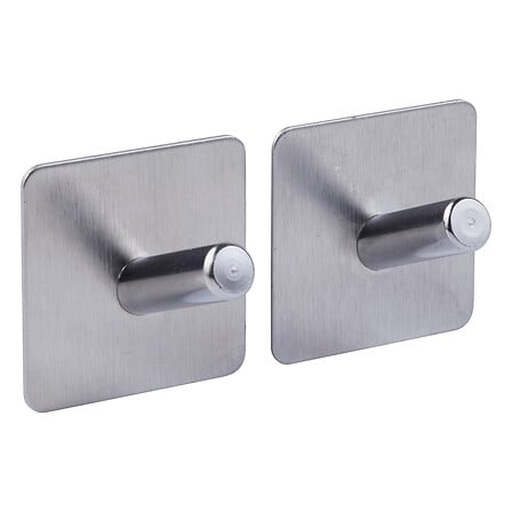
Why this product suits this profile: These compact wall hooks are ideal for keys, towels and small accessories in the kitchen, bathroom or office. According to the product information, they can be fitted to smooth surfaces using 3M adhesive, without drilling.
The load capacity is clearly stated as up to 1.5 kg per hook, making it easier to check that the intended use is within the stated limit.
Set of two hooks; steel and stainless steel; dimensions of 4.5 × 3.5 × 4.5 cm.
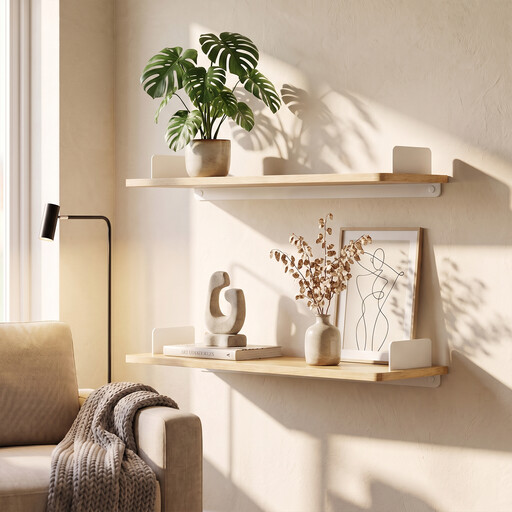
Why this product suits this profile: This wall shelf combines a lacquered rubberwood surface with aluminium brackets. It’s suitable for books, plants, decorations or bathroom essentials.
Fitting involves drilling holes and using wall anchors and screws. This makes it easier to plan for heavier loads than with an adhesive solution, but you’ll need a suitable wall.
Stated load capacity of up to 20 kg; FSC-certified rubberwood according to the product description; water-resistant lacquer finish.
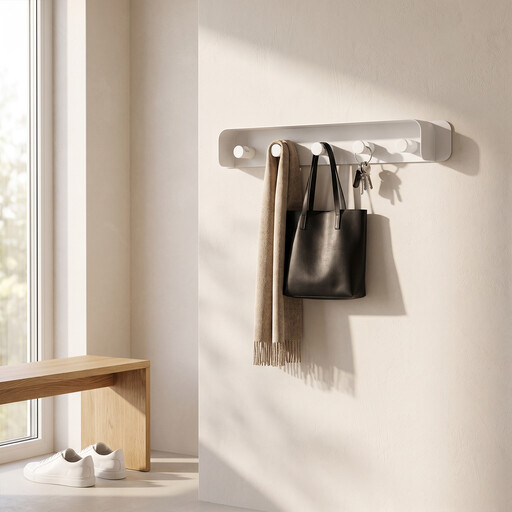
Why this product suits this profile: This coat rack has five hooks and an additional shelf. Designed for hallways, bedrooms, bathrooms or offices, it has room for coats, bags, towels and small items.
The product information states a maximum load of 25 kg and also recommends using suitable wall anchors. Make sure the fixings are appropriate for your wall type.
Five grooved hooks; aluminium construction; integrated shelf; rubber pads on the back to protect the wall.
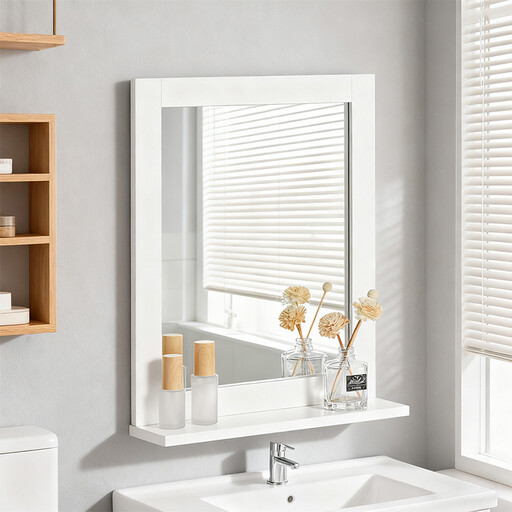
Why this product suits this profile: This mirrored bathroom cabinet combines a wall shelf with concealed storage. It’s ideal for dental care products, cosmetics or small decorations.
Its compact dimensions of 40 × 49 × 10 cm and stated load capacity of 2 kg make it easier to plan for smaller spaces.
MDF construction; mirror; can be fitted horizontally or vertically; fixings and instructions included.
We’ve put together a complete, regularly updated list of products that meet these strict selection criteria and the safety regulations in force in the EU.
When fitting a product to the wall, don’t assume that the screws and wall plugs supplied will be suitable for every wall. Check the wall’s material and condition, and choose appropriate fixings if needed. Once fitted, check regularly that the screws are still secure.
For drill-free fitting, follow these steps:
Metal and wooden surfaces can usually be cleaned with a soft, dry or slightly damp cloth. Scouring products and harsh cleaners may damage the finish. In the kitchen and bathroom, don’t leave moisture sitting on the surface for long periods.
For lightweight items, wall hooks or small organisers with adhesive fittings may be an option. Check that the surface is smooth, the load stays within the stated limit and the product can be removed without leaving residue. Before fitting, consider your tenancy agreement and the condition of the wall. Heavier shelves usually need to be secured with screws.
That depends on the shelf, the wall material, the fixings and how the load is distributed. The lowest limit among these factors is the one that matters. Never exceed the product’s stated capacity, and try to store heavier items close to the wall brackets.
Fit the product using fixings suited to the wall, distribute the weight evenly and check the fixings regularly. In humid rooms, suitable materials and a dry, well-ventilated environment can help protect the surface.