
Lieferung heute & morgen

Qualitätsgarantie

Willkommens-Angebote freischalten: KOSTENLOSE Lieferung | Bis zu 80 % RABATT | Kostenlose 30-Tage-JoyPlus-Testphase
App herunterladen
Purchasing an electric car is a major step, but many owners face the challenge of finding the right home charging solution. Charging from a standard household socket is often slow and not designed for continuous operation. A dedicated home wallbox offers a safe, efficient, and convenient alternative.
This article serves as a guide. It explains the key criteria to consider when choosing an EV charging station and introduces various models suited for different needs and living situations—from permanently installed high-performance solutions to flexible mobile chargers.
The right charging solution depends on your individual living situation, your vehicle, and your usage habits. The following points will help you make an informed decision.
Charging power, measured in kilowatts (kW), determines how quickly your vehicle's battery charges.
Modern charging solutions offer more than just power. Smart features can enhance convenience and help save money.
Safety is the top priority. Look for models with comprehensive protection mechanisms and relevant certifications. These include protection against overcurrent, overvoltage, and overheating, as well as an integrated residual current device (e.g., Type B, which reacts to both AC and DC fault currents). An IP rating (e.g., IP65) indicates that the device is protected against dust and water, making it suitable for outdoor use.
Here, we present three different charging solutions, each designed for specific use cases.
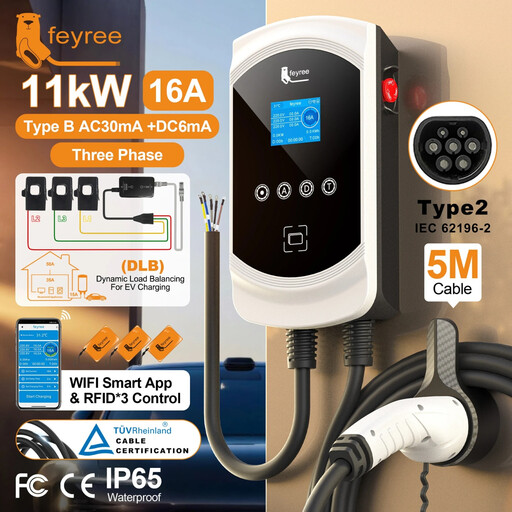
Why It Stands Out The standout feature of this model is its integrated Dynamic Load Balancing (DLB) function. The wallbox monitors the household's power consumption and automatically reduces the charging power when necessary to prevent an overload. This ensures stable and safe operation, even when other large appliances are active.
Pros
Who It's For For homeowners who want to buy a powerful and future-proof 11kW wallbox. It is especially suitable for households where other energy-intensive appliances are used alongside the EV, and where active prevention of grid overload is a priority.
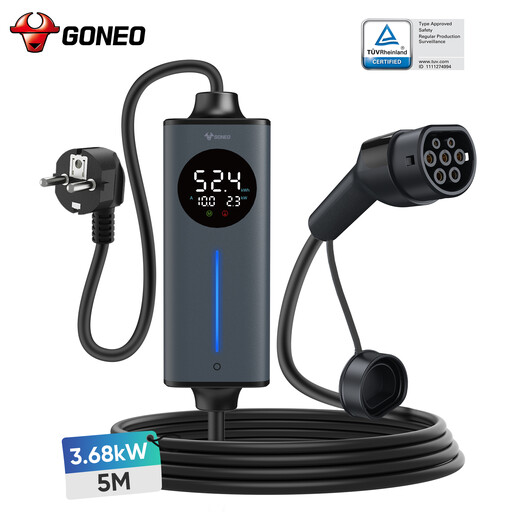
Why It Stands Out This mobile wallbox is a flexible plug-and-play solution. It requires no complex installation and can be operated from any standard household socket. This makes it a practical option for renters, for use at a second home, or as a charging solution for on the go.
Pros
Who It's For For EV drivers looking for a flexible and portable charging solution. Ideal for renters who are not permitted to install a permanent wallbox, or as a secondary charger for travel and visits to friends and family.
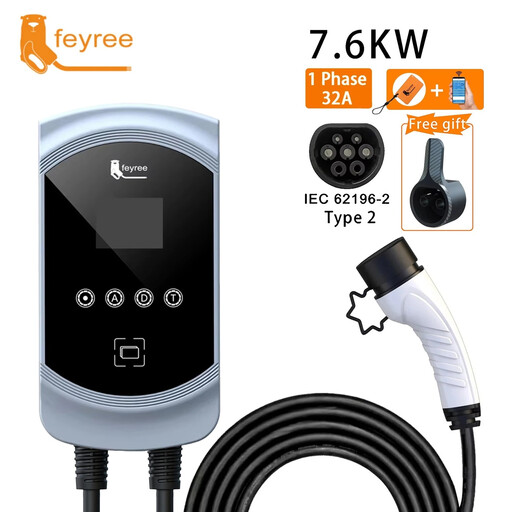
Why It Stands Out At 7.6 kW, this wallbox delivers high charging power on a single phase. It is designed for electrical installations where a three-phase connection is not possible or desired, but a high charging speed is still required. The charging current is flexibly adjustable up to 32 A.
Pros
Who It's For For users whose home connection is designed for a high single-phase load and whose vehicle can accept this charging power. The RFID function also makes it attractive for multi-family homes or semi-public car parks where access needs to be controlled.
The models presented here cover common use cases. If you haven't found the ideal solution for your specific needs, you can explore a wider selection of models and accessories in our Charge Controllers category.
For most private use cases, an 11 kW wallbox is an excellent choice. It allows the battery of a typical electric car to be fully charged overnight (in about 6–8 hours). This charging power represents a balanced compromise between charging speed and the demands on the home's electrical installation.
No. In many regions, a permanently installed EV charging station (like 11 kW or 7.6 kW models) must be installed by a qualified electrician. Furthermore, wallboxes exceeding a certain power level (e.g., 11 kW) often require a permit from the grid operator, while lower-power models may only need to be registered. An exception is mobile chargers like the Type 2 charging brick, which can be used with an existing socket without installation.
A wallbox with an app offers significant advantages in terms of convenience and cost control. You can easily start and stop charging sessions from your smartphone and monitor the charging status in real-time. The scheduling function is particularly useful: you can set your car to charge only during off-peak hours with cheaper electricity rates. You also get detailed reports on your energy consumption.