
Lieferung heute & morgen

Qualitätsgarantie

Willkommens-Angebote freischalten: KOSTENLOSE Lieferung | Bis zu 80 % RABATT | Kostenlose 30-Tage-JoyPlus-Testphase
App herunterladen
Choosing a home charging station is a major step for any electric car owner. An 11kW wallbox is often considered the most sensible choice for charging at home. But the market is crowded and filled with technical jargon that complicates the selection process. Many buyers fall into traps that lead to unnecessary costs or daily frustration. Before you make a decision, you should be aware of the most common pitfalls.
A common misconception is that more power is always better. This often leads to the purchase of an oversized 22kW wallbox, whose potential can rarely be used in a private residential setting and which also requires a special permit. Another costly mistake is opting for supposedly cheap deals that lack essential safety components like DC fault current detection. Retrofitting an expensive external protection device can unexpectedly drive up the total cost. Finally, touted "smart" features often turn out to be unreliable, with poorly programmed apps or a lack of compatibility with other systems, such as your home's photovoltaic array.
This guide will help you navigate these pitfalls and make an informed decision tailored to your actual needs.
To find a future-proof and cost-effective home charging station, you should carefully examine three core aspects. These determine not only the functionality but also the total investment and operational safety.
The charging power determines how quickly your vehicle's battery is charged. While a 22kW wallbox appears twice as fast on paper, there are crucial limitations in practice:
An 11 kW charging station thus offers the optimal balance of charging speed, simple installation, and fewer bureaucratic hurdles.
Safety is the most important aspect of a charging station. When charging electric vehicles, DC fault currents can occur, which are not detected by a standard household residual current device (RCD Type A). This poses a significant safety risk.
Therefore, protection against DC fault currents is mandatory for every wallbox. There are two approaches to this:
Therefore, explicitly check that "integrated DC fault current detection" or a "built-in RCD Type B" is listed in the product specifications.
Modern wallboxes offer much more than just charging. Intelligent features can increase convenience and reduce operating costs.
Based on the criteria mentioned, we have identified a few models that represent a suitable solution for different user profiles.
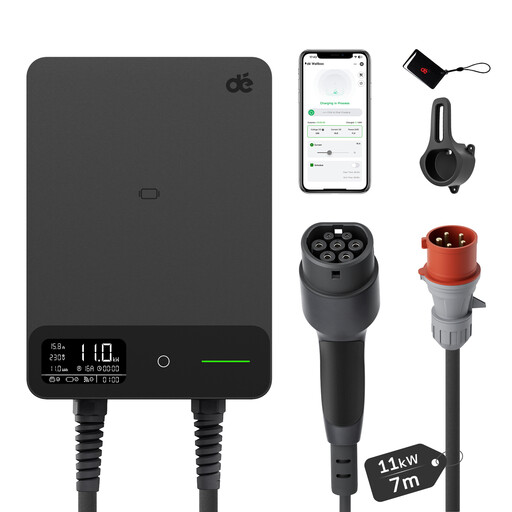
Why This Fits Their Persona: This model offers a complete feature set for straightforward home use. With 11 kW of power, app control, and RFID access, it covers all the essential functions for daily life without making you pay for unused premium features.
According to the manufacturer, the wallbox has an integrated RCD Type B (AC 30mA + DC 6mA). This avoids the expensive retrofitting of an external Type B RCD, keeping installation costs predictable.
A comprehensive safety package and basic smart functions (App/RFID) in one device. The 7.5-metre EV charging cable also offers great flexibility at the parking spot.
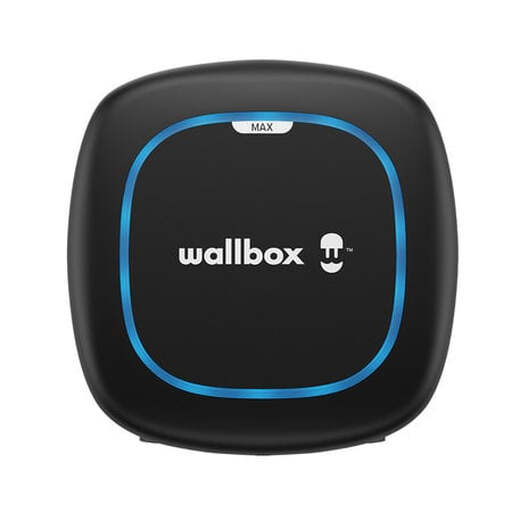
Why This Fits Their Persona: Ideal for homeowners with a PV system who want to maximise their self-consumption. This wallbox is specifically designed for integration into a smart energy management system and offers advanced load-sharing features.
This model avoids the trap of unreliable smart features. According to the manufacturer, Wallbox, the "Eco-Smart" function enables targeted PV surplus charging. The "Power Sharing Smart" feature ensures stable load management with up to 100 chargers.
Specialised software for solar integration and load sharing. Connectivity via Wi-Fi and Bluetooth, as well as the OCPP communication protocol, ensure future-proofing.
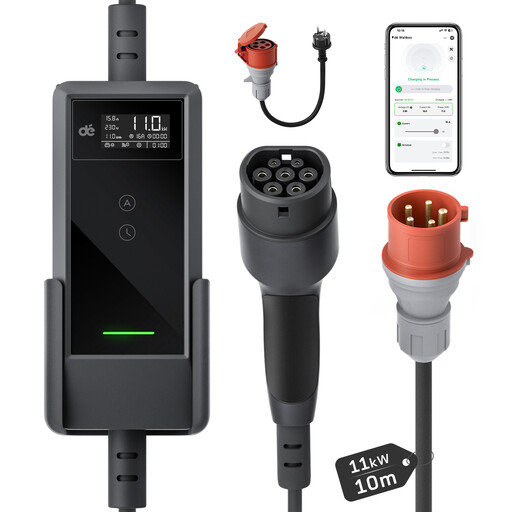
Why This Fits Their Persona: This mobile wallbox is the ideal solution for anyone not tied to a single location. It can be operated from any CEE-16A high-power socket—whether at home, at a holiday house, or at a friend's place—and delivers the full 11 kW charging power.
It bypasses the need for an expensive and permanent installation. Instead of investing in the structural work for a stationary wallbox, this device offers a flexible and powerful alternative with no installation costs.
Maximum portability with full 11 kW charging power. The app control and the 10-metre cable provide additional convenience and reach. The integrated Type 2 EV charger is compatible with all common European vehicles.
We've compiled a complete, up-to-date list of products that fully meet these strict selection criteria and German safety regulations.
No, in Germany, a wallbox with a charging capacity of up to 11 kW only needs to be reported (registered) with the responsible grid operator before commissioning. This is a formal act that is usually handled by the installing certified electrician. A permit, which can also be denied, is only required for charging stations with more than 11 kW of power.
Installation costs are highly variable and depend on the on-site conditions. Factors include the distance from the fuse box to the installation site, the need for wall penetrations, the condition of the home's electrical system, and the electrician's hourly rate. As a rule, the costs for a standard installation range between €500 and €1,500. A detailed quote from a qualified professional is essential.
No, not every wallbox supports this function. For PV surplus charging, the charging station must be able to communicate with the PV system's inverter or an external energy management system (EMS). It requires a special software function that starts, stops, or regulates the charging power based on the available solar surplus. Look for terms like "solar-optimised charging," "PV surplus charging," or corresponding modes in the app's product description.