
Lieferung heute & morgen

Qualitätsgarantie

Willkommens-Angebote freischalten: KOSTENLOSE Lieferung | Bis zu 80 % RABATT | Kostenlose 30-Tage-JoyPlus-Testphase
App herunterladen
You've decided to buy an electric car, but a crucial question remains: What's the most efficient, safe, and cost-effective way to charge it at home? Your own wallbox is the go-to solution. However, the market offers a bewildering array of models, and their marketing messages often create more confusion than clarity. As your Joybuy Product Recommendation Officer, I'll help you separate essential facts from superfluous features and navigate common cost traps.
Many buyers invest in oversized or unsuitable charging stations. Before you make a decision, you should be aware of the following three common pitfalls:
You don't need to be a tech expert to make an informed decision. Focus on three core aspects that will significantly determine the utility and total cost of your charging solution.
Charging power, measured in kilowatts (kW), determines how quickly your vehicle's battery charges. While a 22 kW wallbox charges twice as fast as an 11 kW wallbox on paper, there are important real-world limitations:
An EV charging station with 11 kW is therefore the optimal balance of charging speed, installation effort, and cost for most private users.
The choice between a fixed wallbox and a mobile charging solution depends on your living situation and usage habits.
Regardless of the type, integrated fault protection is a critical safety and cost feature. Look for the note "integrated DC fault current protection" (often specified as 6mA DC). If this is missing, an expensive external Type B residual current device (RCD) must be retrofitted by an electrician, which significantly increases the total cost.
A smart wallbox with an app offers more than just a charging history on your smartphone. The key advantages are tangible cost savings and optimised usage:
Based on the criteria mentioned, we have identified a few models that represent a suitable solution for specific user groups.

Why This Fits Their Persona: Ideal for renters or plug-in hybrid owners looking for a hassle-free charging solution without a fixed installation. The device plugs directly into a standard Schuko (domestic) socket and is ready to use out of the box. Perfect for daily charging needs on shorter trips or as a travel charger.
This mobile charger completely bypasses the trap of high installation costs. According to the manufacturer, it has integrated RCD protection (30mA AC + 6mA DC), meaning no expensive retrofitting is required.
Maximum Flexibility: Use it on any Schuko socket at home or on the go. Timer Function: Allows for scheduled charging to potentially save on costs.
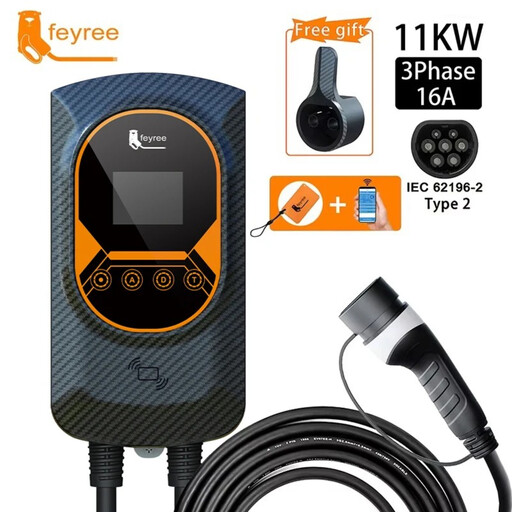
Why This Fits Their Persona: The ideal solution for homeowners seeking a reliable, fixed, and smart charging station. The 11 kW power is optimal for daily overnight charging, and the installation is straightforward (in Germany, it only requires registration, not a permit).
This model avoids the pitfall of missed savings potential. Thanks to its Wi-Fi connectivity and app control (via the Tuya Smart App), charging sessions can be scheduled to take advantage of cheaper off-peak tariffs.
Smart Cost Control: Remote control and charge scheduling via app. Comprehensive Safety Features: According to the manufacturer, it offers various protection mechanisms, including overcurrent and overvoltage protection.
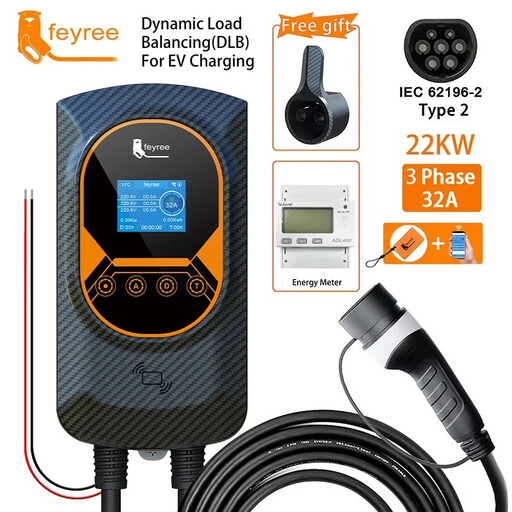
Why This Fits Their Persona: For homeowners with high electricity consumption (e.g., due to a heat pump), multiple EVs, or the desire for maximum charging power. This wallbox is designed for future-proofing and intelligent energy use.
The dynamic load balancing (DLB) feature is the direct answer to the power trap. It prevents an overload of the home's connection by intelligently adjusting the charging power based on total consumption. This can help avoid expensive grid connection upgrades.
Dynamic Load Management: Optimises charging power and protects the home's electrical connection. High Charging Power: Up to 22 kW (subject to permit and vehicle compatibility) for rapid charging.
We have compiled a complete, up-to-date list of products that fully meet these strict selection criteria and German safety regulations.
For most private users, an 11 kW wallbox is the more sensible choice. It is more than sufficient for overnight charging, only needs to be registered (not approved) with the grid operator in Germany, and is fully compatible with most EVs. A 22 kW wallbox is only worth considering if your vehicle can handle this charging speed, you regularly need to charge very quickly, and approval from your grid operator is guaranteed.
An electric car charges using direct current (DC). In the event of a fault, small DC fault currents can occur that a standard Type A RCD (Residual Current Device) in the fuse box cannot detect. To ensure safe charging, protection against DC fault currents is therefore mandatory. A wallbox with integrated 6mA DC fault current protection meets this requirement. If this feature is missing, a separate, expensive Type B RCD (costing approx. €300–€500) must be installed by an electrician. The integrated solution therefore saves significant installation costs.
Yes, installing a wallbox is also possible for renters. Since the reform of Germany's Condominium Act (Wohnungseigentumsgesetz - WEG) in December 2020, tenants and apartment owners generally have a right to install a charging station. However, you must obtain the consent of your landlord or the homeowners' association. A mobile wallbox that connects to an existing CEE socket is often a straightforward alternative, as it requires no structural modifications.