
Lieferung heute & morgen

Qualitätsgarantie

Willkommens-Angebote freischalten: KOSTENLOSE Lieferung | Bis zu 80 % RABATT | Kostenlose 30-Tage-JoyPlus-Testphase
App herunterladen
Charging an electric car at home is a crucial factor for convenience and efficiency. Instead of relying on public charging stations, a private charging station allows you to fully charge your vehicle overnight. However, the market offers a wide variety of options, from permanently installed units to mobile solutions. This article serves as a guide to help you understand how the different systems work and make an informed decision for your home and vehicle.
The choice of the right charging system depends on your living situation, your vehicle, and your usage habits. You should consider three key aspects.
The most fundamental decision is between a permanently installed wallbox and a mobile charger.
Modern charging stations offer more than just charging. Smart features can help reduce costs and optimise the charging process.
The charging power determines how quickly your vehicle's battery is charged. In Germany, the 11kW wallbox has established itself as the standard for private use. It offers a good balance between charging speed and grid compatibility and generally does not require a permit (it only needs to be registered with the grid operator).
In Europe, the standard vehicle connection is a Type 2 connector. Almost all current electric cars and plug-in hybrids on the European market use this standard, ensuring the compatibility of charging stations. Also, ensure the charging cable is long enough to comfortably reach your vehicle.
Based on the criteria mentioned, we have compiled a selection of products that cover different requirements.
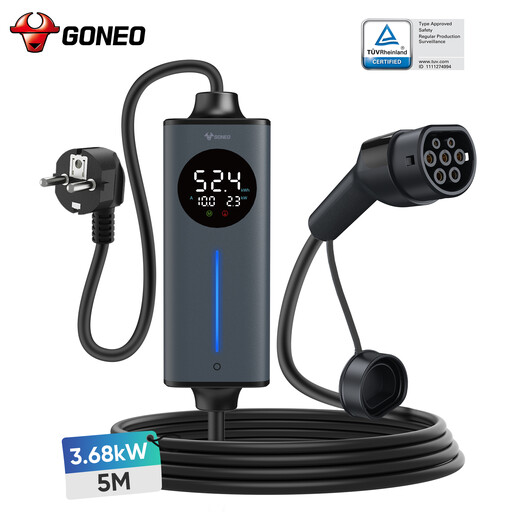
Why it stands out: This mobile charger offers maximum flexibility with no installation required. It can be connected directly to a standard household socket and is therefore ready to use immediately – at home, on holiday, or at a friend's house.
Advantages:
Who is it for? Ideal for renters, second-home owners, or as a secondary charger for on the go. It is a straightforward and cost-effective solution for anyone who cannot or does not want to install a permanent wallbox.
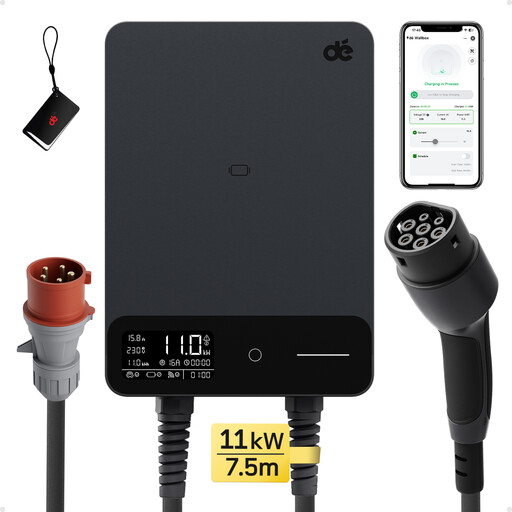
Why it stands out: The dé Wallbox combines solid 11 kW charging power with modern control functions at an attractive price-performance ratio. It is a fully-featured solution for a smart EV charger for your home.
Advantages:
Who is it for? Perfect for homeowners looking for a powerful, permanently installed wallbox with smart features who also value a good price-performance ratio.

Why it stands out: The Pulsar Max is a highly advanced charging station specifically designed for integration with a PV system. Its Eco-Smart function and dynamic load management make it a future-proof choice.
Advantages:
Who is it for? The ideal solution for tech-savvy homeowners with a photovoltaic system who want to maximise their self-consumption. It is also well-suited for households with multiple electric vehicles or for use in small businesses, thanks to its load management capabilities.
If these recommendations do not yet include the perfect solution for your specific needs, there are many other models with different features available. Every home and vehicle situation is unique, and the right choice depends on your priorities.
Discover our full range of Type 2 chargers
For most private use cases, an 11 kW wallbox is perfectly sufficient. It can fully charge a standard EV overnight. While a 22 kW wallbox charges faster, many vehicles cannot accept this high power for AC charging. Furthermore, the installation of a 22 kW box requires a permit from the grid operator, which can involve additional effort and potential costs for a grid upgrade.
No. The installation of a permanently installed wallbox involves working on high-voltage lines (400V). For safety and warranty reasons, it must be carried out by a qualified electrician. This is the only way to ensure safe operation and compliance with all standards. The exception is mobile chargers, which are designed to be plugged into existing sockets.
In Europe, the Type 2 connector (according to the IEC 62196-2 standard) has become the standard for AC charging. Almost all electric cars and plug-in hybrids sold in Germany are equipped with a Type 2 charging socket. Therefore, the wallboxes and chargers presented here with a Type 2 charging cable are compatible with almost all common vehicles.