
Lieferung heute & morgen

Qualitätsgarantie

Willkommens-Angebote freischalten: KOSTENLOSE Lieferung | Bis zu 80 % RABATT | Kostenlose 30-Tage-JoyPlus-Testphase
App herunterladen
You've decided on an electric car, but now the next question arises: What's the most efficient, safe, and cost-effective way to charge it at home? The market is flooded with charging stations, and technical terms like "load balancing" or "phases" can make the decision challenging. This guide serves as a point of reference, presenting objective criteria to help you select the perfect 11kW wallbox for your needs.
The right wallbox for you depends on your specific living situation, your vehicle, and your daily usage habits. There are three key aspects to consider.
Charging power, measured in kilowatts (kW), determines how quickly your vehicle's battery will charge.
A smart wallbox offers significant advantages in terms of convenience and efficiency.
In Europe, the Type 2 EV charger plug (IEC 62196-2) has become the established standard. Ensure the wallbox is equipped with this plug type to guarantee compatibility with most vehicles. Additionally, a high protection rating (e.g., IP66) is important if the home charging station will be installed outdoors (in a carport or on an unsheltered exterior wall). This rating certifies protection against dust and powerful water jets.
Based on the criteria above, we have curated a selection of models that cater to different needs.
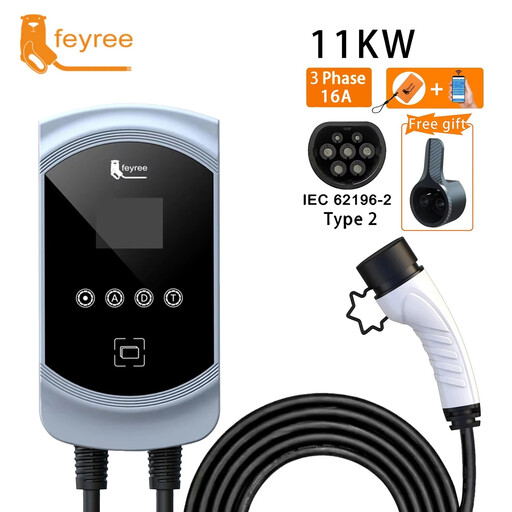
Why it stands out: This model combines the ideal charging power of 11 kW for most households with the benefits of smart control. Integration with the Tuya Smart app allows for complete remote management and scheduling of charging sessions.
Advantages:
Who is it for?: For EV owners looking for an efficient and smart go-to solution for overnight charging who value the convenience of app-based control.
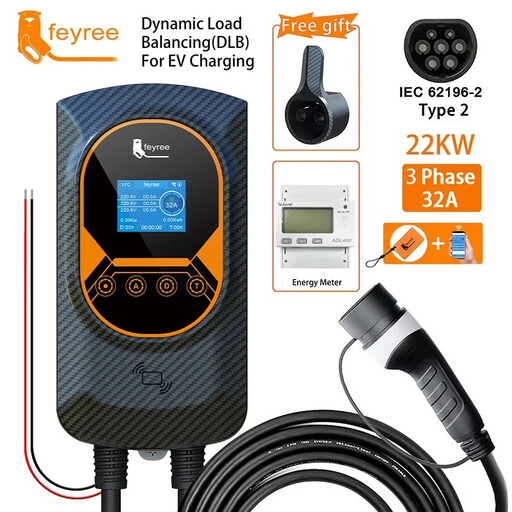
Why it stands out: This wallbox delivers high charging power of up to 22 kW and integrates Dynamic Load Balancing (DLB). It is designed to intelligently manage charging power and prevent overloading your home's electrical system.
Advantages:
Who is it for?: For households with high electricity demand, owners of multiple electric vehicles, or users who want the fastest possible charging speed and have a home electrical connection designed to handle it.
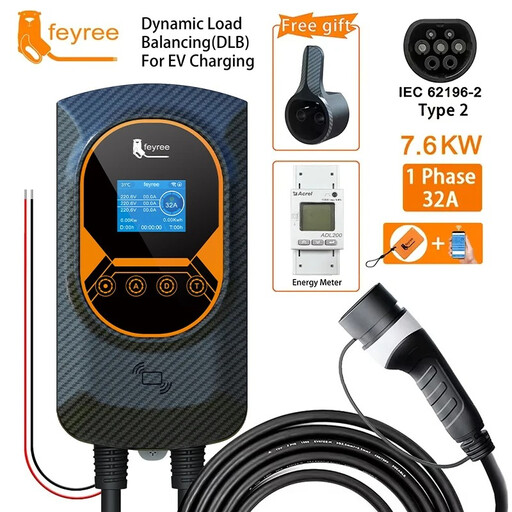
Why it stands out: This single-phase model is a solution for buildings where a three-phase connection is not available. Despite its single-phase design, it offers an advanced energy optimisation feature with Dynamic Load Balancing.
Advantages:
Who is it for?: For homeowners with a single-phase electrical connection who don't want to miss out on the benefits of smart load management.
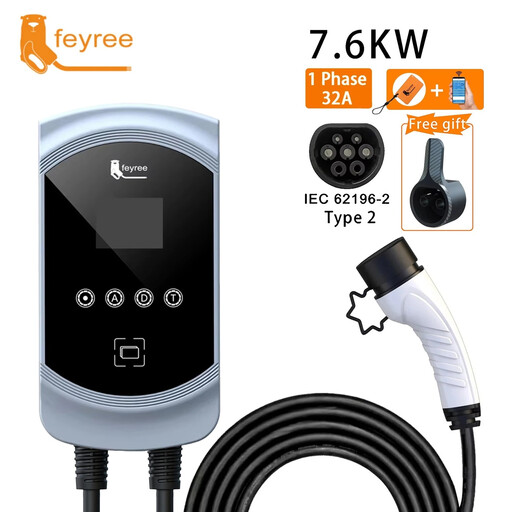
Why it stands out: A straightforward and smart charging station for single-phase connections. It focuses on essential smart features like app control and charge scheduling, making it a practical choice for many users.
Advantages:
Who is it for?: Ideal for owners of plug-in hybrids or electric cars with smaller batteries who are looking for a reliable, app-controlled home charging station for their single-phase connection.
The models presented here cover common user profiles. If you haven't found the right solution for your specific situation, you can explore more options in our product range.
Discover Our Full Range of Electric Car Parts
An 11 kW wallbox charges at a power of 11 kilowatts and, in Germany, only requires notification to the grid operator. It is sufficient for overnight charging. A 22 kW wallbox charges twice as fast but requires approval from the grid operator and a home electrical connection designed to handle the higher load.
Yes. Charging stations for electric vehicles must be reported to the grid operator. Wallboxes with a charging capacity up to and including 11 kW are subject to notification. Wallboxes with a charging capacity of more than 11 kW (e.g., 22 kW) are subject to approval. In all cases, the installation must be carried out by a qualified electrician.
A wallbox with dynamic load balancing continuously measures the total power consumption in the household. When other appliances like a stove or a heat pump are turned on, the wallbox automatically reduces the charging power to the electric car. This prevents the home's electrical connection from being overloaded. As soon as more power becomes available, the wallbox increases the charging rate.