
Lieferung heute & morgen

Qualitätsgarantie

Willkommens-Angebote freischalten: KOSTENLOSE Lieferung | Bis zu 80 % RABATT | Kostenlose 30-Tage-JoyPlus-Testphase
App herunterladen
Purchasing an electric vehicle is the first step towards a new era of mobility. The second, equally important step is choosing the right charging infrastructure. Given the multitude of options—from a permanently installed home charging station to a portable EV charger—the decision can be complex. This article serves as an objective guide to simplify your selection process. We will introduce various charging concepts and present a selection of products that cater to different needs.
As your Joybuy Product Recommendation Officer, I have analysed the available information to provide you with a factual basis for your decision.
Before you decide on a model, a few fundamental aspects should be clarified. Your living situation, vehicle type, and daily driving habits will determine which solution is most practical for you.
The first fundamental decision concerns the type of charging station.
The speed at which your vehicle charges depends significantly on the power connection.
Modern charging solutions often offer smart features that make the daily charging routine more convenient and secure.
Based on the criteria mentioned above, we have compiled a selection of products that cover various use cases—from flexible portable solutions to permanently installed home charging stations.
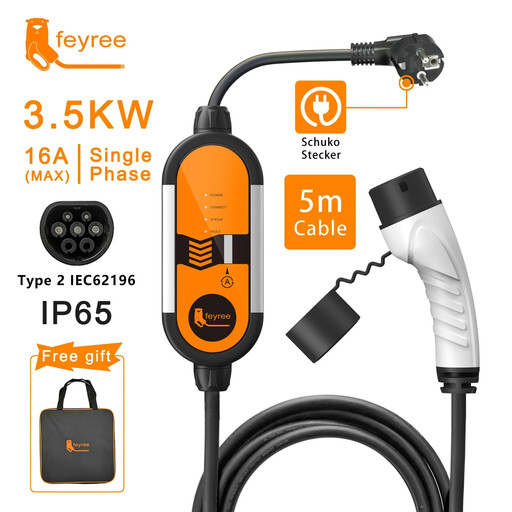
Why it stands out: This portable charger is an extremely flexible and straightforward solution for charging at any standard household socket. Its key feature is the adjustable current (8A, 10A, 13A, 16A), which allows the charging power to be adapted to the capacity of the respective electrical installation. The OLED display shows the current charging status at all times.
Pros:
Who is it for? This device is ideal for owners of plug-in hybrids or EVs with smaller batteries. It serves perfectly as a secondary or emergency charger for on the go, or for renters who rely on an existing Schuko socket.

Why it stands out: This portable wallbox combines the flexibility of a portable device with the performance of a fixed station. With its CEE 16A plug, it achieves a charging power of up to 11 kW, which can reduce charging time by a factor of three compared to a Schuko socket. Control via an app makes it a smart and versatile charging solution.
Pros:
Who is it for? Perfect for EV drivers who need a fast charging solution but cannot or do not want to install a fixed wallbox. It is the optimal choice for anyone with regular access to a CEE socket who doesn't want to miss out on the benefits of a wallbox with an app, even when on the move.
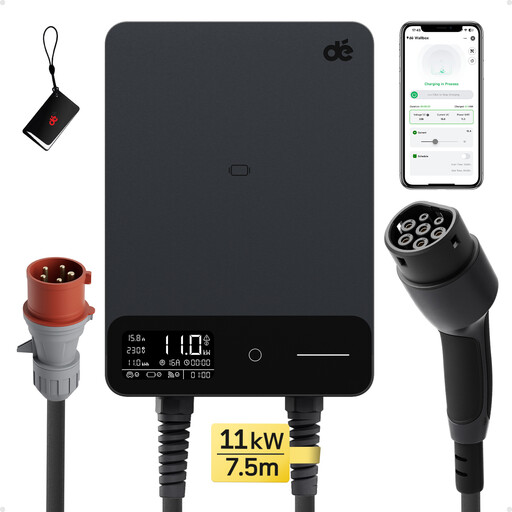
Why it stands out: This installable 11kW wallbox is a comprehensive solution for home charging. It combines high charging power with intelligent control and security features. A particular highlight is the integrated Type B RCD, which protects against both AC and DC fault currents and can save costs during installation. The combination of app control and RFID access control offers maximum convenience and security.
Pros:
Who is it for? This wallbox is the top choice for homeowners looking for a permanent, powerful, and secure home charging station. It is ideal for households with one or more electric vehicles and for users who value smart features and controlled access.
Choosing the right charging solution is a highly individual decision. If the models presented here do not fully meet your requirements, there are numerous other options to discover. From different cable lengths to specific functionalities—the market offers a wide range.
Discover our entire range of charging solutions and find the perfect accessory for your vehicle.
Most modern battery electric vehicles (BEVs) can charge with 11 kW of alternating current (AC). However, some older models or certain plug-in hybrids (PHEVs) have an on-board charger that is limited to a lower power level (e.g., 3.7 kW or 7.4 kW). An 11 kW wallbox will then charge these vehicles only at their maximum possible speed. Nevertheless, an 11kW wallbox is a future-proof investment, as it will be compatible with future vehicles.
In Germany, charging equipment up to and including 11 kW must be registered with the responsible grid operator before commissioning. This is a simple notification process, which the installing electrician usually handles for you. Charging equipment with a power rating of more than 11 kW requires a permit.
No. In Germany, the installation of a hardwired wallbox is work on the home's electrical system and, for safety and warranty reasons, may only be carried out by a qualified electrician. Portable chargers that are plugged into an existing and correctly fused socket (Schuko or CEE) do not require professional installation.