
Lieferung heute & morgen

Qualitätsgarantie

Willkommens-Angebote freischalten: KOSTENLOSE Lieferung | Bis zu 80 % RABATT | Kostenlose 30-Tage-JoyPlus-Testphase
App herunterladen
Wall hooks create extra storage space without taking up floor space or drawer capacity. They are suitable for jackets in the hallway, towels in the bathroom, kitchen utensils or bags in the bedroom. However, not every hook is suitable for every wall or weight. If you focus only on a high load capacity or a low-priced pack size, you may end up buying a product that comes loose, damages the surface or offers too little space for everyday use.
Load-capacity specifications generally apply only under certain conditions. With a wall hook fixed using screws, the load-bearing capacity depends on the wall plugs, screws, wall material and correct installation. With a no-drill adhesive hook, the surface is the key factor. Wallpaper, textured plaster, flaky paint or damp tiles can significantly affect adhesion.
Self-adhesive hooks can often be fitted without a drill. However, this does not automatically mean that every wall will remain undamaged when they are removed. Check the manufacturer’s instructions before buying. Some adhesive solutions are specifically not suitable for delicate, rough or freshly painted surfaces.
A wall hook set containing six or eight pieces is practical when several hanging points are needed. For individual heavy jackets, however, a screw-mounted metal hook may be more suitable than several small adhesive hooks. What matters is whether the number, spacing and shape are right for the intended room.
For rented homes, no-drill adhesive hooks are worth considering because they do not leave holes. The mounting surface should be clean, dry and as smooth as possible. Many adhesive systems require you to wait before placing the first load on the hook. For example, with the JORDAN&JUDY model, it is recommended that the hooks are not heavily loaded for 24 hours after installation.
Over-door hooks simply hang over a door or cupboard edge. Before fitting one, check that the door can still close fully and that the hook thickness matches the door rebate. For consistently heavy loads, wall hooks with screws and suitable wall plugs are a better option.
Stainless steel hooks are worth considering for bathrooms and kitchens, as stainless steel can offer rust resistance. The specific finish and care instructions are still important, however. Metal hooks made from aluminium or steel differ in weight, shape and load capacity. In damp areas, buyers should look for rust resistance specified by the manufacturer.
Rounded edges are useful for clothing, as they are less likely to snag fabrics. With towel hooks, the distance from the wall is also important: too little clearance can make hanging towels difficult, while a double hook can hold several textiles.
The maximum load capacity should not be pushed to its limit. A winter coat, a full bag or a wet towel can be significantly heavier than an empty clothes hanger. With an adhesive hook for lightweight items, how the load is distributed is also important.
Practical guidance:
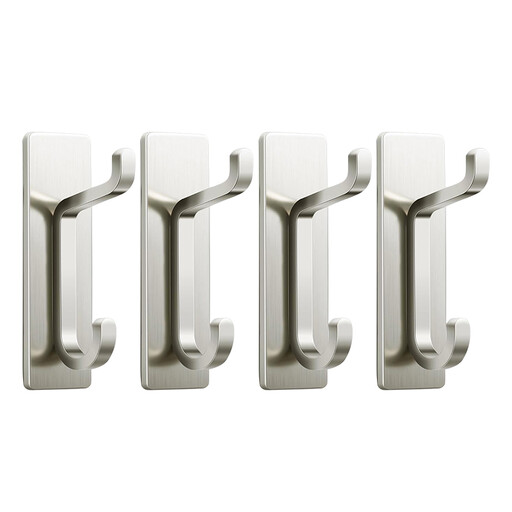
Why this product suits this profile: The 4-piece set is ideal for households wanting to create several lightweight hanging points without drilling, for example in the hallway or bathroom.
The stainless steel construction and adhesive mounting make the material and fixing method clear before purchase. The surface must still be suitable, clean and dry.
Four hooks, stainless steel construction and installation without drilling; also designed for use on doors.
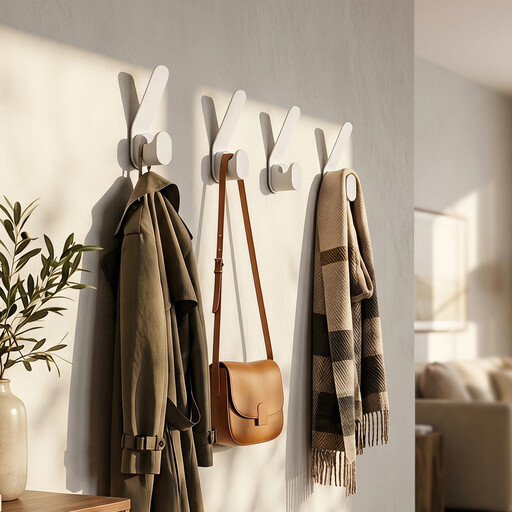
Why this product suits this profile: The screw-mounted set is designed for hallways, bedrooms or bathrooms where secure installation and several hanging points are required.
Screw and wall-anchor installation reduces reliance on adhesive surfaces. The fixings must be suitable for the wall material and checked regularly.
Eight double hooks made from aluminium, rounded edges and a manufacturer-stated load capacity of up to 11 lb per hook.
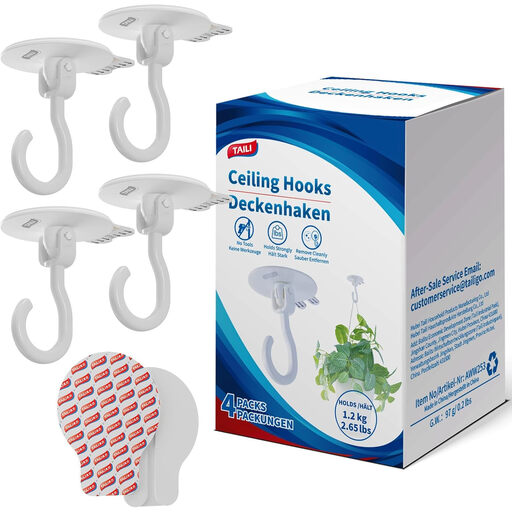
Why this product suits this profile: This design is suitable for lightweight decorations, fairy lights, small plants or kitchen utensils on smooth walls and ceilings.
The manufacturer limits the load to 2.6 lb per hook and explicitly lists unsuitable surfaces such as wallpaper and rough or textured surfaces.
Four hooks, a rotating design and use on walls or ceilings; the adhesive strips are designed for low-residue removal.
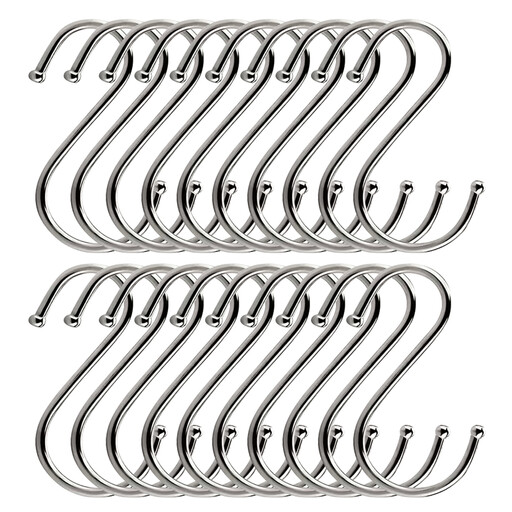
Why this product suits this profile: S-hooks can be hung from rails, bars or edges, making them suitable for flexible organisation in the kitchen, bathroom, cellar or garden.
The pack contains 20 pieces and requires no permanent adhesive or screw mounting. This means storage points can be rearranged whenever needed.
75 mm S-shape, metal construction and use on existing bars or rails; suitable for lightweight to medium-weight items.
We have put together a complete, regularly updated list of products that fully meet these strict selection criteria and the safety regulations applicable in the EU.
For adhesive hooks, first clean the surface with a suitable low-residue cloth and allow it to dry completely. Then press the hook firmly into place as instructed. Do not apply the first load until the stated waiting time has elapsed.
Screw hooks require you to mark the drilling points, use suitable wall plugs and check the screws. In rented homes, you may need your landlord’s permission, particularly if several holes are required. Metal hooks and stainless steel hooks can usually be cleaned with a soft, damp cloth. Aggressive cleaning products may damage the coating.
No-drill adhesive hooks are one possible solution for smooth, load-bearing surfaces. Before installation, check the manufacturer’s instructions regarding wallpaper, paint and removal. For heavy items, screw-mounted fixings are often technically more robust, but they may leave drill holes.
Their lifespan depends on the surface, humidity, temperature, load and quality of the adhesive strip. A hook should not be kept permanently at its stated maximum load. If it becomes loose or shows visible changes, remove the load and replace it.
For bathroom towels, rust-resistant metal or stainless steel hooks are worth considering. For heavy jackets and bags, securely screw-mounted coat hooks with suitable wall plugs are an obvious choice. The load capacity should always match the actual load and the wall material.