
Lieferung heute & morgen

Qualitätsgarantie

Willkommens-Angebote freischalten: KOSTENLOSE Lieferung | Bis zu 80 % RABATT | Kostenlose 30-Tage-JoyPlus-Testphase
App herunterladen
A wall-mounted clothes rail can give you extra storage without taking up floor space like a traditional clothes rack. It’s a practical solution, particularly in small flats, narrow hallways or bedrooms with limited space. Before you buy, though, there are several details to check. Product photos often show a neatly furnished home, but tell you little about the type of wall, the rail’s actual weight capacity or what’s included.
A stated weight capacity of “50 kg” doesn’t automatically apply to every type of wall. Concrete, solid brick, plasterboard and timber structures all require different wall plugs and screws. For some products, the maximum load applies specifically to a solid wall. If you fit a wall-mounted clothes rail to an unsuitable or unstable surface, its weight capacity may be significantly lower.
Before you buy, check:
A 100 cm clothes rail needs more than just a metre of clear wall space. You’ll also need to allow for the depth of the brackets. With a depth of around 26 to 30 cm, make sure the rail won’t obstruct doors, walkways, drawers or nearby furniture.
A 100 cm clothes rail may be enough for a narrow hallway. If you want to hang several jackets, shirts or pairs of trousers, you could consider a 114 cm clothes rail. It’s not just the length of the metal clothes rail that matters: you’ll also need to consider how far it sits from the wall. If clothes hang too close to the wall, they’re more likely to brush against it or crease.
“Easy to assemble” doesn’t always mean that all the tools or suitable wall plugs you need are included. Look for clear assembly instructions, the number of brackets and the type of fixings required. An industrial-style clothes rail often uses flanges or pipe connectors. These need to be aligned straight and screwed in securely.
It’s also worth checking the following before you order:
A metal clothes rail provides a sturdy place to hang clothes and, depending on its design, can suit minimalist or industrial-style interiors. A smooth, coated finish can make cleaning easier. Depending on how they’re used, dark or matt finishes may show signs of wear more clearly than a white clothes rail.
The material description alone doesn’t tell you everything about the construction. The pipe diameter, wall brackets and connections between the individual components all matter too. A rail with a pipe diameter of 2.5 cm may be designed for clothes hangers, jackets or towels, but always check the product details for its permitted load.
Measure the available wall space before you order. As well as the length of the rail, allow a little room at each end for fitting and enough clearance in front to move freely. In a hallway, a wall-mounted coat rack is often best positioned at an easy-to-reach height. In a bedroom, it may work well above a chest of drawers or next to a wardrobe.
Space-saving clothes storage works best when you use the rail regularly and leave enough room between garments. If you plan to use it in the kitchen, bathroom or on a balcony, check that the material and finish are suitable for those conditions. The manufacturer’s guidance on intended use and weight capacity should always be followed.
Don’t consider the weight capacity in isolation. Heavy winter coats put a different strain on the rail from lightweight shirts. Hanging bags, shoes or kitchen utensils on it as well will place extra strain on the brackets. Try to spread the weight evenly and check the screw connections regularly after fitting.
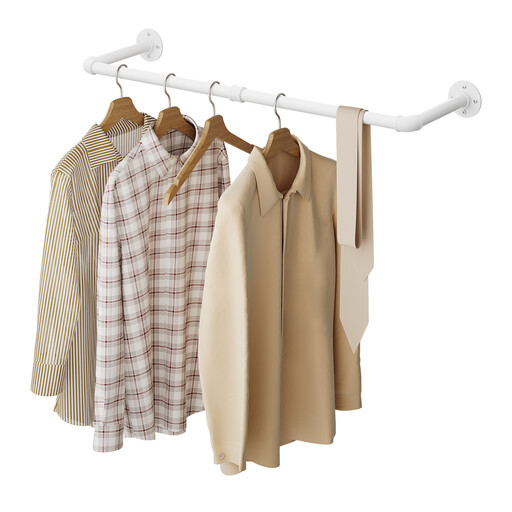
Why this product suits this profile: The white, 100 cm rail is ideal for smaller wall spaces in a bedroom, hallway or kitchen. It’s made of metal and comes with a fitting kit and instructions.
The product details specify the dimensions, material, maximum load and included fixings. The 50 kg weight limit applies only when the rail is fitted correctly and the wall type is taken into account.
100 cm long, 26 cm deep, metal construction, wall-mounted, with a fitting kit and instructions included.
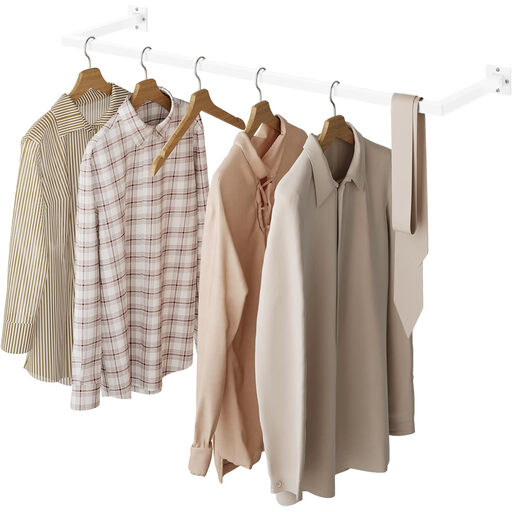
Why this product suits this profile: At 114 cm wide and 30 cm deep, this version offers more hanging space. It can be used as a clothes rail, wall-mounted coat rack or open storage in a range of rooms.
The specifications give separate figures for concrete walls, up to 50 kg, and panel walls, 75 to 100 kg. These figures aren’t a blanket guarantee: they need to be suitable for your wall and fixings.
114 cm wide, metal pipe, open design, 30 cm deep, with a fitting kit and illustrated instructions included.
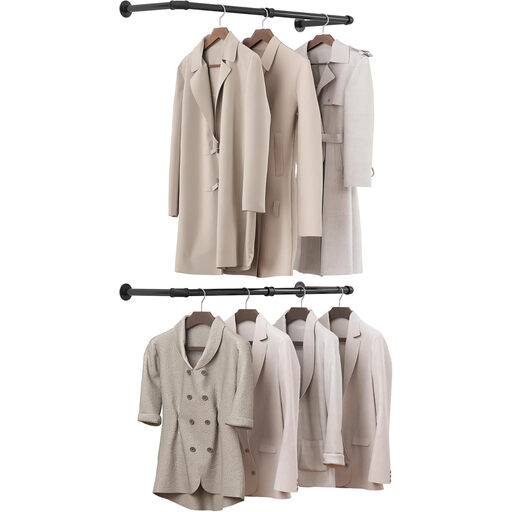
Why this product suits this profile: The two separate black metal rails can be used in different rooms or at different heights. Their matt, industrial-style design also makes them suitable for towels, kitchen utensils or accessories.
The product description states a static load of 50 kg per rail when fitted to a solid wall. For other wall types, you’ll need to use suitable fixings and allow for a lower load.
Two 100 cm rails, 2.5 cm pipe diameter, matt finish, with fitting hardware and instructions included.
We’ve put together a complete, regularly updated list of products that meet these strict selection criteria and fully comply with the safety regulations in force in the EU.
An accessible clothes rail in a child’s bedroom should only be used with particular care for safety. Furniture and hanging fittings must be secured so they can’t tip over. Children should not climb on or hang from the rail.
The height depends on your height, the type of clothes and the room. In a hallway, the rail should be easy to reach for hanging jackets. In a bedroom, you may want to fit it higher if there’s a chest of drawers or shoe storage underneath. Before drilling, use a clothes hanger to check that there’s enough clearance.
Solid concrete or brick walls are generally suitable, provided you use the right wall plugs. Plasterboard or panel walls need specialist cavity wall fixings and a realistic plan for how much weight the rail will carry. Manufacturers’ weight capacity figures often apply to specific wall types, so don’t assume they’ll apply to every wall.
It depends on the product, the fixings, the wall and how the weight is distributed. Some models in this selection, for example, state a capacity of 50 kg under specific fitting conditions. This is a maximum static load, not a recommendation for every installation. Follow the product instructions and don’t exceed the stated weight limit.