
Lieferung heute & morgen

Qualitätsgarantie

Willkommens-Angebote freischalten: KOSTENLOSE Lieferung | Bis zu 80 % RABATT | Kostenlose 30-Tage-JoyPlus-Testphase
App herunterladen
A Wangmazi Chinese cleaver can take much of the effort out of slicing, chopping and mincing. Its large, usually rectangular blade is designed for a different style of preparation than a classic chef’s knife or a Santoku knife. At the same time, descriptions such as “hand-forged”, “high carbon” or “suitable for bones” do not automatically mean that a particular kitchen tool is right for you.
If you want to buy a Chinese cleaver in the UK, you should therefore look beyond the brand name or a low price. The key factors are the intended use, blade thickness, material specifications, dimensions and safe handling.
A Chinese chef’s knife is often suitable for vegetables, herbs and boneless meat. However, this does not mean that every version is designed for poultry bones, ribs or frozen food. A thinner blade may be damaged when used for forceful chopping.
Check whether the seller clearly distinguishes between a vegetable cleaver and a bone cleaver. If the information is unclear, the product should only be used for light cutting tasks.
A 190 mm blade may be easy to handle, but on its own it says little about the weight, spine thickness or balance. A longer model offers greater reach, but may be impractical on smaller work surfaces. For precise cutting, controlled handling is also more important than having the largest possible blade.
Pay attention to the full dimensions and check whether the product is described as a cleaver, slicing knife or bone cleaver.
The term stainless-steel kitchen knife can cover a range of steel types. Similarly, “high carbon steel” does not by itself describe the exact composition or care requirements. Carbon-containing steels can offer good cutting performance, but they usually require more care to prevent moisture damage and discolouration.
For an informed buying decision, focus on specific material details, the manufacturer’s care instructions and the intended use.
A meat and vegetable cleaver generally has a broad blade. This allows ingredients to be divided or chopped with a straight cutting motion. For fine slices, herbs and vegetables, a lighter model is often easier to control than a heavy cleaver.
You should also distinguish between:
Models with a blade length of 170 to 190 mm are compact enough for many kitchen tasks. A 280 or 313 mm model, on the other hand, requires more space and may be harder to control during longer cutting tasks.
The balance between the blade and handle affects control. An ergonomically shaped handle can make handling easier, but it is no substitute for safe cutting technique. For home cooks, a knife whose weight can be controlled without excessive force is recommended.
A cleaver should be washed by hand after every use, dried thoroughly and stored in a dry place. A dishwasher can put greater strain on the handle, surface and cutting edge. Use a sturdy wooden or plastic chopping board. Glass, stone and ceramic surfaces can damage the edge more quickly.
When working with bones, remember: only use models specifically designed for this purpose, and never twist the blade sideways while chopping.

Why this product suits this profile: The name specifically mentions cutting meat and vegetables, making it suitable for households looking for a versatile Wangmazi kitchen knife for everyday food preparation.
The product name limits the intended use to cutting and slicing, rather than making a general claim that it is suitable for chopping bones.
Suitable as an everyday option for preparing meat and vegetables; manufacturer and EU responsible-person details are listed on the product page.
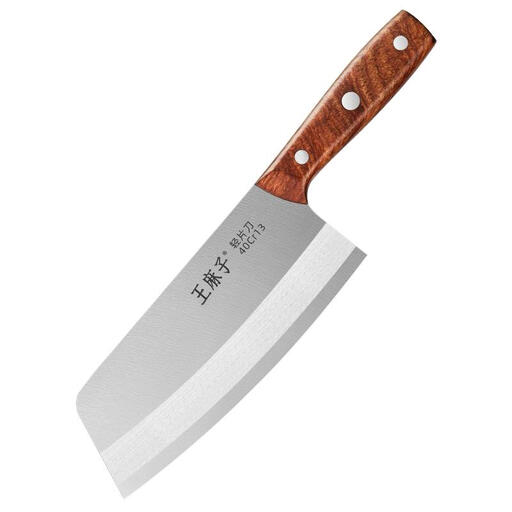
Why this product suits this profile: The 190 mm blade from the Shenmu Series is described as a lightweight cleaver for vegetables, herbs and boneless meat, making it suitable for controlled kitchen preparation.
The description clearly states the intended uses and avoids making a general claim that the knife is suitable for hard bones or frozen food.
190 mm blade length; according to the product description, a lightweight construction, ergonomic handle and suitability for boneless meat.
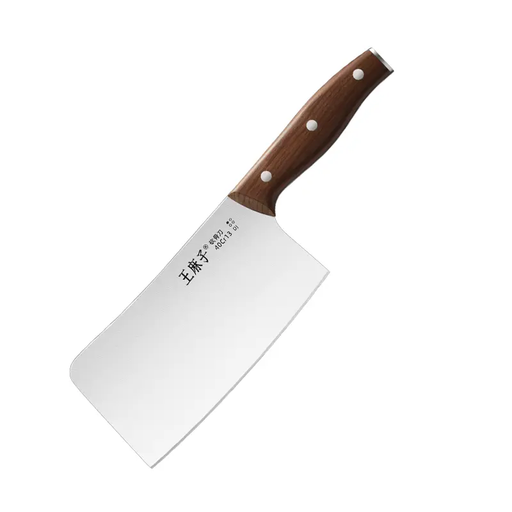
Why this product suits this profile: The product description explicitly refers to chopping ribs and bones. It may therefore suit users looking for a more robust cleaver for clearly defined tasks.
The stated purpose is more specific than a general “heavy-duty” marketing claim. Even so, check the instructions, blade thickness and permitted foods before use.
According to the product description, a forged construction, carbon steel, full-tang design and non-slip handle.
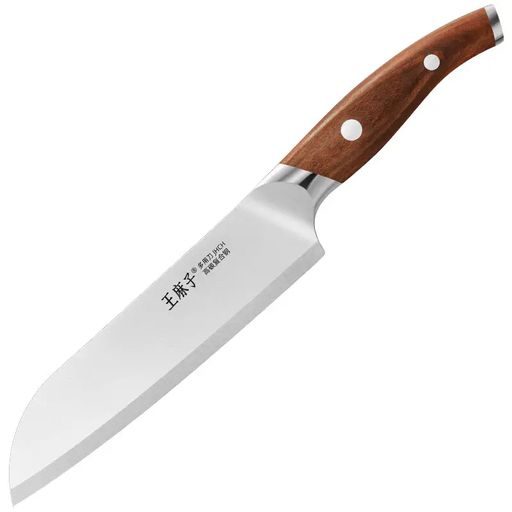
Why this product suits this profile: If you mainly cut vegetables, fish and delicate ingredients, you do not necessarily need a heavy cleaver. This Santoku model is listed as weighing 170 g and is designed for versatile cutting tasks.
The lower listed weight helps distinguish a lightweight cutting knife from a bone cleaver. It is not intended as a substitute for chopping hard bones.
50Cr steel and 170 g according to the product name; suitable for vegetables and preparing sushi and sashimi.
We have put together a complete, regularly updated list of products that fully meet these strict selection criteria and the safety regulations applicable in the EU.
A sharp cleaver remains easier to control in everyday use when the cutting edge is not placed under unnecessary strain. Keep the following points in mind:
Not every model. A bone cleaver requires a sufficiently robust construction designed for this purpose. Models whose description only mentions vegetables and boneless meat should not be used for ribs or hard bones.
Edge retention depends on the steel, grind, cutting surface, technique and care. A general timeframe cannot therefore be given objectively. Drying the knife regularly, using a suitable chopping board and avoiding sideways strain can help protect the cutting edge.
That depends on how you intend to use it. A cleaver is designed for stronger, straight chopping movements. A Santoku knife is better suited to vegetables, fish and precise cutting tasks. Households with varied requirements may benefit from combining a lightweight kitchen knife with a robust cleaver.