
Lieferung heute & morgen

Qualitätsgarantie

Willkommens-Angebote freischalten: KOSTENLOSE Lieferung | Bis zu 80 % RABATT | Kostenlose 30-Tage-JoyPlus-Testphase
App herunterladen
A wardrobe should keep your clothes organised, make good use of the space available and complement your home’s style. In practice, unclear measurements, flimsy construction or impractical internal layouts can often lead to a disappointing purchase. That’s why it’s worth looking beyond appearance and low prices, especially when shopping online.
A wardrobe that’s 200 cm wide may look spacious. What matters, though, is how much room there actually is behind the doors. Back panels, dividers, hinges and thick side panels all reduce the usable internal width. So check the number of compartments, the position of the hanging rail and the space between the shelves.
Depth matters too. A model that’s 57 cm deep may be suitable for hanging clothes, but you’ll also need room for the doors and space to move around in front of it. In a hallway, a shallow storage cupboard or open clothes rail may be more practical.
Material descriptions such as MDF, metal or laminated chipboard don’t tell you everything about how stable a wardrobe is. Check the material thickness, how the parts are joined, the design of the feet and whether it can be secured to the wall. Tall wardrobes should be secured to prevent them tipping over, especially in homes with children.
For an open wardrobe, it’s also important to check the stated maximum load. This may not apply to every shelf or hanging rail individually. Read and follow the manufacturer’s instructions before assembly.
A wardrobe with a mirror, push-to-open doors or a decorative finish may look attractive. But these features are only practical if they suit your everyday needs. Mirrors need careful cleaning, handleless doors need enough surface area to press, and fabric drawers are better suited to lighter items.
Measure the available wall space in several places. Take skirting boards, radiators, windows, doors and plug sockets into account. For a 200 cm wardrobe, you should also allow for at least two people to put it in place and enough room to move around it.
For bedrooms, closed wardrobes with a hanging rail and several compartments are usually a good choice. In an entrance hall, a hallway wardrobe with hooks, a shelf and drawers may be more practical. When choosing a wardrobe for the bedroom and hallway, consider how often you’ll need to access it and how much dust protection you need, as well as its width.
Laminated chipboard with neatly sealed edges is easy to care for and is often used for wardrobe carcasses. MDF panels can provide a smooth finish, while metal frames give open storage systems a clean, simple structure. Fabric drawers are handy for accessories, lightweight clothing and smaller household items.
Check whether the manufacturer recommends dry or slightly damp cleaning. Strong cleaning products can damage surfaces, edges or mirrors.
A large wardrobe with doors offers better protection from dust. A wardrobe with drawers makes it easier to organise underwear, belts and smaller accessories. Open compartments provide quick access, but need to be kept tidy.
In smaller rooms, space-saving clothes storage could combine a compact open section for clothes you wear often with closed boxes or drawers for items you use less frequently.
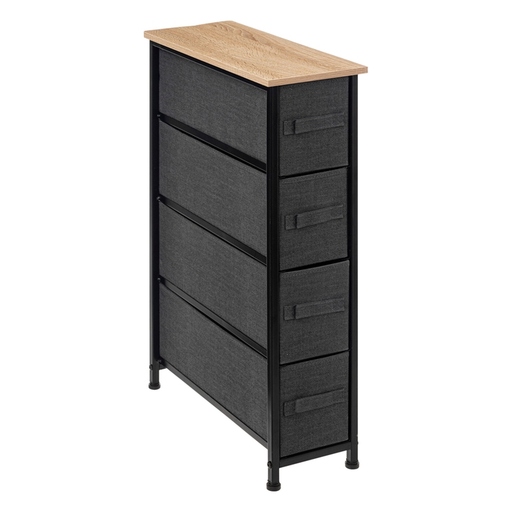
Why this product suits this shopper: Measuring 48 × 20 × 75 cm, this unit is a good fit for small alcoves, entrance halls or as an addition to an existing wardrobe. Four fabric drawers provide space for accessories and smaller items.
Its compact dimensions make it easy to see how much space it will take up. The drawers are clearly specified and aren’t presented as a full-size wardrobe replacement.
Four fabric drawers, an open shelf and a metal frame, all with a small footprint.
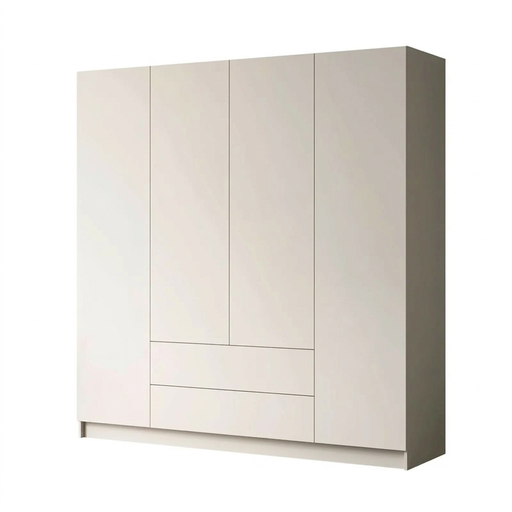
Why this product suits this shopper: This model has twelve shelves, a hanging rail and two drawers. At 200 cm wide, it’s designed for couples or families who need more bedroom storage.
The internal layout is clearly set out. The product description specifies 16 mm laminated chipboard and ABS edges, and the wardrobe is delivered for self-assembly.
Four hinged doors, twelve compartments, a hanging rail, two drawers and two mirrored doors, according to the product description.
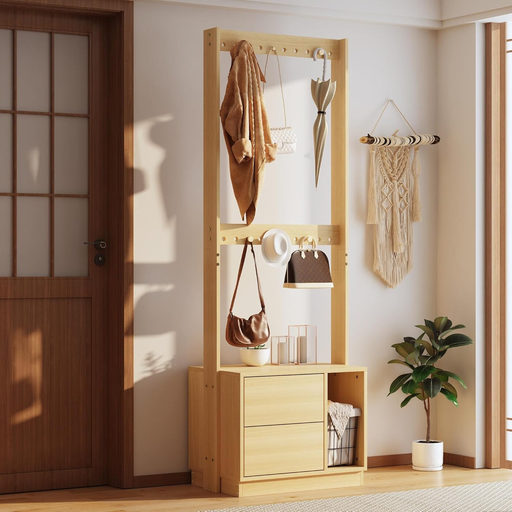
Why this product suits this shopper: Measuring 60 × 40 × 175 cm, it fits in hallways, bedrooms or entrance areas where floor space is limited. The hook rail, two hanging sections and drawers keep everyday essentials close to hand.
The open design makes the available storage space immediately clear. Its maximum load of 5 kg is specified and should be taken into account when using it.
Compact footprint, MDF components, metal frame, hook rail and two drawers.
We’ve put together a comprehensive, regularly updated list of products that meet these strict selection criteria and fully comply with the safety regulations applicable in the EU.
Before assembling a large wardrobe, clear the space and read the full instructions. A model that’s 200 cm wide and 210 cm high will usually need two people to assemble. Also check that your ceiling is high enough to stand it upright.
Wall anchoring is an important safety measure for tall furniture. Use the supplied anti-tip restraint as instructed and choose fixings that are suitable for your wall. Once assembled, the doors and drawers should open and close without excessive resistance.
There needs to be enough internal depth for clothes hangers. The key measurement isn’t just the external depth, but the distance between the back panel and the closed door. Check the internal measurements, and allow for the plinth, back panel and door mechanism too.
An open wardrobe or clothes rail with drawers is useful for coats, bags and shoes you use regularly. As clothes are less protected from dust, keep textiles you use less often in closed compartments or boxes.
How long it lasts depends on the materials, joints, load, care and assembly. Distributing weight evenly, following the load limits and securing the wardrobe safely to the wall can help it stand up to everyday use. Check furniture regularly for loose screws and damaged edges.