If the damp is mainly in your wardrobe or a storage nook, and the rest of the bedroom seems unaffected, a suitably positioned, non-electric moisture absorber may be enough. If the whole room is affected, an electric desiccant dehumidifier may be more suitable – but check its operating temperature, noise level, power consumption and tank maintenance. If there is mould or damp in the building fabric, you need to identify the cause. A dehumidifier won’t solve the underlying problem, as the German Environment Agency also points out.
Who are these solutions suitable for?
People dealing with damp in their wardrobe
If clothes feel damp or smell musty mainly in one particular spot, a quiet moisture absorber placed directly in the storage area could be a good fit. UHU and HUMYDRY describe moisture-absorbing containers and wardrobe-specific options for these smaller spaces.
People dealing with damp throughout the bedroom
If the room’s air or cold surfaces are also affected, you should consider what’s causing the damp. For mould, the German Environment Agency recommends identifying and addressing the cause of excess moisture.
Light sleepers
If you’d rather not hear a fan at night, you could consider a non-electric moisture absorber for a localised damp spot. If that isn’t enough for the whole room, see whether you can run an electric model at another time of day.
What should you consider when choosing?
First, work out whether the damp is limited to the wardrobe or affects the whole room. Then consider how quietly you need to sleep, where you’ll put the device and how much ongoing maintenance you’re willing to do.
| Your concern |
What to look for |
Who will find this especially important? |
| Damp in the wardrobe |
A design that fits a wardrobe or shelving unit; a stable base or secure hanging option, and a suitable place for collecting liquid. |
If my clothes feel damp mainly in the wardrobe, I want to target the affected area without setting up a device for the whole room. Around 36% of consumers put protection against localised wardrobe damp first. |
| Damp throughout the room |
Consider the source of the damp and the room temperature; check the operating temperature, controls, tank and placement guidance for the specific model. |
If the damp isn’t limited to the wardrobe, I want to consider the room’s overall conditions, not just the clothes in storage. Around 29% of consumers prioritise damp throughout the bedroom. |
| A quiet night’s sleep |
Check the noise rating for the mode you’ll actually use, and consider whether you can run the device outside your sleeping hours. |
If I’m sensitive to noise at night, I want to avoid a running fan disturbing my sleep. Around 21% of consumers prioritise a quiet night’s sleep. |
| Ongoing maintenance |
For moisture absorbers, consider replacement refills and emptying; for electric models, factor in power consumption, running time and tank maintenance. |
Once the damp is under control, I want to keep ongoing maintenance and running costs manageable. Around 14% of consumers put ongoing costs and maintenance first. |
Common buying mistakes
-
Assuming a wardrobe moisture absorber will solve all bedroom damp
A moisture-absorbing container is designed for a limited area. If the room remains damp or there is mould, you need to consider the underlying cause. For mould, the German Environment Agency advises identifying the source of the damp.
Before choosing a type of device, check whether the damp affects only stored clothes or other areas of the room too.
-
Choosing an electric model based only on its maximum capacity
Power and noise ratings apply to the specific model, and don’t necessarily reflect the settings you’ll want to use in your bedroom.
Compare noise and power consumption for the mode you plan to use and the intended running time.
-
Placing a liquid container unsecured next to clothes
UHU warns that spills can cause stains and damage delicate materials.
Place the container on a stable surface or use a hanging option designed for that purpose. Keep collected liquid away from fabrics.
Relevant brands at a glance
UHU
Non-electric, refillable containers for smaller spaces; the manufacturer also recommends the Ambiance model for bedrooms.
- UHU describes its 450-g absorber as silent and electricity-free.
- According to the manufacturer, absorption and product life depend on temperature, humidity and room size. Spilled liquid can damage delicate materials.
HUMYDRY
Moisture absorbers designed for wardrobes, including small containers and hanging options.
- The products described include a refillable Compact container and a disposable hanging wardrobe dehumidifier.
- Coverage and protection figures are provided by the manufacturer and aren’t independent measurements taken in a bedroom.
Pro Breeze
The Osmo is described as a non-electric, refillable tablet absorber for use in bedrooms and wardrobes, among other spaces.
- The manufacturer specifies a 700-g tablet and silent operation.
- According to the manufacturer, the stated lifespan of up to 100 days applies under standard conditions; actual duration varies with room size, temperature and humidity.
Meaco
Electric desiccant dehumidifiers in the DD8L range for controlling room humidity, including models designed for cooler spaces.
- For the DD8L Pro, the manufacturer describes an energy-saving mode that automatically adjusts the fan speed.
- Controls and noise ratings vary by model. Check the figures for the specific model and the mode you plan to use.
Trotec
Electric desiccant dehumidifiers; the TTR 57 E is described as suitable for cooler rooms and for helping to dry laundry.
- For this model, the manufacturer specifies a room size of up to 20 m² and a dehumidifying capacity of up to 9 l/24 h.
- These stated maximum figures don’t guarantee the amount of water extracted in the conditions of any particular bedroom.
Joybuy product selection
This selection includes non-electric moisture absorbers for wardrobes and other smaller storage areas.
 No image available
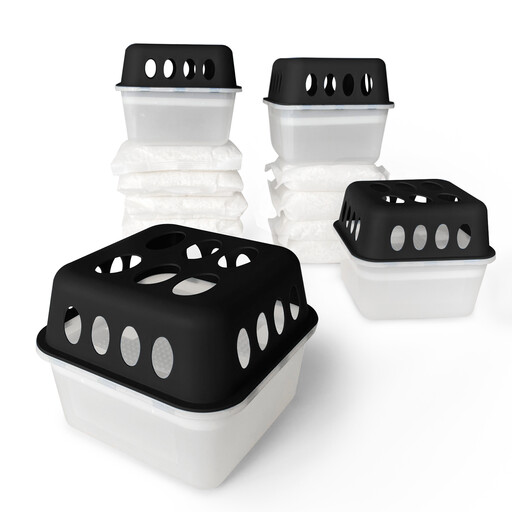
Floordirekt Hava dehumidifier set, 4 containers, 8 refill bags, black
For localised damp in a wardrobe, this set is described as a non-electric moisture absorber for smaller storage areas.
The set contains four reusable containers and eight 400-g refill bags. Once the granules have been used up, replace the bags and dispose of the collected liquid. Keep the product, refills and liquid away from children and pets.
View at Joybuy
Frequently asked questions
How can I tell whether I need a dehumidifier?
Check where the damp is appearing, including behind furniture, and air the bedroom before bed and again in the morning by opening the window wide. If the damp persists, find out what’s causing it; an absorber alone, for example, won’t fix a damp wall. The German Environment Agency recommends identifying the cause when dealing with mould.
Where should I place a granule absorber near clothes?
Follow the instructions for the specific product and place the container on a stable surface. UHU warns that spills can cause stains and damage leather or metal. Empty the container and replace the absorber in line with the usage instructions.
What ongoing costs and guarantees should I take into account?
For non-electric devices, factor in suitable refills; for electric models, consider power consumption and tank maintenance. A voluntary manufacturer’s guarantee isn’t the same as your statutory rights against the seller. The Verbraucherzentrale explains the difference; check the terms that apply in each case.
Can I put a broken electric dehumidifier in my household rubbish?
No. The German Environment Agency explains that electrical waste must be collected separately from unsorted household waste. Take it to a suitable local recycling centre or use a retailer’s take-back scheme.


