
Lieferung heute & morgen

Qualitätsgarantie

Willkommens-Angebote freischalten: KOSTENLOSE Lieferung | Bis zu 80 % RABATT | Kostenlose 30-Tage-JoyPlus-Testphase
App herunterladen
A wardrobe with a mirror combines storage with a handy place to get ready. Even so, it’s worth checking the dimensions, door type and interior layout carefully. Marketing images often show spacious rooms and perfectly furnished bedrooms. In practice, just a few centimetres can determine whether the doors open properly, the shelves are easy to reach and the wardrobe stands securely.
A wardrobe around 57 to 59 cm deep needs more than just that amount of floor space. You’ll also need to allow room for hinged doors to open. With a sliding-door wardrobe, there’s no swing area to account for, leaving more space in front of the furniture to move around. Even so, remember to check for skirting boards, radiators, sockets and door frames.
A 200 cm wardrobe can have a variety of interior layouts. What matters is the number of shelves, the position of the hanging rail and whether it has drawers. A large wardrobe with lots of compartments won’t necessarily suit longer garments if the rail is too low. So check the interior layout, not just the external dimensions.
Many models are supplied as a wardrobe for self-assembly. This makes them easier to transport, but you’ll need enough space to sort the parts and two people to assemble and move the wardrobe. The models featured here are designed to be fixed to the wall. This helps reduce the risk of the wardrobe tipping over, so don’t skip this step.
A sliding-door wardrobe with a mirror, or another sliding-door wardrobe, is a good choice for smaller bedrooms because the doors don’t swing out into the room. Look for a sturdy track, smooth-running rollers and the option to adjust the doors.
A hinged-door wardrobe, on the other hand, gives you direct access to individual sections. You’ll need to leave enough space in front of the wardrobe for the doors to open. Push-to-open fittings can create a handle-free look, but the magnetic catches need to be adjusted correctly.
Measure the available wall width, room height and depth in several places. For taller models, you’ll also need to check that there’s enough room to stand the wardrobe upright. The three models featured here are around 210 to 215 cm tall. If your room has sloping ceilings or a low ceiling, a shorter piece of furniture may be a better fit.
A practical wardrobe with a hanging rail and shelves should suit the clothes you own. Shelves are useful for folded items, while a rail that’s long enough can hold shirts, jackets and dresses. Drawers are handy for smaller items and make it easier to keep everything organised.
The wardrobes featured here are made from coated wood-based panels that are 16 mm thick. ABS or PVC edging protects the panel edges during everyday use. Clean high-gloss and mirrored surfaces with a soft cloth; abrasive cleaners and solvents can damage the finish.
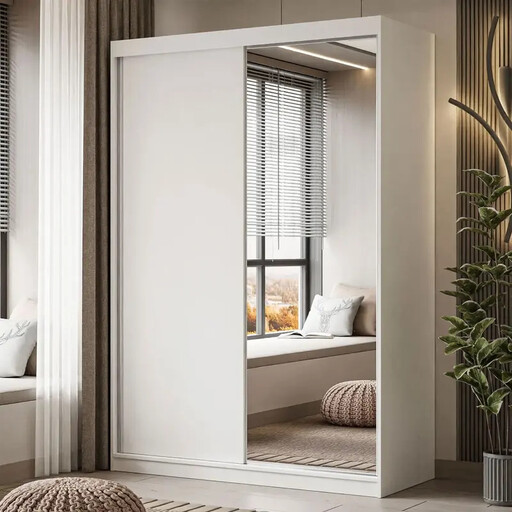
Why it suits this profile: At 150 cm wide, this wardrobe is a good fit for smaller bedrooms or single-person households. Its sliding doors don’t need extra space to swing open.
The product details specify six shelves and a hanging rail, making it easier to understand the interior layout before you buy than if you were relying on an exterior photo alone.
Matte white finish, integrated mirror, aluminium door tracks and adjustable sliding doors.
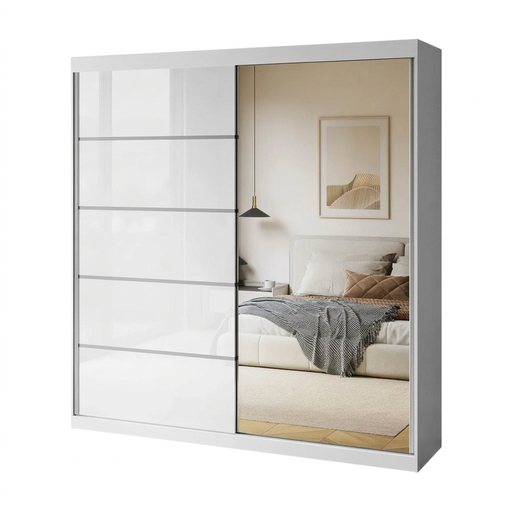
Why it suits this profile: At 200 cm wide, this bedroom wardrobe offers generous interior space and a space-saving door design. It’s a good choice for couples or families with plenty of clothes.
Nine shelves and a hanging rail give you a clear picture of the usable storage space. Remember to factor in the wall fixing and door adjustment when planning your room.
200 cm wide, glossy white finish, a large mirror and aluminium door tracks.
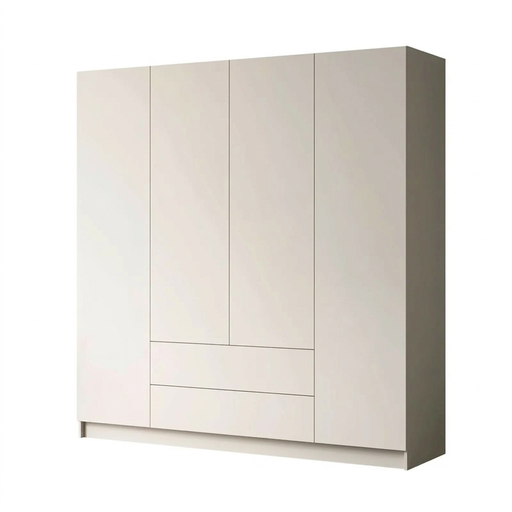
Why it suits this profile: The combination of twelve shelves, a hanging rail and two drawers is ideal for households that like to organise clothes by category and use their wardrobe frequently.
The detailed interior makes it less likely you’ll choose based only on the exterior colour or mirrored finish. However, you’ll need to allow enough room for all four hinged doors to open.
Four hinged doors, two mirrored doors, push-to-open fittings, two drawers and 16 mm coated wood-based panels.
We’ve put together a complete, regularly updated list of products that meet these strict selection criteria and fully comply with the safety regulations in force in the EU.
When assembling the wardrobe, make sure you have a level surface, plenty of room to move around and at least two people. Sort the screws and fittings according to the instructions before you start. Only move the wardrobe once it’s fully assembled, and make sure it’s secured to the wall with the supplied anti-tip restraint.
Mirrors can break if they’re knocked hard. Children shouldn’t hang from the doors or climb on the shelves. Sliding doors can also pose a trapping risk around the tracks and between the door panels. For cleaning, a soft, slightly damp cloth is usually all you need. Use a suitable glass cleaner on the mirror.
As well as allowing for the wardrobe’s depth, leave enough clear space in front of it to walk past. The advantage is that you don’t need extra room for doors to swing open. However, skirting boards and radiators can affect the depth you can actually use.
There’s no reliable way to give a single lifespan. It depends on factors such as the quality of the assembly, how heavily the wardrobe is used, moisture, cleaning and how often the doors are opened. Fixing it securely to the wall, distributing weight evenly across the shelves and following the manufacturer’s care instructions can all help keep it in good condition.
A white wardrobe with high-gloss or mirrored surfaces tends to show fingerprints more quickly than one with a textured finish. A soft microfibre cloth will remove dust and light marks. Avoid abrasive cleaners, hard sponges and harsh solvents.