
Lieferung heute & morgen

Qualitätsgarantie

Willkommens-Angebote freischalten: KOSTENLOSE Lieferung | Bis zu 80 % RABATT | Kostenlose 30-Tage-JoyPlus-Testphase
App herunterladen
A cluttered entryway is a common problem, especially in homes with limited space. Jackets, shoes, and bags pile up, creating a chaotic first impression. A wardrobe with a mirror and shoe cabinet promises to be the ideal all-in-one solution. However, the selection process is fraught with hidden pitfalls that can quickly turn a practical purchase into a regrettable one. Before you make a decision, you should be aware of the typical weaknesses that often only become apparent after a few months of use.
Many products look appealing at first glance but prove impractical in daily use. Pay attention to these three critical points to avoid a poor investment:
To avoid the problems mentioned above, you should base your selection on objective criteria. These three technical features are crucial for the longevity and functionality of your new hallway furniture.
The stability of a cabinet depends directly on the quality of the material. Look for a panel thickness of at least 16 mm. This measurement has established itself as a solid standard for durable furniture. Equally important is the edge finishing. High-quality ABS or PVC edge banding protects the particleboard from moisture—for instance, from wet jackets—and impacts, significantly extending the furniture's lifespan. A simple hallway cabinet in white can look brand new for years with good edge finishing.
Measure your hallway precisely before making a choice. For a wardrobe for a small hallway, the cabinet's depth should ideally not exceed 40 cm to ensure enough room to move. A tall cabinet in the entryway makes optimal use of vertical space. When choosing doors, consider the following:
A good hallway wardrobe with a mirror serves multiple purposes. The mirror is not just for a final outfit check; it also makes small or dark hallways appear brighter and more spacious. When it comes to the shoe cabinet section, details are key. Check if the compartments are suitable for your shoe sizes and types (e.g., boots, high-top sneakers). Adjustable shelves or spacious shoe tippers are a clear advantage here. A well-designed multi-purpose cabinet for the hallway offers flexible solutions for different needs.
Instead of making a blanket recommendation, we have identified models that are tailored to specific living situations and requirements.
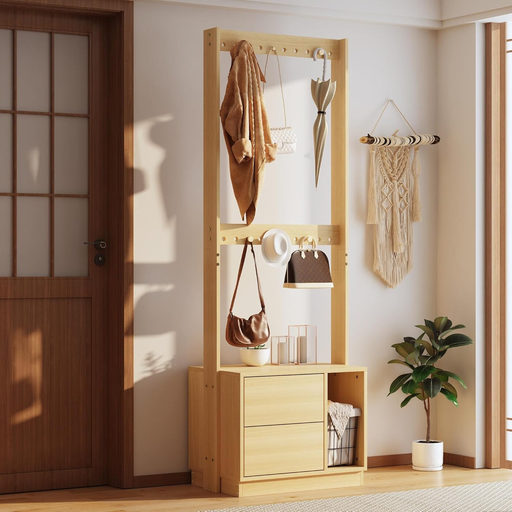
Why It's a Good Fit: The open design makes a small hallway feel airy and uncluttered. It provides the essential functions—hooks, a shelf, and drawers—in a very compact and budget-friendly package. Ideal for students or a first apartment.
The simple construction of metal and MDF panels is inherently stable and avoids complex, failure-prone mechanisms like cheap hinges or sliding systems.
Maximum vertical space utilisation with a minimal footprint (60x40 cm). The open structure encourages tidiness and prevents clutter from accumulating.
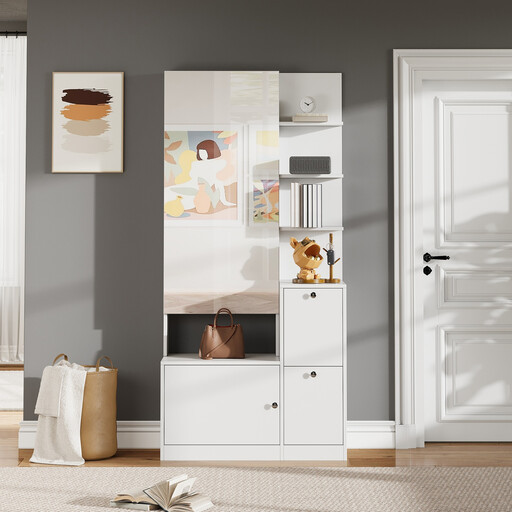
Why It's a Good Fit: This is the classic all-in-one solution that perfectly embodies the category. It combines all functions—mirror, shoe storage, a clothes compartment, and open shelves—into a compact, modern unit ideal for typical city apartment hallways.
This model addresses the "impractical interior layout" problem with clearly defined zones: two pull-out shoe cabinets, a closed compartment for clothes, and open shelves for decor or quick access.
High functionality on a slim 40 cm deep footprint. The integrated mirror eliminates the need for a separate wall mirror, saving both space and money.
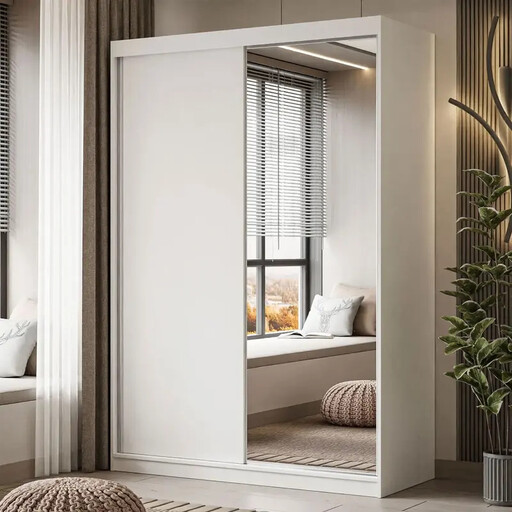
Why It's a Good Fit: When a typical hallway cabinet isn't enough, this model offers the capacity of a full-sized wardrobe. It's ideal for families or anyone who needs to store many jackets, coats, and shoes in the entryway.
This model solves the "unsuitable doors" problem in tight spaces with its sliding door system. The doors require no swing clearance, allowing it to be used even in narrow hallways where a 150 cm wide cabinet with hinged doors would be impossible.
Massive storage capacity combined with space-saving doors. The large mirror front on one door makes the hallway feel more spacious, despite the wardrobe's size.
We have compiled a complete, up-to-date list of products that fully meet these strict selection criteria and UK safety regulations.
For most narrow hallways, a maximum depth of 40 to 45 cm is recommended. This provides enough storage space for hangers placed at a slight angle without overly restricting the walkway. For very tight spaces, models with a depth of less than 35 cm are worth considering, though they often don't allow for hanging jackets on hangers.
Pay attention to the material specifications in the product description. A panel thickness of 16 mm or more is a good sign. Look for details on the edge finishing, such as ABS edging. Additionally, hardware made of metal (hinges, handles, rails) is generally more durable than plastic.
Yes, it is strongly recommended. Tall and narrow cabinets have a higher centre of gravity and can tip over, especially when the doors are open or if children pull on them. Reputable manufacturers include an anti-tip kit for wall mounting with the product. Securing the cabinet is an essential safety measure that should be taken in every household, especially those with children.