
Lieferung heute & morgen

Qualitätsgarantie

Willkommens-Angebote freischalten: KOSTENLOSE Lieferung | Bis zu 80 % RABATT | Kostenlose 30-Tage-JoyPlus-Testphase
App herunterladen
An organised closet is the foundation of an efficient daily routine. Choosing the right closet organisation system depends on objective factors like available space, the type of textiles being stored, and the material properties of the storage solution. This article analyses various types of closet organisers based on their technical specifications and practical applications to provide a basis for an informed decision.
An organiser's effectiveness is determined by its material, construction, and dimensions. An objective evaluation of these criteria is crucial for selecting the right solution.
The choice of material affects the organiser's durability, breathability, and stability. Common materials include:
The design of the organiser determines its primary use case.
Precisely measure the available space in your closet before making a purchase. Pay attention to the manufacturer's specified maximum load capacity, especially for hanging organisers and fabric boxes, to prevent deformation or damage. The volume, often stated in litres, provides an indication of the actual storage capacity.
The following products have been selected based on their technical features and specific benefits for organising clothing and household items.

Why we're analysing this product: This set of six storage boxes for clothes offers a standardised solution for shelving systems. The cube shape, measuring 26.7 x 26.7 x 27.9 cm (10.5 x 10.5 x 11 inches), is compatible with many common cube shelving units. The construction of natural fibre and a cardboard structure provides basic stability with a low tare weight.
Advantages:
Who it's for: Individuals who use shelving systems in their closet or living area and want a uniform look for sorting clothes, toys, or office supplies. The maximum load capacity of 2.27 kg (5 lbs) per box makes them ideal for lighter items.
→ View details for the ANQI Storage Cubes

Why we're analysing this product: This hanging closet organiser is designed to maximise vertical space. With a height of 120 cm and a width of 30 cm, it creates ten separate compartments within a small footprint. The combination of PP and cardboard ensures a lightweight yet structurally stable design.
Advantages:
Who it's for: Users with closets that have ample rod space but few shelves. Ideal for storing folded sweaters, T-shirts, trousers, or lightweight shoes.
→ View details for the 5Five Hanging Organiser
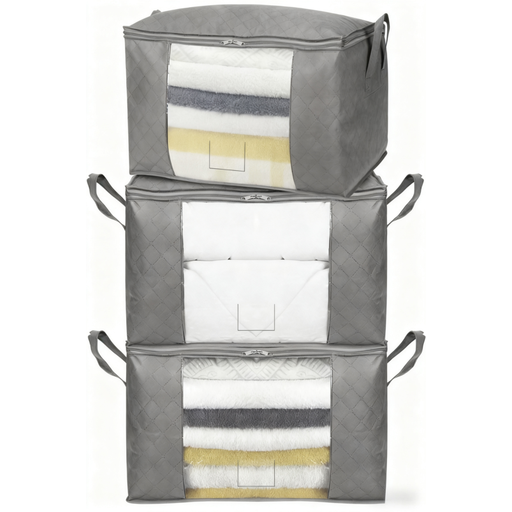
Why we're analysing this product: This storage bag set is designed for storing bulky or seasonal textiles. The dimensions of 48.3 x 35.6 x 20.3 cm per bag offer ample space for duvets, winter coats, or multiple garments. The polyester fabric and zip closure protect the contents from external elements.
Advantages:
Who it's for: Households looking for a solution for seasonal clothes storage or for storing bedding and blankets. The bags are well-suited for placement in hard-to-reach areas like the top shelf of a closet or under the bed.
→ View details for the ANQI Storage Bag Set
The products featured represent a selection of specific solutions. The market offers a wide variety of other configurations and designs. For a more comprehensive selection of modular storage solutions, consider the Cube Storage Organisers category.
1. How do you systematically organise a closet? A systematic approach starts with categorising your clothes (e.g., by type, season, or occasion). Then, select the appropriate type of organiser for each category: collapsible fabric boxes for small items on shelves, hanging organisers for folded sweaters on the rod, and sealed storage bags for rarely used textiles.
2. What are the advantages of collapsible storage boxes? Their primary advantage is flexibility. They quickly create structured storage space when needed and can be folded flat when not in use, which saves storage space. They are also lightweight and often easy to handle thanks to their grips.
3. How can you effectively protect clothes from dust? For long-term protection from dust, sealed systems are best. Storage bags or boxes with zips or tight-fitting lids are the functional choice here. They prevent dust particles from settling on clothing, which is especially important when storing seasonal items or delicate fabrics.