If only an enclosed wardrobe is slightly damp, a non-electric hanging bag or container placed inside it is a better fit for this limited area. If the dampness affects the whole room or keeps coming back, you should investigate the cause. An electric room dehumidifier needs floor space, power and maintenance, and won’t fix structural damp or existing mould.
For anyone mainly looking to keep clothes dry
People who store clothes in a wardrobe
If you notice dampness or a musty smell mainly in your wardrobe, you may be looking for a space-saving, non-electric solution. However, a product designed for a wardrobe won’t necessarily tackle damp throughout your home. UHU and HUMYDRY, for example, offer different styles for wardrobes.
People with a damp room
If signs of damp aren’t limited to stored clothes, consider the room’s air, ventilation and possible sources of moisture together. The German Environment Agency recommends identifying and addressing the cause of excess damp.
People storing delicate items
If you want to keep liquid and desiccant away from clothes or delicate materials, check the design, how it hangs and the replacement instructions. UHU specifically warns that the unprinted side of its Kompakt/Mobil bag should not come into direct contact with delicate materials.
What to consider when choosing
First, establish whether the damp is confined to the wardrobe or affects the room. If the room keeps getting damp, you should also investigate the cause, as recommended by the German Environment Agency.
| Concern |
What to check before buying |
Who is this particularly important to? |
| Dehumidifying without taking up floor space |
Whether the product can be hung up and what area it is designed for. |
If I only want to keep my wardrobe drier, I need a solution that fits inside it and isn’t mistaken for a product designed for the whole home. Around 33% of consumers prioritise targeted dehumidification. |
| Damp throughout the room |
Where the damp is, the room size and the operating conditions of the chosen appliance. |
If there’s damp on the walls or in other parts of the room, I want to find out whether the room air is affected and what’s causing it. Around 27% of consumers prioritise distinguishing between a room and a wardrobe problem. |
| Keeping liquid away from clothes |
The collection tray and installation method, as well as the model’s warnings. |
If the desiccant is hanging or standing right beside textiles, I want to keep an eye on collected liquid and contact surfaces. Around 20% of consumers pay particular attention to handling liquid and delicate materials. |
| Ongoing effort and operation |
Power and noise information, as well as tank maintenance or consumables. |
If I want to keep ongoing tasks to a minimum, I compare replacing or refilling non-electric products with maintaining an electric appliance. Around 20% of consumers prioritise the effort involved in running a product. |
Avoiding buying and usage mistakes
-
Buying a wardrobe bag to solve damp throughout the home
A product for a limited storage area won’t identify the cause of damp on walls or elsewhere in your home. The German Environment Agency recommends finding and addressing the causes of excess damp.
Check where the damp is appearing. If there’s damp on the walls or mould, tackle the cause first rather than simply using more desiccant.
-
Comparing disposable bags, standing containers and electric appliances using a single capacity figure
Manufacturers’ figures for the area a product can cover, the amount of granules and the maximum litres extracted per day refer to different things, so they can’t be compared directly.
Decide where you’ll use the product first, then compare information for the specific model and how it works.
-
Overlooking warnings about collected liquid and contact with clothes
Different designs collect moisture in different ways. UHU warns that the unprinted side of its Kompakt/Mobil bag should not come into direct contact with delicate materials.
Before putting clothes away, check how the product is installed, whether it needs a stable, level surface and what warnings apply to the model you’ve chosen.
Useful brands to help you choose
UHU
UHU describes Kompakt/Mobil as a hanging bag and Original as a refillable container. This information relates to these product ranges and isn’t based on an independent comparison of their effectiveness.
- According to the manufacturer, Kompakt/Mobil can be hung in wardrobes.
- UHU Original needs a firm, stable surface; the unprinted side of Kompakt/Mobil should not come into direct contact with delicate materials.
HUMYDRY
HUMYDRY describes a hanging wardrobe dehumidifier with granules and a liquid collection bag at the bottom.
- The manufacturer explains how to hang it up and replace it once the granules have been used up.
- How often it needs replacing depends on how it’s used; information about how long it lasts comes from the manufacturer.
WENKO
WENKO describes Cube and Drop as non-electric standing containers that use replaceable calcium chloride blocks.
- According to the manufacturer, you can monitor the water level, and the containers can be refilled.
- A standing container needs floor space; the manufacturer’s description doesn’t prove how well it performs in a particular wardrobe.
Trotec
According to Trotec, the TTR 57 E is an electric desiccant dehumidifier for room air, not a hanging solution for a wardrobe.
- For this model, Trotec specifies a room size of up to 20 m², a 5-l tank and a maximum dehumidification capacity of 9 l/24 h.
- The maximum figure isn’t a measured result for a specific home; the appliance needs floor space and electricity.
Meaco
Meaco offers electric desiccant and compressor appliances in separate product ranges, including DD8L desiccant dehumidifiers and Arete compressor dehumidifiers.
- The separate ranges offer different types of appliance for dehumidifying rooms.
- Operating limits and features vary by model; instructions for the DD8L Junior don’t apply to all Meaco appliances.
Joybuy products for room dehumidification
The following Joybuy appliances are classed as room dehumidifiers. They’re more suitable for damp in a room or drying laundry indoors than for hanging directly inside a wardrobe.
 No image available
Comfee' MDDO-10DEN7 dehumidifier
Described as a room appliance with a laundry-drying mode, making it a possible alternative if you need to tackle damp beyond the wardrobe.
- Rated capacity: 10 l/day
- Water tank: 2.5 l; automatic shut-off when full
- Rated for rooms of around 40 m³ (16 m²)
- The tank needs emptying when full.
View at Joybuy
 No image available
Bosch Dry 4000 dehumidifier
The stated Laundry mode may be useful if you want to use a room dehumidifier to dry laundry indoors too.
- Rated capacity: up to 16 l/day
- Water tank: 2.5 l; full-tank warning and automatic shut-off
- Rated for rooms up to 75 m³
- Place on a level surface; the tank needs emptying when full.
View at Joybuy
 No image available
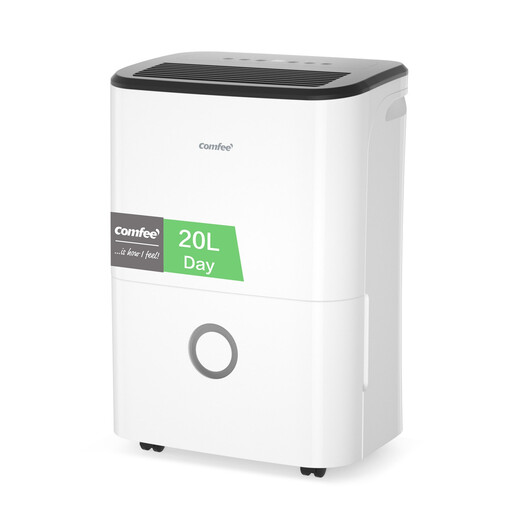
Comfee' MDDF-20DEN7 dehumidifier
Described as a room dehumidifier with a drying mode, it may be suitable if you need to tackle damp in the room and not just in the wardrobe.
- Rated capacity: up to 20 l/24 h
- Water tank: 3 l
- Rated for rooms of around 100 m³ (40 m²)
- The tank needs emptying when full; continuous drainage requires a hose.
View at Joybuy
Frequently asked questions
How can I tell whether the wardrobe or the whole home is too damp?
Look at where the damp is appearing and measure the relative humidity in the room with a hygrometer. Check cool areas behind furniture too: a wardrobe that seems dry doesn’t rule out a source of damp in the wall. The German Environment Agency recommends adjusting ventilation to how the room is used and where moisture is coming from.
How do I set up and replace a wardrobe dehumidifier?
Follow the instructions for the specific design. HUMYDRY explains how to hang up its product and replace it once the granules have been used up. UHU Original needs a firm, stable surface; empty and refill it once the salt has dissolved. The unprinted side of UHU Kompakt/Mobil should not come into direct contact with delicate materials.
How do the different designs compare in terms of maintenance and ongoing effort?
Disposable bags need replacing, while refillable containers need fresh material and emptying. An electric room dehumidifier needs power and its water tank needs looking after. The best option depends on whether you want to treat just the wardrobe or the air in the room.
Which labels are relevant when buying in Germany?
The EU explains that CE marking is only required for products covered by specific EU harmonisation rules that explicitly require it; it isn’t an independent quality mark. Hazardous chemical products must follow CLP labelling rules. Check the labelling on the specific electrical appliance or desiccant you’re considering.
Will a dehumidifier help if there’s already mould?
A dehumidifier doesn’t replace identifying and dealing with the source of the damp. The German Environment Agency stresses that the cause of excess damp needs to be found and addressed.


