
Lieferung heute & morgen

Qualitätsgarantie

Willkommens-Angebote freischalten: KOSTENLOSE Lieferung | Bis zu 80 % RABATT | Kostenlose 30-Tage-JoyPlus-Testphase
App herunterladen
Smart wardrobe storage is fundamental to keeping your clothes organised and preserving their lifespan. However, the market is saturated with products whose marketing promises often fail to deliver in practice. Before you invest, it's crucial to understand the common pitfalls that lead to frustration and unnecessary expense. Many buyers only realise after a few months that their new solution is impractical, unstable, or simply unsuitable.
This guide focuses on the objective criteria that distinguish a good storage solution from an inadequate one. We will highlight three common problems:
To avoid these issues, you should base your purchasing decision on verifiable features. Three parameters are decisive here: material quality, load capacity, and design functionality.
The material determines the product's durability and intended use. The maximum static load capacity, usually specified in kilograms (kg), is a critical indicator of stability.
A good design solves specific, everyday problems. Pay attention to details that make usage easier.
In many closets and hallways, vertical space is not used efficiently. Specialised solutions can help here.
Based on these objective criteria, we have identified several products that represent suitable solutions for specific user profiles.
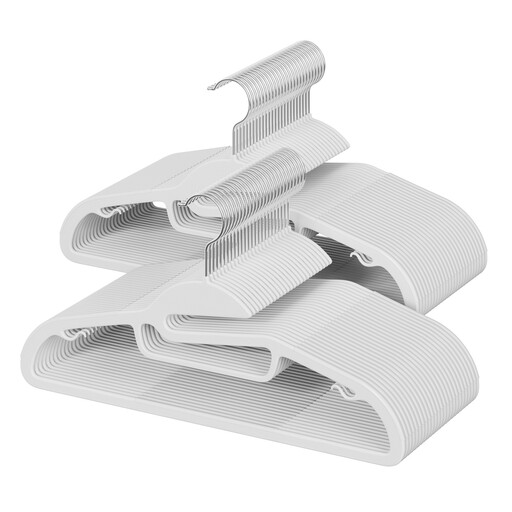
Why It's a Match: This bulk pack offers an economical solution for outfitting multiple closets. The S-shaped opening makes it easy to hang garments with narrow collars, such as children's T-shirts, without stretching the fabric.
These hangers are made of durable ABS plastic and have a specified load capacity of 5 kg per hanger. This avoids the trap of cheap, brittle plastic that fails under load.
The slim 0.5 cm profile makes them true space-saving hangers. The 360° swivel hook provides additional flexibility in the closet.
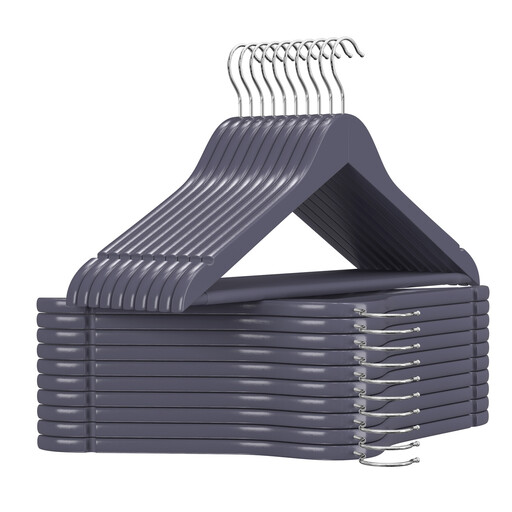
Why It's a Match: For those who value aesthetics and material quality. The solid maple wood and grey lacquer finish create a uniform, high-end look in the closet. Ideal for suits, coats, and delicate blouses.
The smoothly polished surface prevents the wood from splintering and protects clothing. The ergonomically curved shape prevents shoulder bumps, a common problem with poorly designed hangers.
These heavy-duty hangers made of maple wood have a load capacity of 5 kg. The combination of shoulder notches and a rubberised trouser bar makes them versatile, non-slip hangers.
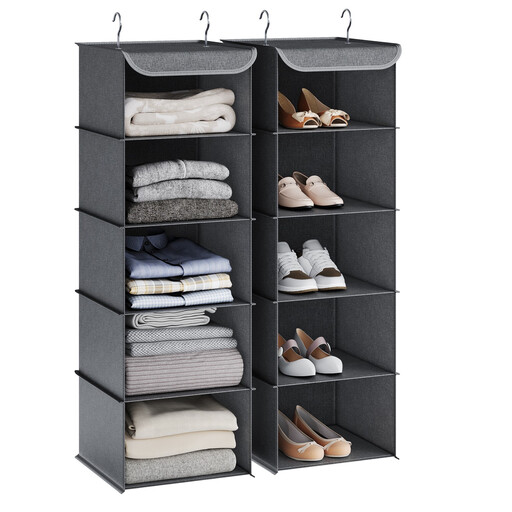
Why It's a Match: This solution utilizes the often-wasted vertical space in a closet without any drilling required. It's perfect for renters who need extra storage for sweaters, jeans, or bags without altering the property.
Unlike flimsy fabric organizers, this model features removable bamboo inserts in each compartment. These reinforce the shelves and prevent the typical sagging, even with heavier items.
The hanging closet organizer is foldable, allowing it to be stored compactly when not in use or during a move. It hangs from two metal hooks, which distribute the load more effectively than a single loop.
For hallways and entryways, sturdy wall hooks are often the most practical solution. We have curated a selection of products that stand out for their high load capacity and secure mounting.
1. How much weight can a clothes hanger really support? The load capacity varies greatly depending on the material and construction. A simple wire hanger can bend under just 1-2 kg. High-quality plastic or wooden hangers, like those featured here, are often designed for a maximum static load capacity of 5 kg or more. This is sufficient for heavy winter coats or multiple garments. Always check the manufacturer's specifications.
2. Are wooden hangers better than plastic ones? There is no one-size-fits-all answer; it depends on the use case. Wooden hangers are often more stable, durable, and visually appealing, making them ideal for heavy and formal wear. Plastic hangers are lighter, often more affordable in bulk, and can offer special design features like S-shaped openings or a very slim profile, making them great all-rounders and space-saving hangers.
3. How do I securely mount a wall coat rack? The security of a wall-mounted coat rack or a wall-mounted coat hook depends on two factors: the wall type and the correct mounting hardware. For solid concrete or brick walls, the standard wall plugs provided are usually sufficient. For drywall (plasterboard), you should use special hollow-wall anchors to ensure a secure hold. Whenever possible, mount heavy hook rails directly into the wood or metal studs behind the wall. For renters, adhesive solutions are an alternative, provided the specified maximum load is not exceeded.