
Lieferung heute & morgen

Qualitätsgarantie

Willkommens-Angebote freischalten: KOSTENLOSE Lieferung | Bis zu 80 % RABATT | Kostenlose 30-Tage-JoyPlus-Testphase
App herunterladen
A wardrobe with a mirror combines storage with a practical place to get ready. But looks alone don’t determine whether a model will work well in your bedroom in the long term. Inaccurate measurements, an unsuitable door system or a poorly thought-out interior layout can often lead to a disappointing purchase.
This guide explains what to consider before you buy and which models suit different room layouts.
A wardrobe with hinged doors needs enough space in front for the doors to open fully. In a narrow bedroom, by a doorway or next to the bed, this can make everyday use more difficult. A sliding-door wardrobe with a mirror, on the other hand, doesn’t need extra space for doors to swing open. However, the runners must be properly aligned and the floor should be as level as possible.
A large wardrobe isn’t automatically spacious inside. The number, position and adjustability of the shelves, as well as the length of the hanging rail, all make a difference. A 200 cm wardrobe can offer plenty of storage, but it also needs a wall wide enough to accommodate it and a suitable route for delivery. As well as checking the width, height and depth, make sure you measure door frames, stairwells and the space where the wardrobe will stand.
A mirror can make a room look bigger, but its glass surface is delicate. Knocks, sharp objects and improper cleaning can cause damage. Dust and fingerprints may also be more noticeable on white or high-gloss fronts, depending on the light. For everyday care, use a soft cloth and a suitable glass cleaner; abrasive products can damage the surfaces and edges.
Measure the available wall width, the room height and the maximum depth. Height is especially important if you have sloping ceilings or low ceilings. The models in this selection are between 150 and 200 cm wide and around 57 to 59 cm deep.
A wardrobe with shelves is useful for folded clothes, bed linen and accessories. A hanging rail is designed for shirts, jackets and dresses. Drawers make smaller items of clothing easier to access.
Check:
A wardrobe with drawers can improve how you organise the interior, but the drawers need extra room to open.
The models featured here are made from 16 mm laminated chipboard. ABS or PVC edging protects the edges of the panels from everyday wear. The sliding-door models use aluminium profiles and runners.
For tall, heavy furniture, securing it to the wall is an important safety measure. The assembly instructions for the models listed specify that the supplied anti-tip kit must be used. Two people are needed to assemble and move the wardrobes. Keep children away during assembly, and don’t let them use sliding doors, drawers or mirrored surfaces for climbing.
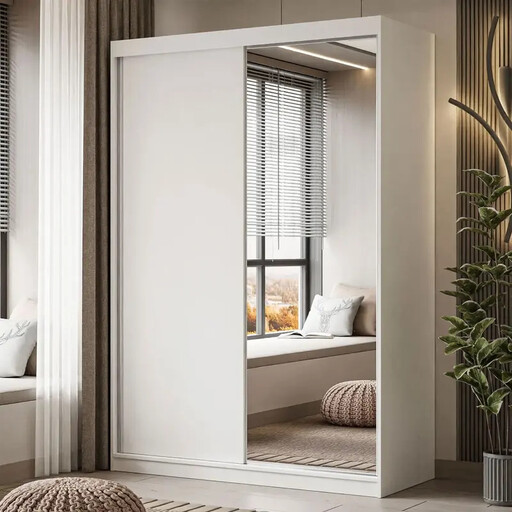
Why this product suits you: At 150 cm wide, this model’s sliding doors make it a good choice for smaller bedrooms, rented homes or rooms with limited space in front of the wardrobe.
The sliding doors don’t need clearance to swing open. Six shelves and a hanging rail make it easy to plan the interior layout.
150 cm wide, with a mirrored front, six shelves and an aluminium sliding system with integrated handle strips.
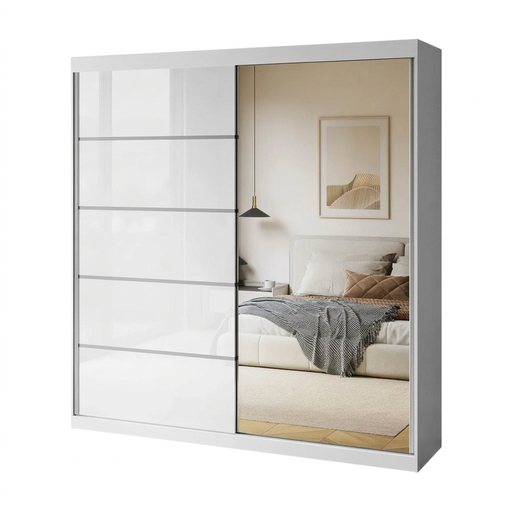
Why this product suits you: At 200 cm wide, this model pairs a high-gloss white front with a full-length mirror on one door, making it a good fit for a spacious bedroom.
The interior layout is clearly specified, with nine shelves and a hanging rail. The sliding doors also reduce the space needed in front of the wardrobe.
200 cm wide, with nine shelves, a mirrored door, aluminium runners and ABS edging on the laminated chipboard.
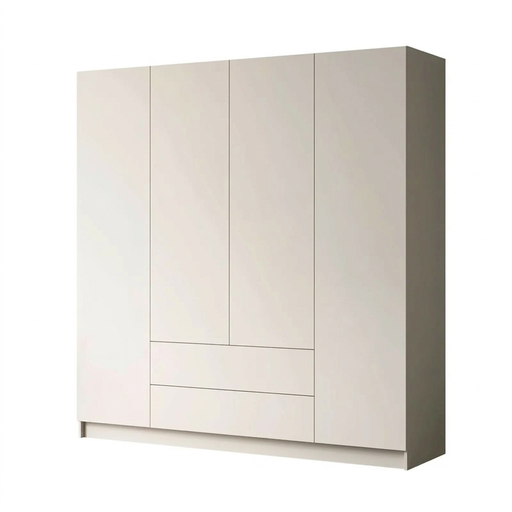
Why this product suits you: With twelve shelves, a hanging rail and two drawers, its interior layout is well suited to families or anyone with a variety of storage needs.
The layout clearly lists all the key storage features. This makes it easier to check in advance whether there’s room to keep folded and hanging clothes separate.
200 cm wide and 210 cm high, with twelve shelves, two drawers with ball-bearing runners and two mirrored doors.
We’ve put together a complete, regularly updated list of products that meet these strict selection criteria and the applicable EU safety regulations.
The wardrobes featured here are delivered flat-packed for self-assembly. Read the instructions all the way through before you start, and make sure you have two people available for assembly and moving the furniture. The models described must be secured to the wall. Before assembly, check that your wall is suitable for the specified fixings.
A soft, slightly damp cloth is usually all you need for routine care. Clean mirrors with a suitable glass cleaner. For high-gloss fronts, a microfibre cloth is recommended to help prevent scratches. Sliding doors may have adjustment screws underneath; hinged doors and push-to-open fittings may also need fine-tuning after assembly.
Unlike hinged doors, sliding doors don’t need clearance to swing open. However, the runners must remain accessible, and there should be enough room in front of the wardrobe to take things in and out. The exact amount of space you need depends on the bed, chest of drawers and room access.
A wardrobe with sliding doors can work well in a small room because its doors don’t swing out into the space. A mirrored surface can also make the room look bigger. Even so, measure the width, depth and height, as well as the position of your other furniture, before buying.
There’s no reliable one-size-fits-all answer. Its lifespan depends on factors including assembly, wall fixings, how heavily it’s loaded, moisture and care. Proper assembly, distributing clothes evenly and protecting the wardrobe from damp can help keep it in good condition.