
Lieferung heute & morgen

Qualitätsgarantie

Willkommens-Angebote freischalten: KOSTENLOSE Lieferung | Bis zu 80 % RABATT | Kostenlose 30-Tage-JoyPlus-Testphase
App herunterladen
A wardrobe with a mirror combines storage with a practical place to get ready. However, a large size, glossy finish or lots of compartments won’t automatically make it the right choice. The key considerations are your room layout, the door mechanism and how much of the interior space you can actually use.
A large wardrobe may fit on your floor plan and still make everyday life more difficult. A hinged-door wardrobe with a mirror needs extra room for the doors to swing open. Before buying, check not only the width, height and depth, but also the distance from the bed, walls, windows and radiators.
A 200 cm wardrobe is a practical choice for couples or families, but it needs a suitably wide space. For smaller bedrooms, a sliding-door wardrobe may be a better option, as its doors don’t swing out into the room.
A mirrored front can make a room look brighter and larger. However, it shows fingerprints and dust more clearly than a matt surface. Using unsuitable cleaning products on high-gloss fronts can cause scratches or dull patches.
Check the manufacturer’s specific care instructions. In most cases, a soft, slightly damp cloth is enough for the furniture surfaces, while the mirror can be cleaned with a suitable glass cleaner. Avoid abrasive cleaners and solvents.
‘Lots of compartments’ may sound appealing at first, but what matters more is whether the layout suits your clothes. A wardrobe with shelves and a hanging rail should have enough space for both hanging garments and folded clothes. Drawers are useful for smaller accessories, underwear or belts.
Check how many shelves are fixed or adjustable, whether the hanging rail runs the full width and whether you can make full use of the drawers.
Measure the available floor space at several points. As well as the width, height and depth are important: tall models must not clash with ceiling lights, skirting boards or doors. If the wardrobe is around 57 to 59 cm deep, also check that clothes will fit comfortably on hangers and that the doors can slide or open fully.
A mirrored sliding-door wardrobe is often a space-saving option for smaller rooms. A mirrored hinged-door wardrobe, on the other hand, gives you direct access to individual sections.
A practical interior combines shelves, a hanging rail and, where needed, drawers. Check the following:
The models featured here are made from 16 mm laminated chipboard with sealed edges. This is a clear, verifiable material specification, but you should still follow the maximum load limits in the assembly instructions.
Sliding doors need properly aligned runners and clear space in front of the wardrobe. Hinged doors can usually be opened individually, but need more room to swing open. A push-to-open system does away with traditional handles, but the magnetic catches may need fine-tuning after assembly.
The wardrobes featured here are supplied as flat-pack wardrobes for self-assembly. Two people are recommended for assembly and moving. You must secure the wardrobe to the wall using the supplied anti-tip device. This is especially important in homes with children. Mirror glass can break if struck hard, while sliding doors can pose a trapping risk around the runners and door gaps.
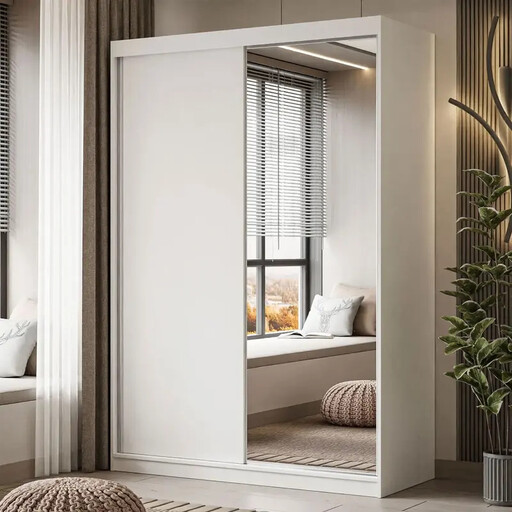
Why it suits this profile: At 150 cm wide, it’s a good fit for individuals, couples short on space or smaller bedrooms. The sliding doors don’t need extra room to swing open.
The matt white finish is more understated than a high-gloss surface, while six shelves and a hanging rail make the interior layout easy to understand.
150 cm wide, with a mirror on one door, six shelves and an aluminium sliding system with integrated handles.
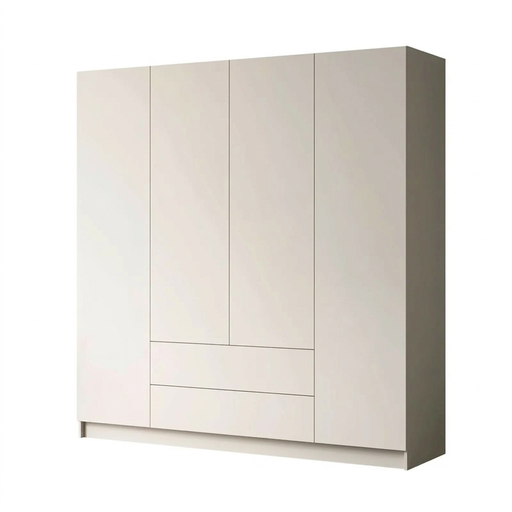
Why it suits this profile: This model is designed for households looking for generous storage, a clearly organised interior and extra drawers.
The specifications clearly list twelve shelves, a hanging rail and two drawers, making it easier to plan your storage before buying.
200 cm wide and 210 cm high, with two mirrored doors, a push-to-open mechanism, 16 mm laminated chipboard and ABS edging.
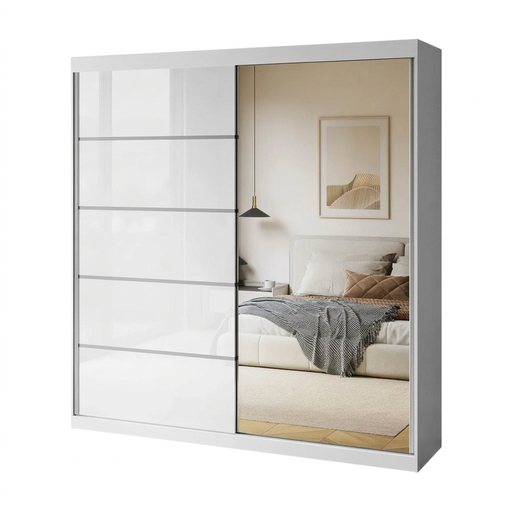
Why it suits this profile: For families or couples who need plenty of storage, this 200 cm wide mirrored sliding-door wardrobe combines a generous front with nine shelves and a hanging rail.
The sliding doors save space. The interior layout, mirror position and runner system are also clearly specified, rather than relying on vague claims about storage.
200 cm wide and 215 cm high, with nine shelves, a hanging rail, one fully mirrored door and aluminium runners.
We’ve put together a complete, regularly updated list of products that meet these strict selection criteria and fully comply with the safety regulations in force in the EU.
Read the assembly instructions in full before you begin. Two people are recommended for assembling and moving the models featured here. Secure the wardrobe to the wall using the supplied anti-tip device. If you have plasterboard walls, check which fixings are suitable for your particular wall construction.
Its lifespan depends on factors such as the materials, load, assembly and care. 16 mm thick laminated chipboard with sealed edges can provide a sturdy base when used correctly. Don’t overload the shelves or hanging rail, and adjust the doors after assembly as directed in the instructions.
A sliding-door wardrobe needs less clear space in front, so it’s often a good choice for smaller bedrooms. A hinged-door wardrobe gives you direct access to individual compartments, but needs room for the doors to open. The key is to consider the specific layout of your room, including the bed, walkways and windows.