
Lieferung heute & morgen

Qualitätsgarantie

Willkommens-Angebote freischalten: KOSTENLOSE Lieferung | Bis zu 80 % RABATT | Kostenlose 30-Tage-JoyPlus-Testphase
App herunterladen
A wardrobe with a mirror combines storage with a practical dressing area. However, bedrooms, dressing rooms and hallways require different designs, from narrow hallway wardrobes with mirrors to large wardrobes with sliding doors and multiple internal compartments.
Your choice should not be based solely on colour or mirror size. Three common purchasing issues can make a wardrobe less practical in everyday use than expected:
First measure the available wall width, ceiling height and depth. With taller models, you should also check whether the wardrobe can be positioned upright. A model measuring 215 cm high may be unsuitable for rooms with low ceilings or sloping roofs.
A wardrobe for small rooms will often benefit from sliding doors, as no swing area in front of the furniture is required. Depth is still important, however: around 58 to 59 cm may be suitable for hanging clothes, while a narrow hallway wardrobe with a depth of 40 cm is more likely to be designed for folded textiles, accessories or shoes.
A wardrobe with sliding doors can also be used where a bed, desk or passage is close to the front of the wardrobe. Look for a sturdy runner and make sure the floor is level. Sliding doors can also create a trapping hazard around the joins and runners.
A hinged-door wardrobe with a mirror usually provides direct access to individual sections. The doors do, however, need sufficient room to open. Push-to-open systems do away with traditional handles, but may require fine adjustment of the magnetic catches after assembly.
A wardrobe with shelves and a clothes rail should ideally accommodate different types of clothing. A clothes rail is useful for shirts, jackets and dresses, while folded clothing, bags and bed linen can be organised on shelves. Drawers provide additional space for smaller textiles.
Check the information about the material and edges. The models featured here are described as using 16 mm laminated chipboard with ABS or PVC edges. This information describes the construction, but does not replace correct assembly. Large and tall furniture must be secured to the wall in accordance with the manufacturer’s instructions to prevent it from tipping over.
The following models differ significantly in width, door system and storage capacity. The recommendations are based on the published product data and typical living situations in Germany.
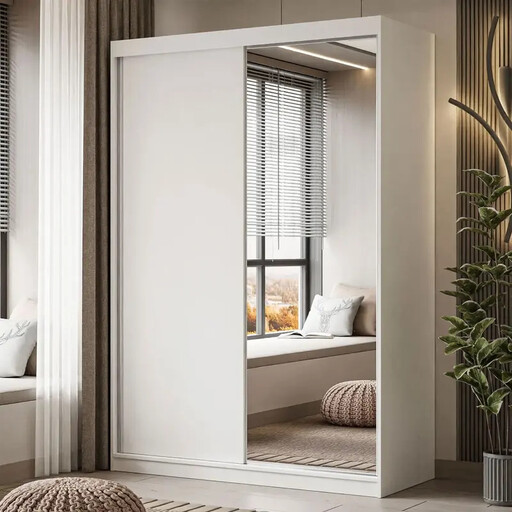
Why this product suits the profile: At 150 cm wide, this white wardrobe offers a medium-sized solution for bedrooms and smaller homes. The sliding doors do not require any additional swing area.
The product data specifies six adjustable shelves and a clothes rail. This makes the internal layout easier to assess than a listing that only provides external dimensions.
One mirrored door, a matt white finish, an aluminium sliding system and 16 mm laminated chipboard with PVC edges.
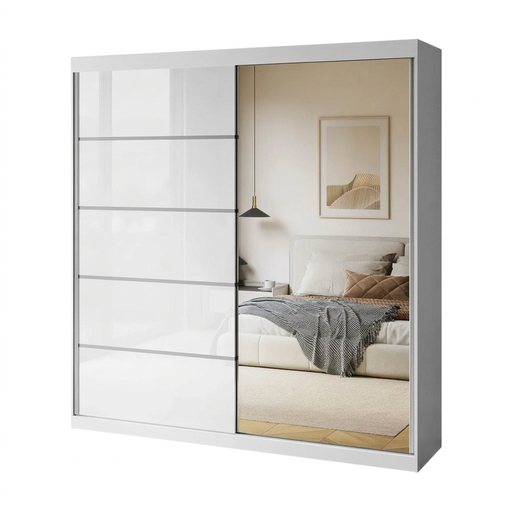
Why this product suits the profile: This 200 cm-wide model is aimed at couples or households with a substantial wardrobe. A fully mirrored door and nine shelves help organise the interior.
The specified dimensions, nine shelves and clothes rail make planning easier. The required wall anchoring should be factored in during assembly.
200 cm width, 215 cm height, Servoll aluminium rails, ABS edges and a high-gloss white finish.
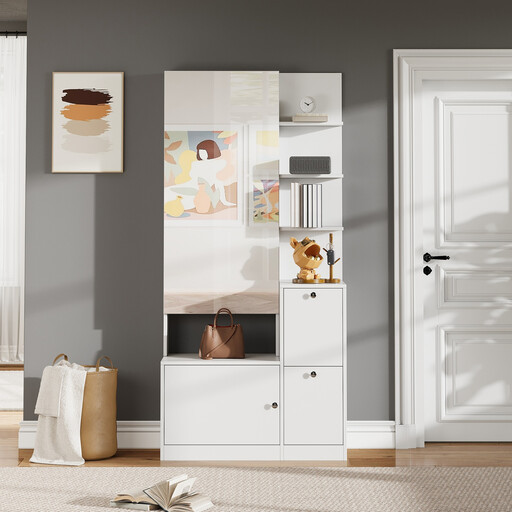
Why this product suits the profile: This narrow hallway wardrobe with shoe storage is designed for hallways, entrance areas or small homes. Its 40 cm depth keeps the passage relatively clear.
The product description lists five open shelves, three separate internal sections and two pull-out shoe cabinets, each with two tiers.
85 × 40 × 180 cm, integrated mirror, two doors, five open compartments and a specified top load capacity of 50 kg.
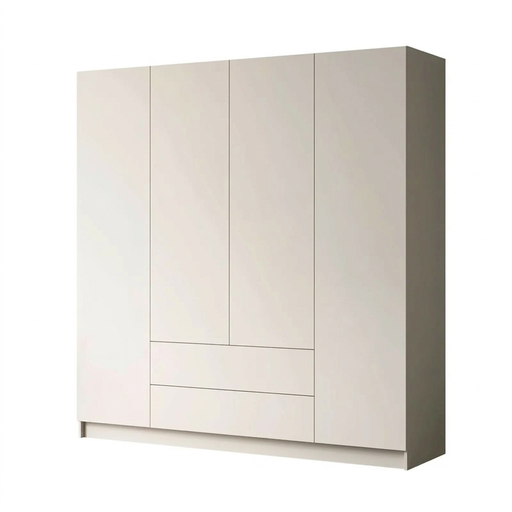
Why this product suits the profile: The combination of four hinged doors, two mirrored doors, twelve shelves, a clothes rail and two drawers suits households that want to organise clothing by category.
The interior is clearly specified as having twelve shelves, a clothes rail and two drawers. Before buying, measure the swing area required by the four doors.
Push-to-open mechanism, ball-bearing drawer runners, 16 mm laminated chipboard and ABS edges.
The wardrobes featured are delivered flat-packed and require self-assembly. With tall or wide models, at least two people should be available for assembly and transport. Read the instructions in full before connecting any components and check that all packages have arrived.
Wall anchoring is a key safety consideration with large wardrobes. The surface must be level, and doors and drawers should open and close smoothly after assembly. A soft, slightly damp cloth is generally sufficient for decorative surfaces. Mirror glass should be cleaned with a suitable glass cleaner and a soft cloth. Abrasive cleaners and solvents can damage surfaces and edges.
We have put together a complete, regularly updated list of products that fully meet these strict selection criteria and the safety regulations applicable in the EU.
No traditional swing area is required in front of the wardrobe. Nevertheless, you should allow sufficient space at the sides, above and in front of the furniture for assembly, cleaning and opening the doors fully. The actual depth depends on the model and should be checked against the room layout.
Yes, provided the width, depth and door system suit the room. A sliding-door wardrobe can help keep the passage clear. Narrow models with integrated shoe storage may be suitable for tight hallways. The mirror can make the room appear more open, but it does not replace careful planning of the available floor space.
There is no reliable way to give a general lifespan. It depends, among other things, on the material, assembly, load, moisture and daily use. Look for precise product information, secure the wardrobe to the wall and avoid overloading shelves, drawers or surfaces.