
Lieferung heute & morgen

Qualitätsgarantie

Willkommens-Angebote freischalten: KOSTENLOSE Lieferung | Bis zu 80 % RABATT | Kostenlose 30-Tage-JoyPlus-Testphase
App herunterladen
A wardrobe with plenty of storage should keep clothes clearly organised, make smart use of the space you have and remain easy to access day to day. In small flats, student digs or busy family homes, it’s not just the stated size that matters. Layout, load capacity, materials and anti-tip safety all influence whether a wardrobe stays practical in the long run.
A tall or wide wardrobe doesn’t automatically provide enough room for folded clothes. What really counts is the internal layout, the number of compartments and where the clothes rail is positioned. Deep shelves can hold a lot, but they can make it harder to reach smaller items.
Before you buy, check:
Marketing words like ‘robust’ or ‘extra stable’ don’t replace hard facts. Look for the maximum static load for the rail, each shelf and the entire unit. These figures can’t simply be added together: a fully loaded rail may stress the frame more than several light accessories.
With a fabric wardrobe, tube diameters, push-fit connections and the stability of the plastic joints also matter. A portable wardrobe should only stand on a level floor and, if the manufacturer advises it, be completely emptied before you move it.
Tall furniture has a higher centre of gravity. A wardrobe with a clothes rail, a multi-shelf system or an open garment rack can become unstable if heavy items are stored at the top. That’s why several models come with wall anchoring as standard or a clear recommendation to fix them.
Before assembly, check whether your wall is suitable for the fixing system. A folding wardrobe or fabric wardrobe usually needs less assembly than a large carcass unit, but it should still be set up securely and never used as something to climb on.
A continuous clothes rail is ideal for hanging garments. For jumpers, trousers, bedding and shoes you’ll need shelves or drawers. A wardrobe with a clothes rail and several shelves can keep different types of clothing in one piece of furniture.
Storage boxes help structure the interior. Foldable storage boxes can be tucked away flat when not in use. Pay attention to the internal shelf measurements: JOYFURNOS boxes measure 30 × 30 × 30 cm each and, according to the product information, fit compartments from 30.5 cm wide.
A rigid wardrobe is often made from coated engineered wood. For the AUREL model, for example, 16 mm laminated chipboard and ABS edges are specified. Fabric wardrobes typically use metal tubes, plastic connectors and non-woven fabric. These materials are light and flexible, but should be protected from moisture, direct sunlight and excessive loads.
Care is particularly important with textile boxes. JOYFURNOS boxes are made from 80 g/m² non-woven fabric and cardboard. They shouldn’t be washed; wipe them with a damp cloth and let them dry thoroughly.
Measure not only the footprint but also ceiling height, doorway width and the clearance around the furniture. A 200 cm wide wardrobe needs enough room for delivery, assembly and for the doors to open later on. Larger carcass units usually require two people for assembly and transport.
A portable wardrobe can suit rented flats, guest rooms or seasonal clothing. A clothes rack needs less depth and is easy to reposition, but it won’t automatically protect garments from dust.
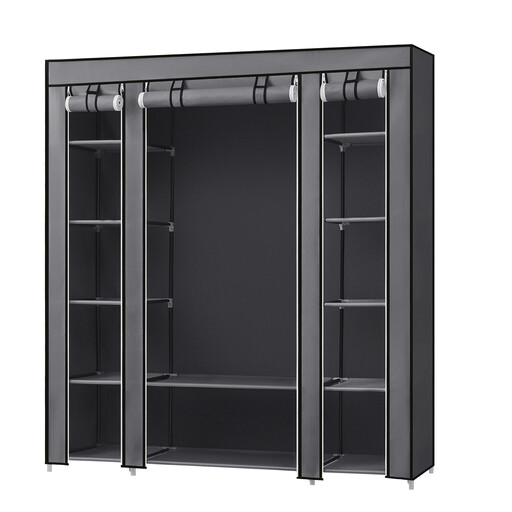
Why this product suits the profile: At 45 × 150 × 175 cm, this fabric wardrobe offers twelve storage compartments and a clothes rail for clothing, shoes and accessories.
Clear dimensions and load ratings of 5 kg per shelf and 15 kg for the rail make realistic planning easier.
Metal frame, non-woven fabric cover and numbered assembly parts; the cover can be closed or rolled up.
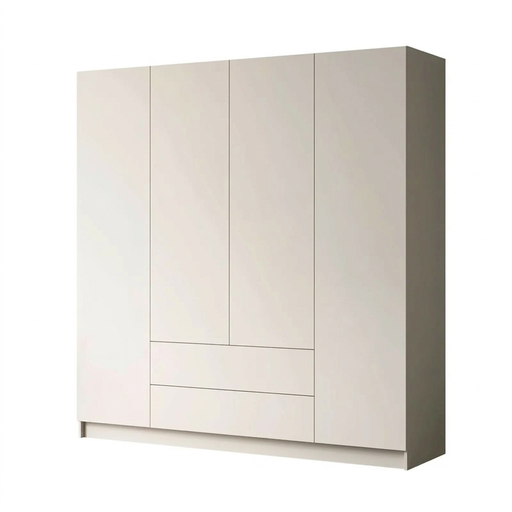
Why this product suits the profile: The large carcass suits households that want to organise clothing permanently in a single piece of furniture with twelve compartments, a clothes rail and two drawers.
The interior fittings are specified in detail. The mandatory wall fixing addresses the tip-over risk of large furniture.
16 mm laminated chipboard, ABS edges, four doors, two drawers and ball-bearing runners.
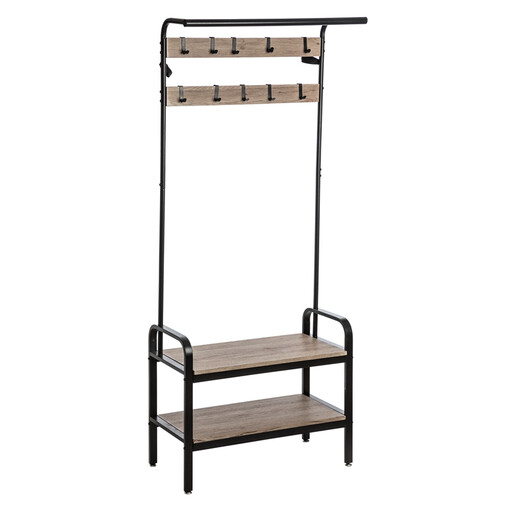
Why this product suits the profile: The vertical layout with ten levels, six hooks and a reinforced rail suits a hallway, bedroom or student flat.
A total load of 50 kg and 5 kg per shelf are specified. The recommended wall fixing should be planned in.
Powder-coated metal frame, engineered wood shelves and multiple levels to exploit vertical space.
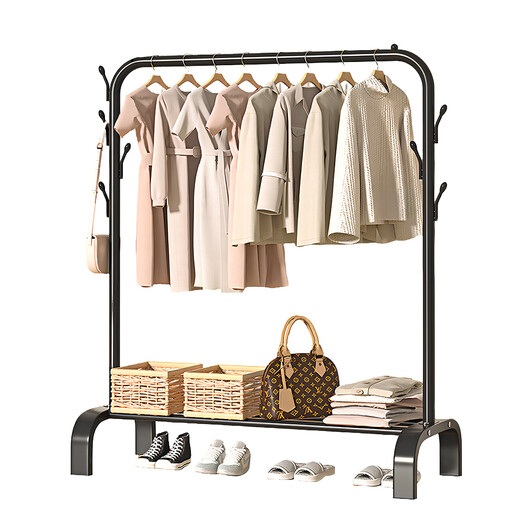
Why this product suits the profile: The 105 cm high clothes rack takes up very little room and is ideal for frequently worn pieces, guests’ coats or seasonal clothing storage.
The overall height and carbon steel material are clearly stated. The rack should stand on a level surface and not be overloaded.
Lightweight construction with a stated product weight of 0.4 kg and black coating; designed for indoor use.
We’ve compiled a complete, continuously updated list of products that fully meet these strict selection criteria and EU safety regulations.
Not everything needs to be hung up. Seasonal textiles, scarves, hats and bedding can be grouped in storage boxes. Transparent windows make it easier to find what you’re after, while carry handles help when you rearrange.
JOYFURNOS boxes come as a set of six and can be folded flat when not in use. For shelves with different dimensions, foldable boxes measuring 40 × 30 × 20 cm with a 24-litre capacity are a good option. The key is not to exceed the stated load limit and to store textiles dry.
Around 55 to 60 cm depth is often practical for hanging garments so they have enough space on the rail. With a space-saving wardrobe or clothes rack, less depth may be enough, provided clothing doesn’t rub against doors or walls.
That depends on the frame, connectors, cover and load specifications. A fabric wardrobe can be a sensible choice for bedrooms, guest rooms or rented flats. It should stand in a dry spot, be checked regularly for loose connections and be secured to the wall as the manufacturer advises.
Start by sorting clothing by use and season. Hang items on the rail and keep frequently used textiles on easily accessible shelves. Store rarely needed clothing in labelled storage boxes on the upper shelves. Keep heavy items as low as possible to maintain a low centre of gravity.