Who is this relevant to?

Households with tea towels and outdoor clothing

If your tea towels and outdoor clothing need different washing conditions, it’s important to wash them separately using suitable cycles. The German Federal Institute for Risk Assessment and GORE-TEX each set out care requirements for the types of textiles they refer to.

Outdoor enthusiasts with delicate layers

If you want to remove mud without compromising the fabric or ignoring care instructions, choose the detergent, programme and drying method specified on the label of the garment in question. GORE-TEX highlights specific care requirements and exceptions.

Households short on space for appliances

A washer-dryer can let you wash and dry your laundry in the space taken up by one appliance. The German consumer advice centre points out that washing and drying capacities, as well as energy consumption, may differ from what you’d expect from separate appliances.

What should you look for when buying?

Washer-dryer

A good fit if: you only have space for one appliance and can wash your textiles in separate loads.

Consider: The drying capacity may be lower than the washing capacity, so you’ll also need to take energy consumption and drying throughput into account.

Washing machine and separate tumble dryer

A good fit if: you have space for two appliances and regularly want to machine-dry larger, separate loads.

Consider: You’ll need more space and will have to move the laundry from one appliance to the other.

Washing machine and air-drying

A good fit if: you have a suitable place to dry your laundry and the care label allows or requires air-drying.

Consider: Air-drying takes time and space. Always follow the care instructions for the garment in question.

What matters to you What to check before buying Who is it most relevant to?
Suitable washing for tea towels Suitable wash programmes and the option to run a separate load. If I want to wash tea towels hygienically, I don’t want to apply the same programme and detergent to outdoor clothing without checking first. Around 33% of consumers rank this as their top priority.
Caring for muddy outdoor layers Detergent and programme settings that follow the care label, plus the option to skip drying. If a delicate layer gets muddy, I want to follow the fabric’s care instructions and any restrictions on drying. Around 27% of consumers prioritise this kind of care for outdoor fabrics.
One appliance in a limited space Appliance dimensions and door opening, plus the separate washing and drying capacities. If I only have space for one appliance, I want to be able to wash and occasionally dry my laundry in the same machine. Around 20% of consumers consider this space constraint their top priority.
Drying capacity and energy consumption Washing and wash-and-dry load capacities, plus kWh per 100 cycles for both modes. If I wash separate loads one after another and often want to tumble-dry them, I want to weigh up throughput and energy consumption together. Around 20% of consumers rank this as their top priority.

Common buying mistakes

  • Assuming a hygiene or steam programme means you can skip separating your laundry

    A programme name doesn’t prove that its wash cycle and detergent are suitable for both heavily soiled kitchen cloths and delicate technical clothing. The German Federal Institute for Risk Assessment recommends washing heavily contaminated dishcloths and cleaning cloths on a 60 °C cotton cycle with detergent containing bleach. Outdoor clothing may have different care requirements.

    Plan separate loads and check the care label, detergent and programme for each type of textile.

  • Assuming the drying capacity is the same as the washing capacity

    Bosch Hausgeräte Deutschland lists a washing capacity of 10.5 kg for the Bosch WNG24443, but only 6 kg for a combined wash-and-dry cycle. These figures apply to this model and shouldn’t be assumed to apply to other appliances.

    Choose a machine based on the amount of laundry you need to dry. If you’re washing separate loads, you may need to run consecutive cycles.

    If the washing load is larger than the permitted drying load, you may need an additional drying cycle.

  • Comparing washing energy consumption only

    The EU energy label shows separate figures for the wash-only cycle and the combined wash-and-dry cycle. If you’ll be using the dryer regularly too, take both figures into account. The German consumer advice centre highlights the potential for washer-dryers to use more energy than separate appliances.

    Compare the kWh figures per 100 cycles for the modes you actually plan to use.

Key brands at a glance

AEG

The 9000 Series L9WEF80690 is a heat pump washer-dryer with separate washing and drying specifications.

  • AEG lists a washing capacity of 9 kg, a drying capacity of 6 kg and energy consumption of 252 kWh per 100 wash-and-dry cycles for this model.
  • These model specifications don’t prove that it’s suitable for every item of outdoor clothing or that it offers a specific hygiene benefit for tea towels. The care label for each item remains the key guide.

Haier

The HWD120-BD16397EU1 from the X Series 11 is worth comparing if you’re looking for larger washing and drying capacities.

  • Haier lists a washing capacity of 12 kg, a drying capacity of 7 kg and heat pump technology for this model.
  • The stated appliance depth is 661 mm. A higher rated capacity doesn’t automatically make it the right choice for washing different textiles together.

LG

The W4WR7096YB is listed with a washing capacity of 9 kg and a drying capacity of 6 kg.

  • Looking at the washing and drying capacities separately helps you work out how much laundry you can put through a combined cycle.
  • A fabric-protection test described by LG applied to other models and 2 kg of underwear on specific programmes. It doesn’t indicate how the machine will perform with muddy outdoor clothing.

Bosch

The WNG24443 illustrates a washer-dryer with a larger washing capacity than drying capacity.

  • Bosch Hausgeräte Deutschland lists a washing capacity of 10.5 kg and a combined wash-and-dry capacity of 6 kg, with dimensions of 848 × 598 × 590 mm.
  • The advertised stain-removal feature is not independent proof that the machine removes mud or can wash kitchen textiles and outdoor clothing together.

Siemens

The WN54C2A40 features i-Dos and is worth comparing if automatic detergent dosing matters to you.

  • Siemens lists a washing capacity of 10.5 kg and a combined wash-and-dry capacity of 6 kg for this model.
  • The appliance is 622 mm deep. Automatic dosing doesn’t replace the different detergent requirements that may apply to individual textiles.

Washer-dryers at Joybuy

The models below are washer-dryers for households that want to wash tea towels and outdoor clothing in separate loads, following the relevant care labels.
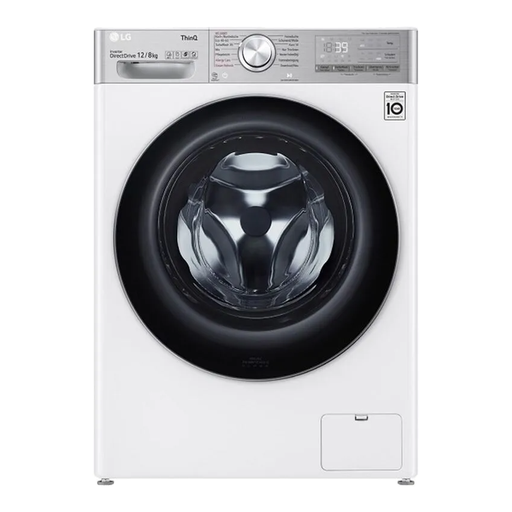
LG V9WD128H2 AI DD washer-dryer (12 kg), white

LG V9WD128H2 AI DD washer-dryer (12 kg)

Designed as a single washer-dryer for separate loads. Before buying, check the stated drying capacity separately.

View at Joybuy

LG WT1210WWF washer-dryer with 12 kg washing and 10 kg drying capacities

LG WT1210WWF washer-dryer, 12 kg wash/10 kg dry

The stated washing capacity of 12 kg and drying capacity of 10 kg can help you plan separate loads. For a combined cycle, the drying capacity is the limiting factor.

View at Joybuy

Samsung washer-dryer with 9 kg washing and 6 kg drying capacities

Samsung washer-dryer, 9 kg wash/6 kg dry

The 9 kg washing capacity and 6 kg drying capacity show how much the load size differs for a combined cycle.

View at Joybuy
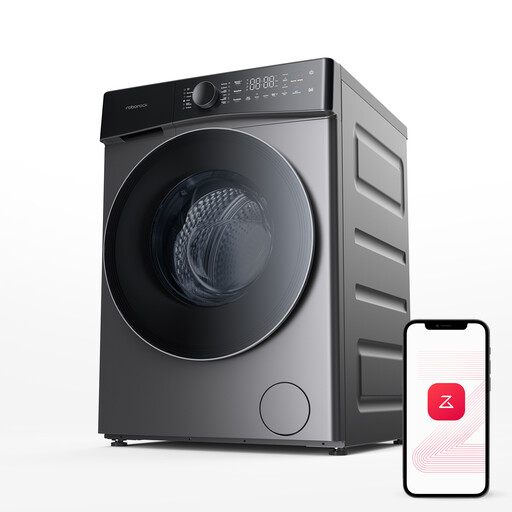
Roborock Zeo Lite Grey washer-dryer with 10 kg washing and 6 kg drying capacities

Roborock Zeo Lite Grey washer-dryer, 10 kg wash/6 kg dry

The stated washing capacity of 10 kg is higher than the drying capacity of 6 kg, so plan combined cycles around the lower figure.

View at Joybuy
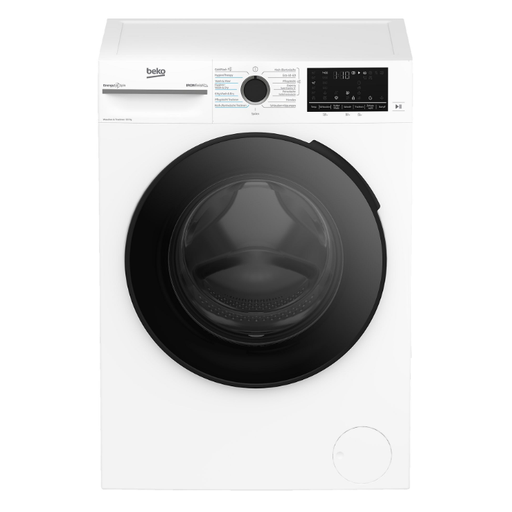
Beko BM3DT4944W washer-dryer with 9 kg washing and 6 kg drying capacities

Beko BM3DT4944W washer-dryer, 9 kg wash/6 kg dry

For separate loads, bear in mind that the stated drying capacity of 6 kg is lower than the washing capacity of 9 kg.

View at Joybuy

Frequently asked questions

Can I wash tea towels and muddy waterproof jackets together?

As a rule, treat them as separate loads and follow the care labels for each item. The German Federal Institute for Risk Assessment recommends washing heavily contaminated dishcloths and cleaning cloths on a 60 °C cotton cycle with detergent containing bleach. GORE-TEX gives different care instructions for its outerwear. These don’t automatically apply to every tea towel or outdoor layer.

Can every outdoor jacket go in the washer-dryer after washing?

No. Always follow the care label for the jacket in question. GORE-TEX recommends air-drying or gentle tumble-drying for suitable outerwear, but specifically prohibits tumble-drying SHAKEDRY garments.

How can I estimate potential electricity costs?

On the EU energy label, compare the kWh per 100 cycles for washing only and for washing plus drying separately. To work out your own estimate, multiply the relevant consumption figure by your electricity price per kWh and the number of cycles you expect to run.

Are a guarantee and statutory consumer rights the same thing?

No. In Germany, the seller is responsible for meeting statutory obligations if a product is faulty. A guarantee is an additional voluntary promise with its own terms and conditions. The German consumer advice centre explicitly distinguishes between statutory rights and guarantees.

What information should the energy label show when buying online?

The EU energy label for washer-dryers includes information such as efficiency, energy consumption, programme duration and noise emissions. According to the European Commission, energy labels for products covered by the rules must also be visible in online shops. This doesn’t mean there’s a general minimum efficiency rating you must choose.