
Lieferung heute & morgen

Qualitätsgarantie

Willkommens-Angebote freischalten: KOSTENLOSE Lieferung | Bis zu 80 % RABATT | Kostenlose 30-Tage-JoyPlus-Testphase
App herunterladen
A donut-shaped dog bed is a popular choice for many pet owners due to its specific design. The raised, round rim creates a sheltered environment that caters to the natural instinct of many dogs for security and comfort. At the same time, washability is a crucial criterion for maintaining hygiene and ensuring longevity. This article analyses the technical specifications relevant to choosing a washable donut dog bed and presents a selection of recommended models.
The decision for a suitable dog bed should be based on an analysis of material, construction, and care properties.
The surface materials and filling determine comfort, durability, and ease of care.
The option for easy cleaning is fundamental for household hygiene. There are several different designs to consider:
The correct size is crucial for your pet's comfort. A round dog bed is primarily suitable for dogs that like to curl up to sleep. Measure your dog while it is curled up and add 15–25 cm to the diameter to determine the adequate size. The raised rim should be sturdy enough to serve as a headrest without collapsing under the pet's weight.
A non-slip base, often featuring rubber dots, prevents the bed from sliding on smooth floors like parquet or tile. This increases safety, especially for older or very active dogs when getting in and out.
The following products were selected for this overview based on their technical specifications and functional features.
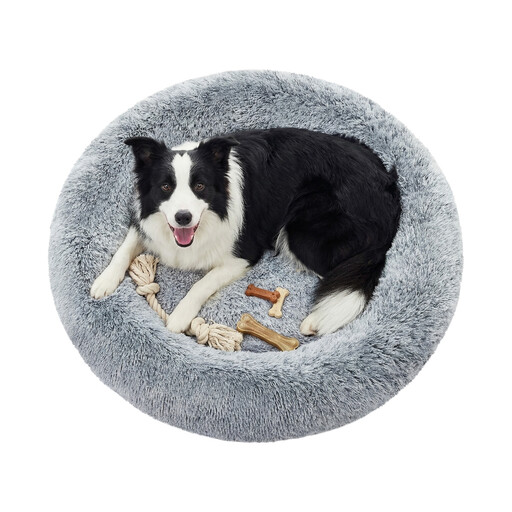
Why we recommend this product: This model combines a generous 100 cm diameter with a well-designed cleaning solution. The centre cushion can be easily removed via a zip on the bottom and washed separately, which significantly simplifies the care of such a large bed.
Pros:
Who it's for: This dog bed for large dogs or medium-sized breeds that prefer plenty of space is a functional choice. It also works well as a donut cat bed for multi-cat households.
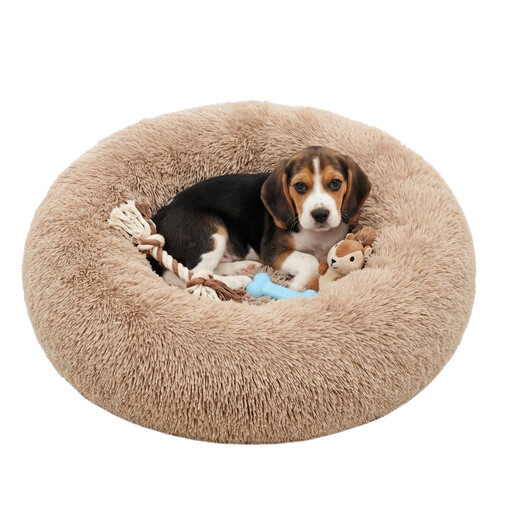
Why we recommend this product: The 70 cm diameter model offers a balanced combination of comfort and practical handling for a common pet size. The design, which also features a removable centre cushion and PP cotton filling, aims for long-lasting shape retention and easy cleaning.
Pros:
Who it's for: Ideal for small to medium-sized dogs and cats that prefer a cosy and secure nest. The size is compact enough for most living spaces.
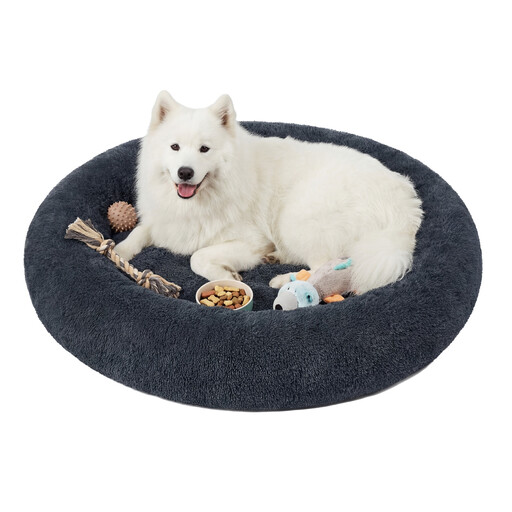
Why we recommend this product: This model stands out with its square shape and exceptional size of 140 x 140 cm. The key feature is the completely removable and washable cover, which makes cleaning such a large surface practical. The 20 cm high rim offers adequate support even for very large dogs.
Pros:
Who it's for: This bed is designed for very large dog breeds (up to approx. 40 kg, according to the manufacturer), multi-pet households, or dogs that like to stretch out in their sleep.
If the donut shape doesn't exactly meet your pet's needs, or if you are looking for specific covers with different material properties, you can find a wider selection of sleeping options in our main category.
Find more models in the category: Cushions with Covers
1. How do I wash a donut dog bed correctly? Always follow the manufacturer's care instructions on the label. For models with a removable cover or cushion, wash these parts separately on a gentle cycle at a low temperature. Use a mild detergent. Air drying is often recommended to preserve the shape of the filling. For fully washable beds, ensure your washing machine is large enough to avoid an imbalance.
2. What size donut dog bed does my dog need? Measure your dog while it is lying in its preferred sleeping position—typically curled up. Measure the diameter and add 15 to 25 cm. This ensures the animal has enough space to position itself comfortably and that the rim can serve as a support.
3. Is a calming dog bed a good choice for every dog? The term "calming" in relation to these beds refers to the physical design. The high, enclosing rim can provide a sense of security and comfort, similar to a nest. This can be beneficial for many dogs, especially those that are naturally more anxious or like to sleep in sheltered spaces. However, it is a comfort feature, not a therapeutic measure.