
Lieferung heute & morgen

Qualitätsgarantie

Willkommens-Angebote freischalten: KOSTENLOSE Lieferung | Bis zu 80 % RABATT | Kostenlose 30-Tage-JoyPlus-Testphase
App herunterladen
Washable felt-tip pens for children encourage creativity without every splash of colour on clothes, skin or furniture becoming a permanent problem. At the same time, children’s pens vary considerably in their grip, nib, ink and age rating. A wide range of colours alone tells you little about whether a marker is suitable for a toddler, nursery or creative school projects.
This buying guide will help parents, grandparents and education professionals avoid common buying mistakes and choose the right art pens for children based on clear, practical features.
Washable markers are usually easier to remove from skin and fabrics than non-washable alternatives. However, that doesn’t mean every colour will come away completely from every material. The longer ink is left to dry, the harder it may be to clean. That’s why fresh stains should be treated with water and, if necessary, soap as soon as possible.
The Jar Melo products described here are said to be 90% washable from skin and most fabrics. This claim doesn’t automatically apply to every surface, such as wood, wallpaper, leather or upholstered furniture.
A large pen set for children may look appealing, but it can be impractical for little hands. Thin barrels, very fine nibs or hard-to-open caps can make pens difficult to use. For toddlers, chunky felt-tip pens for little hands or round dot markers are often easier to grip.
You should also take note of age recommendations, such as 3 years and over. They don’t replace adult supervision. Small caps, replacement nibs and other accessories may present a choking risk.
Terms such as “non-toxic felt-tip pens” or “water-based pens” describe important features, but they don’t replace checking the specific product information. Things to look out for include:
For example, the Crayola Mini Kids set is described as having water-based, non-toxic ink, a non-retractable ball tip and ventilated caps with EN-71 certification according to the product description. Even so, children should be supervised while drawing and should not put the pens in their mouths.
Water-based ink is often a practical choice for home and educational use. It may be easier to remove with water than alcohol-based ink. However, no general claim can be made about every surface. For everyday use, a washable table covering is a good idea, especially with toddlers.
If you’re considering products described as washable markers, it’s also worth checking the care instructions: caps should be firmly closed after use to help stop the nibs from drying out too quickly.
The nib determines whether a pen is suitable for colouring in, dots, outlines or writing:
Dual-tip markers with brush and chisel tips are better suited to older children or frequent users. They aren’t automatically the best choice for toddlers, given the extra features and, in some cases, smaller caps.
A set of six colours may be enough for early colour-matching activities. Twelve or 24 colours offer more choice for nursery, school and craft projects. Activity sheets can make it easier to get started and remove the need to buy an additional craft and art set.
Think about storage, too. A box or case with a handle makes it easier to keep pens organised and carry them around. With very large sets, check that all the included parts are age-appropriate.
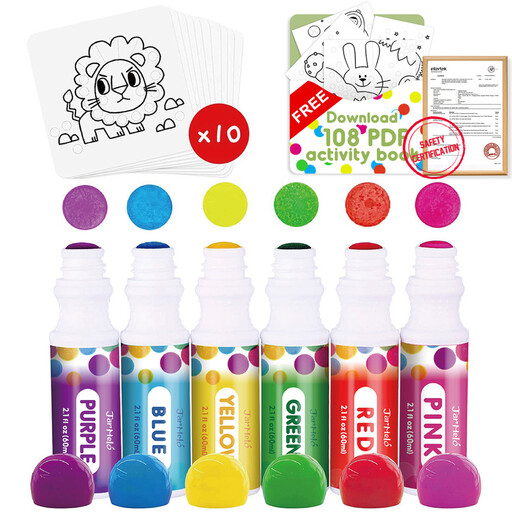
Why this product suits this profile: Six jumbo dot markers offer a manageable introduction to early colour and dot activities. The large, round barrel is designed for little hands.
The broad sponge-pad tip is less suited to fine lines, making it easy to use for dot pictures and larger areas. The ink is described as water-based, alcohol-free and odourless.
Six markers, ten printed activity sheets and access to more than 120 PDF pages; according to the product information, 90% washable from skin and most fabrics.
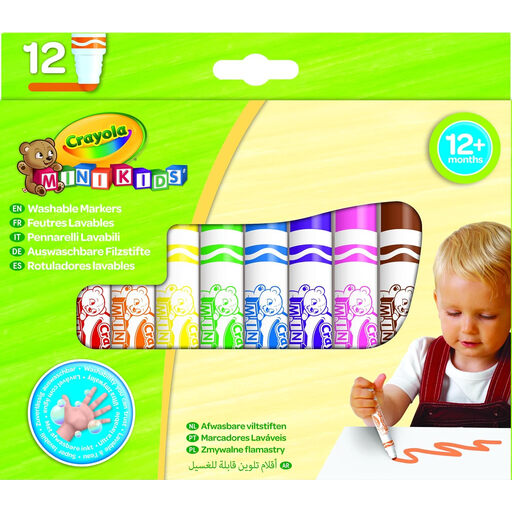
Why this product suits this profile: This set combines twelve colours with a chunky maxi barrel and a ball tip, making it suitable for pre-school children.
The product description specifies a non-retractable ball tip and ventilated caps with EN-71 certification. However, adult supervision is still essential.
Water-based ink described as non-toxic, a maxi format and colours for drawing and colouring in.
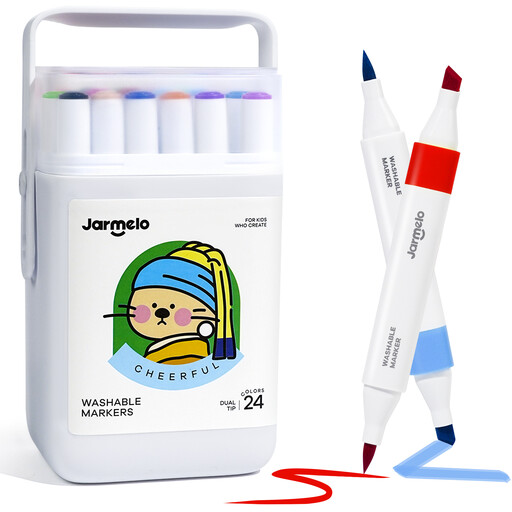
Why this product suits this profile: With 24 colours and brush and chisel tips, this set is suitable for older children, lettering, coloured outlines and a range of craft projects.
The thicker, oval shape makes the pens easier to grip. Ventilated caps and a storage bag are specific features listed in the product description.
24 dual-tip markers with brush and chisel tips, water-based ink and a carry case with a handle.
To help children’s pens last as long as possible, you should:
For very young children, dot markers for toddlers with activity sheets can offer an easier introduction. Children aged 3 and over often benefit from short, thick tips. Fine markers, replacement nibs and large collections of accessories are better suited to older children.
We’ve put together a complete, regularly updated list of products that meet these strict selection criteria and fully comply with the safety regulations in force in the EU.
It depends on the product. The age recommendation, the size of the caps and accessories, and the design of the tip are all important. Even a product labelled “3 years and over” should only be used under supervision.
Treat fresh stains with cold or lukewarm water as soon as possible. Depending on the fabric, you may also be able to use soap or a suitable laundry detergent. Check the garment’s care label before treating the stain. Dried ink, or ink on delicate materials, can be harder to remove.
Their lifespan depends on how they’re used, capped and stored. Leaving them uncapped frequently will cause the tips to dry out. Firmly closed caps and dry storage help extend their useful life. With dot markers, the amount of ink in each pen may also be worth comparing; the Jar Melo models mentioned here are listed as containing around 62 ml per marker.