
Lieferung heute & morgen

Qualitätsgarantie

Willkommens-Angebote freischalten: KOSTENLOSE Lieferung | Bis zu 80 % RABATT | Kostenlose 30-Tage-JoyPlus-Testphase
App herunterladen
Fostering creativity is a key part of a child's development. Painting, drawing, and crafting not only train fine motor skills but also spark the imagination. However, with creativity often comes mess. Stains on clothes, hands, or even furniture are a common concern for parents. The search for the right art supplies that are safe, practical, and inspiring can be a challenge.
This article serves as your guide. We will introduce different types of washable markers and explain which features are relevant for various age groups. Our goal is to provide you with an informed basis for your decision, so you can find markers that satisfy your child's creative drive while minimising the clean-up.
Before you make a decision, there are several objective criteria to consider. These will help you identify the right product for your child's needs and age.
Safety is the top priority. Look for non-toxic markers that have been specifically developed for children. Ideally, the inks should be water-based and free from alcohol and strong odours. Products labelled as "non-toxic" generally comply with current safety standards. A water-based formula is not only safer but also the key to good washability.
Children's motor skills develop gradually. Therefore, different marker shapes are suitable for different age groups.
The term "washable" is not standardised. Most high-quality markers can be easily removed from the skin with soap and water. For textiles, the result depends on the fabric and how long the ink has set. Many manufacturers, such as Jar Melo, specify the degree of washability (e.g., 90% washable from most fabrics). As a general rule: fresh stains are much easier to remove than dried-on ones.
Based on the criteria above, we have compiled a selection of products that stand out for their functionality and child-friendly design.
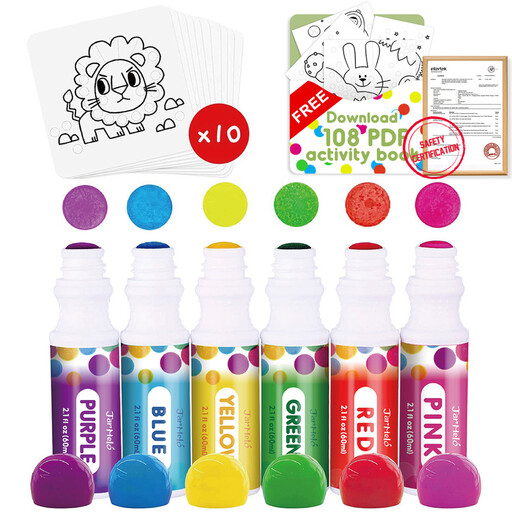
Why It Stands Out: These dot markers are specifically designed for toddlers' hands. The thick barrel allows for a firm grip, and the large sponge tip releases colour evenly without any pressure needed.
Pros:
Who Is It For? Ideal for toddlers aged 1 to 3 as a first art set to learn colours and develop motor skills in a playful way.
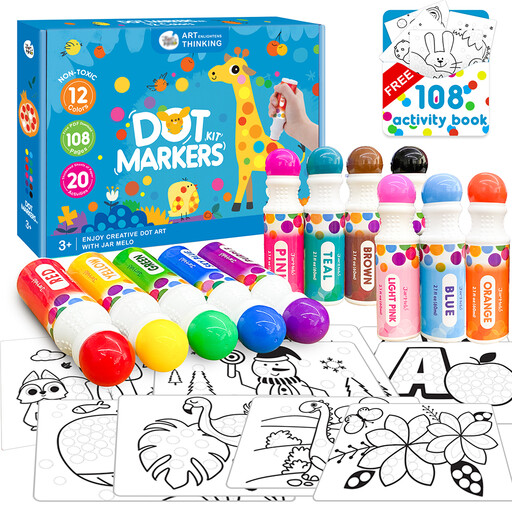
Why It Stands Out: This set expands the creative possibilities with a wider range of colours while retaining the proven, toddler-friendly design. The large ink capacity ensures long-lasting artistic fun.
Pros:
Who Is It For? For toddlers and preschoolers who already enjoy painting with dot markers and want a larger selection of colours for their projects.
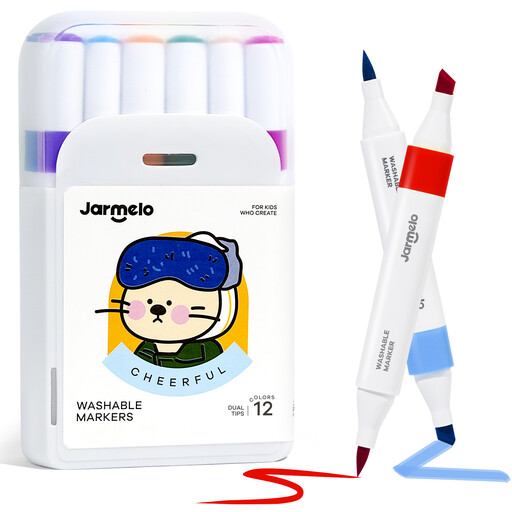
Why It Stands Out: This set is aimed at older children and offers maximum versatility with its dual tip. The practical carrying case also ensures everything stays organised, making the set ideal for on the go.
Pros:
Who Is It For? For children aged 4 to 8 who already have good pen control and want to try out different art techniques like drawing, colouring, and lettering.
The markers presented here already cover a wide range of needs. However, if you are looking for other types of art supplies like crayons, coloured pencils, or finger paints, you can find more products in our main category.
? Explore our full range of Arts & Crafts Club Supplies.
1. Are washable markers really 100% washable from all fabrics? Most markers labelled "washable" can be removed very well from skin and smooth surfaces. With textiles, the result depends on the type of fabric and how fresh the stain is. According to the manufacturer, the ink in the featured Jar Melo markers is 90% washable from most common fabrics. It is recommended to treat stains as quickly as possible with cold water and to follow the garment's washing instructions.
2. From what age are dot markers suitable for toddlers?Dot markers are generally suitable for children from around 18 months to 2 years old, but they should be used under supervision initially. Their thick shape and simple application make them an ideal tool for gaining first experiences with colours and for training motor skills without causing frustration.
3. How can I identify non-toxic markers for my child? Look for product labels such as "non-toxic," "water-based," and "alcohol-free." Reputable manufacturers list the ingredients and safety information transparently on the packaging or in the product description. Products intended for the European market must also meet the relevant safety standards for toys.