
Lieferung heute & morgen

Qualitätsgarantie

Willkommens-Angebote freischalten: KOSTENLOSE Lieferung | Bis zu 80 % RABATT | Kostenlose 30-Tage-JoyPlus-Testphase
App herunterladen
A washbasin cabinet creates storage space, can help organise a small bathroom visually and makes sensible use of the area beneath the washbasin. To avoid making the wrong choice, however, you should consider more than just the colour and front design. Particularly in rented homes, cloakrooms and family bathrooms, unsuitable dimensions, missing fittings or an impractical layout often lead to problems.
The cabinet’s width alone does not tell you much. Depth, height, the position of the trap and the cut-out for the waste outlet are also crucial. A cabinet measuring 60 cm wide may be unsuitable if the washbasin overhangs significantly or the wall waste outlet has not been taken into account. Before buying, you should therefore check the available dimensions and the position of the connections.
Many bathroom cabinets are made from wood-based materials or bamboo. These materials may be suitable for everyday use, but they need to be handled carefully around moisture. Terms such as “water-repellent” or “suitable for bathrooms” do not replace specific care instructions. Standing water, permanently damp edges and harsh cleaning products can damage surfaces.
A large compartment is not practical in every bathroom. Bottles, towels and cleaning products can be stored with varying degrees of convenience in drawers, compartments or adjustable shelves. A washbasin cabinet should also leave enough room for the trap. Otherwise, an attractive front can significantly reduce the storage space that is actually usable.
Before buying, measure:
A space-saving washbasin cabinet with a shallow depth can be a practical choice for a cloakroom. However, you must check that the washbasin and tap have enough room. If you are buying a cabinet with a washbasin, read the compatibility information particularly carefully.
A white washbasin cabinet made from wood-based material has a neutral appearance and works well with a wide range of bathroom styles. A damp cloth is usually sufficient for everyday cleaning; any excess water should then be wiped away. Abrasive cleaners, rough sponges and excessive moisture should be avoided with coated wood-based materials.
A bamboo washbasin cabinet can add a warmer accent thanks to its visible wood grain. The manufacturer’s specified load limits and care instructions are the key considerations here. Bamboo is not a licence to leave surfaces permanently wet. After cleaning, the cabinet should be wiped dry.
A wall-mounted washbasin cabinet makes floor cleaning easier and can make a small bathroom feel more open. At the same time, the wall must be suitable for the combined weight of the cabinet, washbasin and contents. The fixings must be compatible with the type of wall. Freestanding furniture should likewise be placed on a level surface and positioned securely.
If there are children in the household, cabinets should be secured using the intended wall fixing. Drawers and doors are not suitable for climbing. The permitted load per compartment or drawer must not be exceeded.
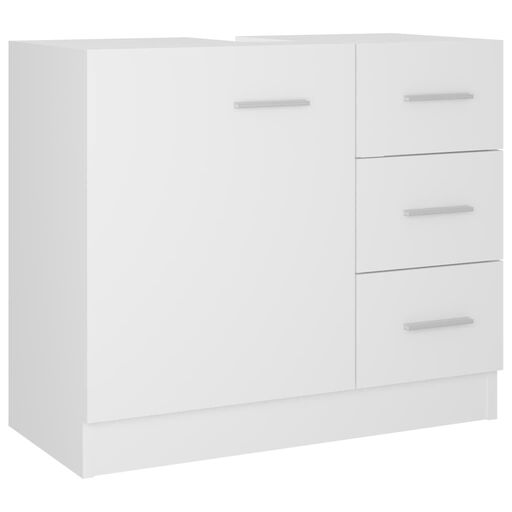
Why this product suits the profile: Measuring 63 × 30 × 54 cm, it is suitable for compact bathrooms or cloakrooms. The white finish works well with different washbasins and bathroom styles; the washbasin is not included.
The product details specify the compact dimensions, storage layout and supplied wall bracket. This makes it easier to plan the space required and tip-over protection before installation.
One compartment and three smooth-running drawers provide versatile storage options. The surface can be cleaned with a damp cloth.
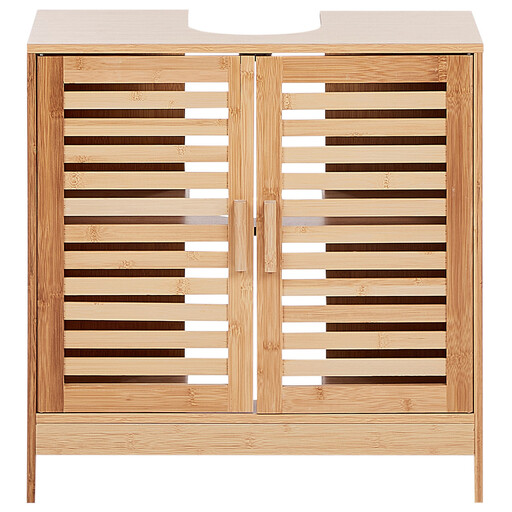
Why this product suits the profile: Two louvre-style doors and two shelves provide clearly organised storage. Measuring 60 × 30 × 60 cm, it combines a shallow depth with the warm look of bamboo.
The specifications state concrete load limits of 3 kg per compartment and 3 kg for the top panel. These figures help prevent overloading and incorrect use beneath the washbasin.
The bamboo frame and wooden handles define the design. Two compartments provide separate storage for cosmetics and bathroom essentials.
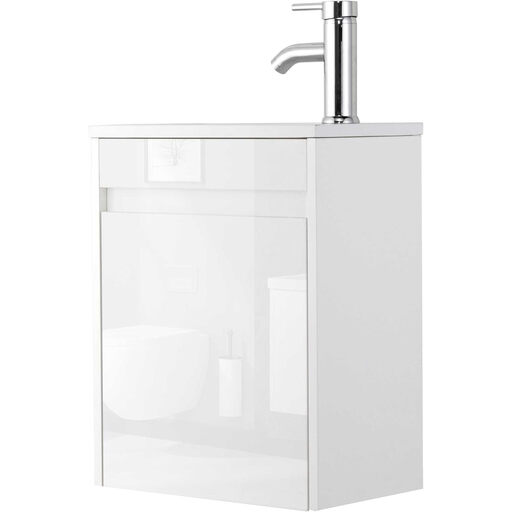
Why this product suits the profile: This set combines a washbasin and cabinet and, at 40.6 cm wide and 25 cm deep, is designed for small spaces. It may be a good option for a cloakroom, rented home or compact secondary bathroom.
As the washbasin and cabinet are supplied as one unit, you do not need to match the two components separately when choosing the product. The wall installation must still be suitable for the wall construction and the position of the connections.
The set includes a washbasin, a single cabinet section and an integrated pop-up waste valve. The smooth surface is designed to be cleaned with a soft cloth.
Before installation, check that all components are present and free from possible transport damage. For a bathroom cabinet with a wall bracket, carry out the installation according to the instructions. Wall plugs and screws must be suitable for the wall material; if you are unsure, professional installation is advisable.
A soft cloth and mild cleaning product are sufficient for everyday care. Water on edges, joints and the top surface should be wiped away promptly. Heavy items should preferably be stored in the lower sections. With drawer models, you should also check whether the drawers can be pulled out fully and whether they clash with the trap.
We have put together a complete, regularly updated list of products that fully meet these strict selection criteria and the safety regulations applicable in the EU.
The right size depends on the washbasin, the connections and the available space. The cabinet’s width and depth must not obstruct doors, the shower or walkways. If you already have a washbasin, measure the trap and waste outlet position before buying.
A wall-mounted model can make floor cleaning easier and leave more open floor space in small bathrooms. The requirements are a suitable wall, compatible fixings and correct installation. The combined weight of the cabinet, washbasin and contents must be taken into account.
There is no single answer regarding service life. It depends on factors including the material, build quality, load, installation and exposure to moisture. Regularly drying the cabinet, observing the load limits and checking the screws and brackets can help maintain its usability.