What should you look for when buying?
First, check whether the aprons’ care labels allow tumble drying. Then compare load size, available space and consumption figures for the way you usually use the appliance.
Washer-dryer with air-drying
A good fit if: you have room for just one appliance and can hang your aprons up to dry, or their care labels do not allow tumble drying.
The trade-off: Air-drying takes time and space. The Verbraucherzentrale and the European Commission also distinguish between consumption figures for washing and for washing and drying.
Washer-dryer for continuous cycles
A good fit if: you have little room to hang laundry and the care labels say your aprons are suitable for tumble drying.
The trade-off: The load for a continuous cycle is limited by the drying capacity, not just the washing capacity. Compare the electricity and water figures for the complete cycle too.
Separate washing machine and tumble dryer
A good fit if: you have enough space and often tumble-dry laundry or want to handle several loads.
The trade-off: Two appliances take up more space. The Verbraucherzentrale generally rates conventional washer-dryers less favourably than separate appliances for electricity and water consumption. Compare specific heat-pump models separately.
| Consideration |
What to check when buying |
Who should pay particular attention |
| Apron care and stains |
Care label, permitted temperature and suitable wash programme; treat stains while they’re still fresh if possible (GINETEX Germany and the Verbraucherzentrale). |
If I want to wash aprons according to their care labels and tackle stains while they’re fresh, choosing the right wash cycle matters. Around 28% of consumers prioritise proper apron care. |
| Load size for family laundry |
Compare the washing capacity and the separate wash-and-dry capacity in kg with the size of your usual load. |
If I want to wash aprons with the rest of the family laundry, the load also needs to suit the planned drying stage. Around 22% of consumers prioritise having the right capacity. |
| Everyday consumption |
Compare kWh per 100 cycles, water per cycle and load size for the same programme on the EU label (European Commission). |
If I regularly use complete wash-and-dry cycles, I want to compare their consumption rather than just that of a wash cycle. Around 22% of consumers prioritise running costs. |
| Space and connections |
Check the appliance dimensions, door opening, route for delivery and installation instructions for the specific model. |
If there’s space for just one appliance, it needs to fit along with the access route and connections. For around 17% of consumers, space requirements are the main consideration. |
| Drying delicate aprons |
Check the tumble-drying symbol and permitted temperature for each apron against the drying option available. |
If I want to machine-dry delicate aprons, their care labels must allow it. Around 11% of consumers prioritise whether fabrics are suitable for gentle drying. |
Suitable products at Joybuy
The selection includes washer-dryers as well as combinations of a washing machine and a separate tumble dryer. The right option for aprons and family laundry depends on factors including care labels, load size and available space.
 No image available
LG WT1210EGF WashTower
A washing machine and tumble dryer combination for households that like to plan washing and drying together.
Washing capacity: 12 kg; drying capacity: 10 kg. Heat-pump tumble dryer, AI DD and TurboWash 360°.
View at Joybuy
 No image available
LG WT1210WWF washer-dryer
For households that want to wash and dry suitable family laundry in one appliance.
Washing capacity: 12 kg; drying capacity: 10 kg. Dual Inverter Heat-Pump and AI DD.
View at Joybuy
 No image available
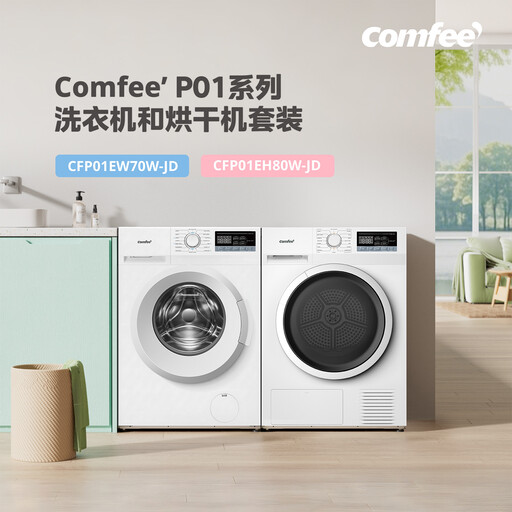
Comfee' CFP01EW70W-JD washing machine and CFP01EH80W-JD heat-pump tumble dryer
A separate-appliance combination for households that want to use a washing machine and tumble dryer independently.
The product name lists a washing machine and a heat-pump tumble dryer.
View at Joybuy
 No image available
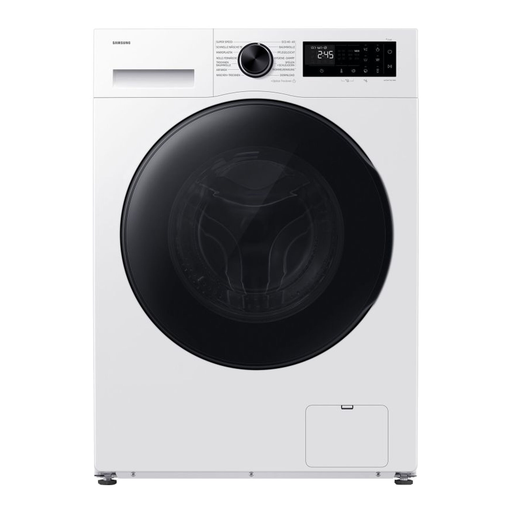
Samsung WD9BHG5U34BEEG washer-dryer
For households that want to wash aprons and family laundry in one appliance, then dry suitable fabrics.
Washing capacity: 9 kg; drying capacity: 6 kg. AI Ecobubble and 1400 rpm.
View at Joybuy
 No image available
Samsung washer-dryer combination, 9 kg/6 kg
For households that want to wash and dry their laundry in one appliance.
Washing capacity: 9 kg; drying capacity: 6 kg. Energy class A for washing and D overall; with Add-Laundry function.
View at Joybuy
Frequently asked questions
Can every washable apron stay in the washer-dryer after washing?
No. Check the tumble-drying symbol on each apron: it may allow machine drying, limit it to a low temperature or rule it out altogether. If drying is permitted, choose a suitable programme.
What should I bear in mind when setting it up for the first time?
Follow the installation instructions for the specific model. For example, the Bosch instructions for the WNG24442 cover the installation location, removing the transit bolts, connecting and levelling the appliance as separate steps. Check the appliance dimensions and delivery route before ordering too.
How do I keep aprons and the appliance clean day to day?
Try not to let stains dry in, and dose detergent according to the load size, how soiled the laundry is and the water hardness. Follow the instructions for your specific model when cleaning and maintaining the appliance.
How do I compare washer-dryer consumption?
On the EU label, compare the kWh per 100 cycles for the programme you actually use: ‘wash only’ or ‘wash and dry’. Check the water consumption per cycle and the corresponding load size too. Your tariff and how often you use the appliance also affect your running costs.
What labelling and legal rights apply when buying in Germany?
Household washer-dryers are covered by EU energy-labelling rules, and the energy label must also be visible when shopping online. If you buy from a trader in the EU, faulty goods are covered by a legal guarantee of at least two years from receipt. Any additional manufacturer’s guarantee does not replace these rights.


