If there’s no room for a second appliance or a suitable place to dry your laundry, a washer-dryer could be a good all-in-one solution. First, check the available space, connections and room for the door to open, then compare the stated wash-and-dry capacity with your bath towel load. If you dry laundry frequently, the energy and water consumption and the duration of a complete wash-and-dry cycle are important too. Air-drying avoids the machine’s drying cycle, but you’ll need enough space and time.
Who might benefit from a washer-dryer?
Homes with a narrow space for an appliance
If there’s room for only one appliance, its dimensions, connections and the space in front of the door all need to fit your laundry area. A shallow appliance isn’t necessarily one that will fit or be easy to use in that space.
Homes with lots of bath towels
If you want to dry several bath towels in one go, compare the drying capacity, not just the washing capacity, with the size of your actual load. If the load exceeds that limit, you’ll need to remove some towels or dry them separately.
Homes that need to dry laundry frequently
If you regularly use a machine to dry your laundry, check the figures for a complete wash-and-dry cycle. These include energy and water consumption and programme duration, not just the figures for the wash cycle.
What should you look for when buying?
A washer-dryer as your only appliance
A good fit if: there’s no room for two appliances or a suitable place to dry laundry in your compact laundry area.
The trade-off: the stated washing and drying capacities may differ. For a continuous wash-and-dry cycle, your load must be within the lower applicable capacity.
A washing machine with air-drying
A good fit if: you have a suitable, well-ventilated place to dry laundry and don’t need your bath towels to dry straight away.
The trade-off: air-drying takes space and time. If you dry laundry indoors, good ventilation and heating are important.
A washing machine and a separate tumble dryer
A good fit if: you have room to install both appliances and regularly dry large loads of laundry.
The trade-off: two appliances take up more space. Germany’s consumer advice centre rates conventional washer-dryers less favourably than separate appliances for electricity and water consumption. Compare heat-pump washer-dryers using their own energy label figures.
| Buying priority |
What to look for |
Who is it especially important for? |
| Fit and installation |
Compare the appliance dimensions with the space available; check the connections and room for the door at the installation point. |
Fit is especially important if you first need to check whether the appliance, connections and space to use it will all fit in your laundry area. Around 36% of consumers put this first. |
| Drying capacity for bath towels |
Compare the wash-and-dry capacity in kg with the size of your actual load. |
If you want to dry your bath towels without splitting the load, check the drying capacity rather than relying on the washing figure alone. Around 29% of consumers make this their main priority. |
| Energy, water and time |
Compare kWh per 100 complete wash-and-dry cycles, water per cycle and programme duration on a like-for-like basis. |
If you dry laundry frequently, the energy, water and time required for a complete cycle are key considerations. Around 21% of consumers prioritise these running costs and times. |
| Towel care |
Check the care label and choose suitable washing and drying programmes. |
If you want to care for your bath towels in line with their care label, choose the temperature and programme accordingly. Around 14% of consumers put towel care first. |
Germany’s consumer advice centre says that washing at 40 °C is sufficient for healthy households. It also recommends an occasional 60 °C wash with heavy-duty detergent to help maintain hygiene. Always follow the care label for each bath towel. The EU energy label for washer-dryers provides figures for energy consumption, water consumption and programme duration. If you plan to use the drying function, compare the figures for a complete wash-and-dry cycle.
Common buying and usage mistakes
-
Assuming the washing and drying capacities are the same
A washer-dryer’s stated washing and drying capacities can differ significantly. If you want to wash and dry a load without interruption, the stated wash-and-dry capacity is the figure that matters.
Plan your bath towel load around the applicable drying capacity. A larger load may need extra drying cycles or space to put some towels aside.
-
Comparing energy use for the wash cycle only
The EU energy label shows separate figures for washing and for a complete wash-and-dry cycle. If you look only at the washing figure, you leave out the subsequent drying cycle when comparing models.
If you dry laundry regularly, compare figures based on the same cycle, including energy and water consumption and programme duration.
-
Taking claims about technology or quick programmes at face value
A technology feature or short programme time advertised by the manufacturer doesn’t necessarily tell you how a full load of bath towels will be handled.
For the specific model, check the programme, permitted load and standardised energy label figures separately.
-
Overlooking moisture when air-drying indoors
Poor ventilation and inadequate heating when drying laundry indoors can contribute to damp and mould problems.
When choosing how to dry your laundry, make sure you have a suitable place to hang it and can ventilate and heat the room sufficiently.
Brands to consider
Siemens
The WN44A191 is listed with a washing capacity of 9 kg, a wash-and-dry capacity of 5 kg and a depth of 565 mm. Source: Siemens Home Appliances Germany.
- Its stated depth may be worth considering if you have a narrow space.
- The lower drying capacity may mean splitting larger bath towel loads. Check the full installation space and connections too.
Bosch
For the WNC244070, Bosch Home Appliances Germany lists a washing capacity of 9 kg, a wash-and-dry capacity of 6 kg and a depth of 622 mm.
- The model specifications show a higher drying capacity than the Siemens WN44A191 considered here.
- The stated depth is greater in this model comparison. This isn’t a general assessment of the brand.
AEG
For the LWR9W81609, AEG Germany lists a washing capacity of 10 kg, a drying capacity of 6 kg and heat-pump technology.
- The product data sheet gives figures of 206 kWh per 100 complete cycles and 51 kWh per 100 washing cycles.
- These figures are based on different cycles and aren’t directly comparable. Claims about heat-pump technology and fabric care apply to this model and don’t prove that it is generally superior.
LG
LG Germany lists a washing capacity of 9 kg, a drying capacity of 6 kg and heat-pump technology for the HPWD096C.
- The stated capacity makes it easy to compare the model with the bath towel load you plan to dry.
- A short running time advertised by the manufacturer can’t be applied to a full load of bath towels without checking the load size and programme.
Samsung
Samsung Germany lists a washing capacity of 9 kg, a drying capacity of 6 kg and a depth of 600 mm for the WD90DB7B85GWU2.
- The model specifications give you another combination of dimensions and capacity to compare with your available space and load.
- Savings advertised on the basis of tests of a different model don’t prove that you’ll save the same amount when drying bath towels in this appliance.
Washer-dryers at Joybuy
The Joybuy picks below are washer-dryers designed to provide an all-in-one solution. Compare each model’s stated drying capacity with your bath towel load and check the dimensions of the specific model to make sure it will fit.
 No image available
Roborock Zeo Lite White, 10 kg washing and 6 kg drying capacity
The product title identifies this model as a washer-dryer for an all-in-one solution.
The product title states a washing capacity of 10 kg and a drying capacity of 6 kg. It lists the energy efficiency class as E.
View at Joybuy
 No image available
LG WT1210WWF, 12 kg washing and 10 kg drying capacity
The product title describes the LG WT1210WWF as a front-loading heat-pump washer-dryer.
The stated capacity is 12 kg for washing and 10 kg for drying.
View at Joybuy
 No image available
Samsung washer-dryer, 9 kg washing and 6 kg drying capacity
The product title identifies this model as a washer-dryer.
It lists a washing capacity of 9 kg, a drying capacity of 6 kg and a spin speed of 1400 rpm. The energy efficiency classes are listed as A for washing and D overall.
View at Joybuy
 No image available
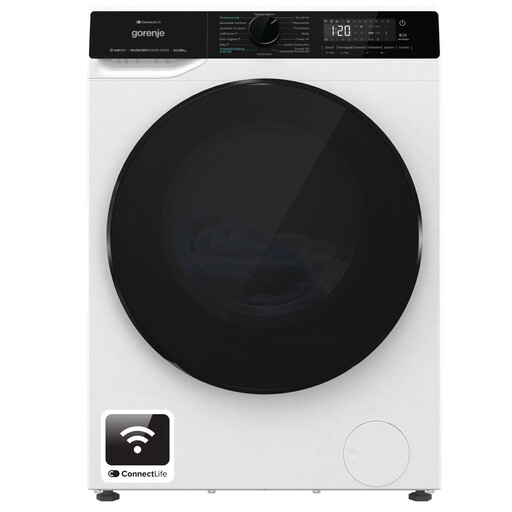
Gorenje WD2PA1X64ADW DE
The product title describes this model as a washer-dryer for an all-in-one solution.
The title lists 10.5 kg, 54 litres and 1400 rpm. Before buying, check whether the weight figure refers to washing or drying capacity.
View at Joybuy
 No image available
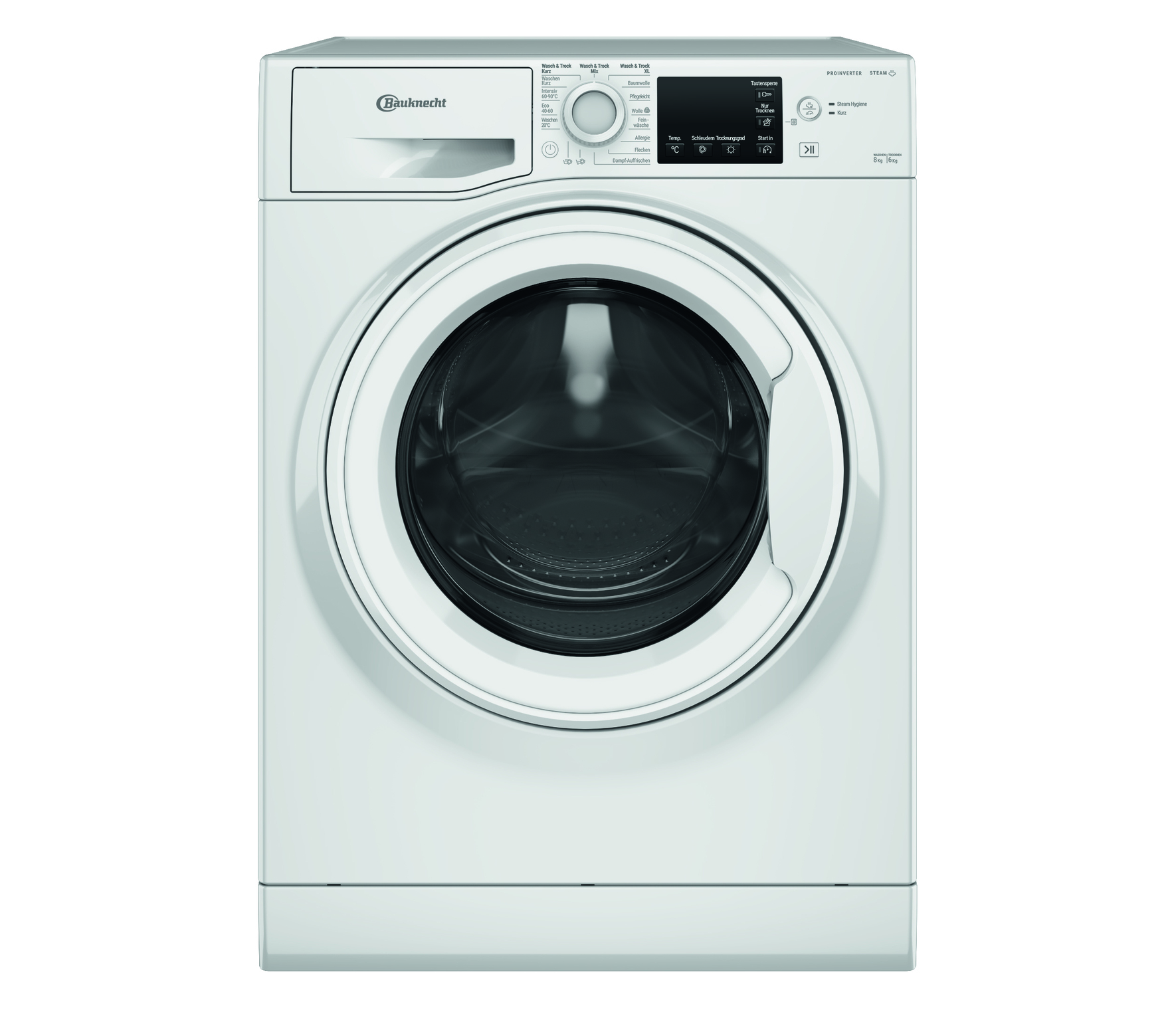
Bauknecht WD Eco Shield 8614 D, 8 kg washing and 6 kg drying capacity
The product title identifies this model as a washer-dryer and lists a washing capacity of 8 kg and a drying capacity of 6 kg.
The stated energy efficiency class is D. Compare it with the figures for a complete wash-and-dry cycle and consider how you’ll use the appliance.
View at Joybuy
Frequently asked questions
Can I dry a full load of bath towels without transferring them after washing?
Only if the load is within the wash-and-dry capacity of the specific model. For example, Bosch Home Appliances Germany lists a washing capacity of 9 kg and a wash-and-dry capacity of 6 kg for the Bosch WNC244070.
Do bath towels always need to be washed at 60 °C?
No. Germany’s consumer advice centre says that 40 °C is sufficient for healthy households, and recommends an occasional 60 °C wash, preferably with heavy-duty detergent, for good hygiene. Always follow the care label.
Which energy consumption figures should I compare?
If you plan to use the machine to dry your laundry, compare the figures for a complete wash-and-dry cycle, not just those for washing. The EU energy label includes figures such as energy consumption, water consumption and programme duration.
What should I clean after washing?
Don’t leave wet laundry in the machine for long. Wipe the door seal and detergent drawer dry, and regularly clean any lint filter according to the appliance instructions. Not all models have the same filter system.
What should I consider when air-drying laundry at home?
Make sure you have a suitable place to dry your laundry, and ventilate and heat the room sufficiently. Germany’s consumer advice centre warns that poor ventilation and inadequate heating when drying laundry indoors can contribute to damp and mould problems.


