Households without space to dry laundry
If you only have room for one appliance and nowhere suitable to hang your bath towels, the key question is whether your preferred load will dry in a single wash-and-dry cycle.


A washer-dryer is a practical option if you don’t have room for a separate tumble dryer or a suitable place to hang your laundry. Check that your dry load of bath towels is within the drying capacity of the programme you choose, and make sure the appliance and delivery route will fit. The Verbraucherzentrale also points out that washer-dryers can use more electricity and water than separate appliances.
If you only have room for one appliance and nowhere suitable to hang your bath towels, the key question is whether your preferred load will dry in a single wash-and-dry cycle.
If you regularly wash several bath towels together, consider the washing and drying capacities separately, and allow for the time needed to complete a full cycle.
If you can occasionally air-dry your laundry or fit two appliances, you can weigh the space-saving benefits of a washer-dryer against its energy and water use and the way it fits into your routine.
A good fit if: you only have space for one appliance and your bath towels are within its drying capacity.
The trade-off: no need to move laundry between appliances, but cycles take longer and, according to the Verbraucherzentrale, washer-dryers use more electricity and water than separate appliances.
A good fit if: you have a suitable place to hang your laundry and don’t need to dry it by machine.
The trade-off: bath towels need room to dry; if you dry them indoors, you’ll also need to consider heating and ventilation.
A good fit if: you have space for two appliances and regularly wash larger loads of towels.
The trade-off: more space is needed and you’ll have to move laundry between appliances; according to the Verbraucherzentrale, separate appliances use less electricity and water than a washer-dryer.
| Criteria | What to check before buying | Who should consider it? |
|---|---|---|
| Appliance space and delivery route | Check the appliance’s width, depth and height against the available space, connections and delivery route. For compact models, also check the drying capacity. | If I have limited floor space, the appliance needs to fit, and there must be room to get it into place. Around 33% of consumers prioritise making sure the washer-dryer and load fit in the space available. |
| Towel load | Compare your usual dry load with the drying capacity for a complete cycle, and check how long the programme takes. | If I want to dry my bath towels without splitting the load, it must stay within the drying limit. Around 27% of consumers prioritise being able to dry a suitable towel load in one go. |
| Electricity and water | Compare the label figures for washing alone and for a complete wash-and-dry cycle separately, and think about how you plan to use the appliance. | If I often use the machine to dry laundry, I want to understand the consumption of a complete cycle. Around 20% of consumers prioritise ongoing electricity and water costs. |
| Fabric care | Check the care labels, whether the towels are suitable for tumble-drying and which programmes are appropriate. | If I care for different types of bath towels, I want to choose the right programme and temperature for each fabric and purpose. Around 20% of consumers prioritise choosing the right care for their towels. |
For the models described, the maximum load for a complete wash-and-dry cycle is lower than the washing capacity. You may therefore need to split a full wash load before drying.
Compare your usual dry towel load with the drying limit for the specific programme.
The energy label gives separate figures for washing alone and washing with drying; these figures relate to different operating modes.
If you often use the machine to dry laundry, compare the figures for complete wash-and-dry cycles and check the water consumption too.
A smaller appliance may dry less laundry per cycle. For example, the Haier Mini HWD50-BP12307U1 has a washing capacity of 5 kg and a drying capacity of 2,5 kg.
Check the space available and how much laundry you need to dry before choosing a compact appliance.
The WNG24442 washer-dryer is an example of a model with a washing capacity of 9 kg and a drying capacity of 6 kg.
According to LG, the W4WR7096YB combines a washing capacity of 9 kg with a drying capacity of 6 kg.
The G5 HWD100-BP14657U1 and Mini HWD50-BP12307U1 models differ in dimensions and capacity.
The WD5000D WD90DG5B15BEEG is listed with a washing capacity of 9 kg and a drying capacity of 6 kg.
The LWR8E80610 model is listed with a washing capacity of 11 kg and a drying capacity of 7 kg.
This selection includes washer-dryers for households looking to combine washing and drying in one appliance. Compare the drying capacity with your usual towel load, and check the dimensions against the space where you plan to put it.
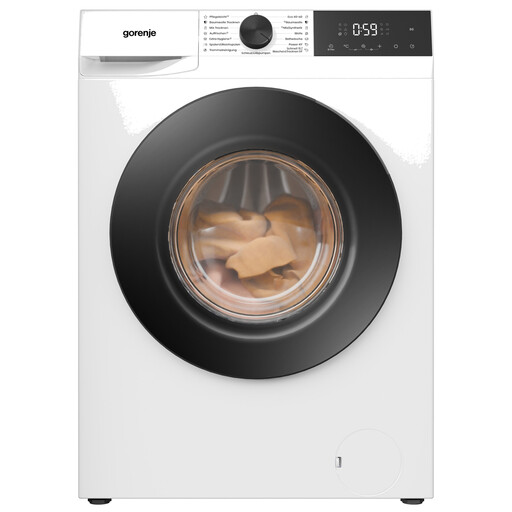 No image available
For towel loads that stay within the stated drying limit.
Washing capacity: 11 kg; drying capacity: 7 kg.
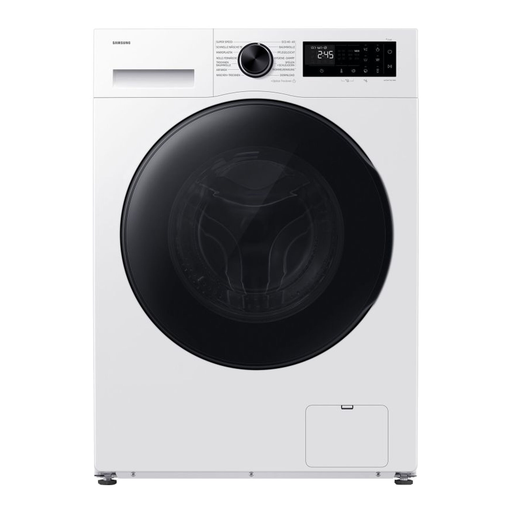 No image available
An option if your dry towel load does not exceed the 6 kg drying capacity.
Washing capacity: 9 kg; drying capacity: 6 kg; dimensions: 600 × 850 × 590 mm.
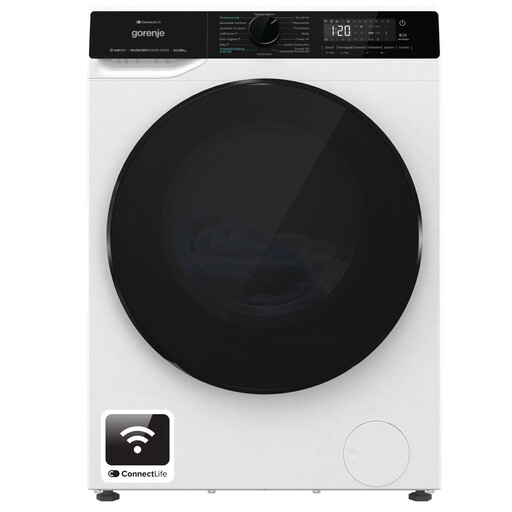 No image available
A combined appliance for households looking to wash and dry with one model.
The product title lists 16 programmes.
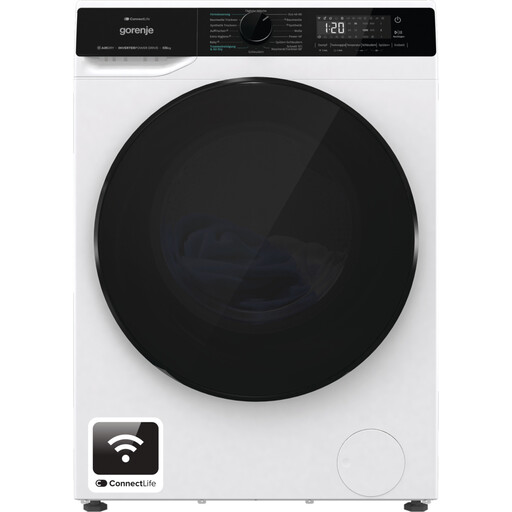 No image available
The stated depth of 51 cm may be useful when checking whether it will fit in a tight space.
Washing capacity: 8 kg; drying capacity: 5 kg; appliance depth: 51 cm.
 No image available
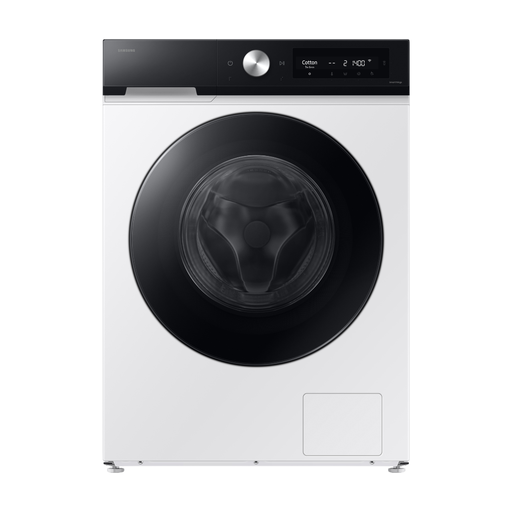
For households that need an 11 kg washing capacity and can take the lower limit into account when drying.
Washing capacity: 11 kg; drying capacity: 6 kg; dimensions: 600 × 850 × 600 mm.
Only if the load is also within the drying capacity of the programme you choose. For example, Bosch lists the WNG24442 as having a washing capacity of up to 9 kg, but a capacity of up to 6 kg for a complete wash-and-dry cycle.
No. Choose the temperature and programme according to the care label and what the towels have been used for. For laundry contaminated with pathogens, the Verbraucherzentrale recommends a 60 °C programme with heavy-duty detergent.
Compare the figures on the energy label for a complete wash-and-dry cycle; the figures for washing alone are listed separately. Your personal costs will also depend on how you use the appliance and the electricity and water rates you pay.
Check the dimensions of the specific model against the available space, connections and delivery route. If you occasionally air-dry laundry indoors, remember to allow for adequate heating and ventilation.