A washer-dryer can work well for bedding if neither a clothes airer nor a separate tumble dryer is practical, and the dry load fits within the combined drying capacity. Compare the washing and drying capacities, along with the consumption for a complete wash-and-dry cycle. If separate appliances or air-drying could work for your household, consider those options too.
Who is a washer-dryer suitable for?
When you have no space to dry clothes
If you can’t reliably hang your bedding to dry or fit a separate tumble dryer, a washer-dryer combines washing and drying in one appliance. The Verbraucherzentrale recommends this as a practical option for small flats where there isn’t room for two appliances or a clothes airer.
For larger bedding loads
If you wash several covers or other bedding together, pay particular attention to the drying capacity. It may be lower than the washing capacity, which can determine whether the whole load can be dried in one cycle.
If you’re keeping running costs in mind
If you use a tumble dryer frequently, compare the consumption for a complete wash-and-dry cycle, not just the figures for washing. The Verbraucherzentrale lists separate consumption figures for the two types of cycle.
What should you look for when buying?
Washer-dryer
A good fit if: you can’t reliably hang your bedding to dry and only have room for one appliance.
Consider: The stated drying capacity may be lower than the washing capacity, so larger loads may need an extra drying cycle.
Washing machine and separate tumble dryer
A good fit if: you can safely stack two appliances and regularly dry larger loads of laundry.
Consider: You’ll need space for two appliances and a stacking kit that’s compatible with the specific models. The Verbraucherzentrale rates separate appliances as more efficient in terms of electricity and water consumption than typical washer-dryers.
Washing machine and air-drying
A good fit if: you can occasionally hang your bedding to dry and don’t need to use a tumble dryer.
Consider: Air-drying takes time and space. The Umweltbundesamt describes a washing line or clothes airer as an energy-efficient way to dry laundry.
Weigh your usual dry bedding load and compare it with the appliance’s drying capacity. The percentages below refer to consumers whose main concern is the corresponding selection criterion.
| What matters to you |
What to check before buying |
Who is it most important to? |
| Drying without hanging laundry up |
Check the washing and drying capacities, along with the maximum load for the programme you plan to use. |
If I can’t dry my bedding properly anywhere else, I want to be able to finish it in the same appliance without hanging it up. Around 36% of consumers say their main concern is a lack of space to dry clothes. |
| Larger bedding loads |
Weigh the intended dry load and compare the separate capacities for washing and washing-and-drying. |
If I’m washing several covers and sheets together, I want to know whether they can be dried without splitting the load. Around 29% of consumers prioritise larger bedding loads. |
| Consumption when drying |
Check the kWh per 100 complete wash-and-dry cycles and compare water consumption on a like-for-like basis. |
If I use a tumble dryer frequently, I care about the consumption for the whole cycle, not just the washing energy rating. Around 21% of consumers say running costs are their main concern. |
| Fabric care |
Check the care symbol, the suitable washing programme and the permitted drying setting for each cover. |
For delicate bedding, I want to follow the care label and avoid choosing an unsuitable drying setting. Around 14% of consumers say fabric care is their main concern. |
Avoid common buying mistakes
-
Choosing based only on the higher washing capacity
The washing capacity alone doesn’t tell you whether the whole load can then be dried in the same appliance. Several models with a 9 kg washing capacity are rated for just 6 kg when washing and drying.
Choose based on the weight of your dry load and the stated combined capacity, not just the washing capacity in kg.
A larger load may need an extra drying cycle, using more time and energy.
-
Confusing the washing energy rating with consumption for the whole cycle
The consumption figures for washing and for a complete wash-and-dry cycle relate to different processes. The washing rating alone therefore doesn’t show how much energy is used for the drying that follows.
Compare the kWh figures per 100 complete wash-and-dry cycles on a like-for-like basis, and check water consumption too. The Verbraucherzentrale explains the separate figures on the energy label.
-
Measuring the space based only on the appliance’s depth
The appliance dimensions alone may not take connections, door clearance and the required gaps into account. For heat pump models, you’ll also need to follow the model-specific guidance on air circulation.
Measure the space and access route, then install the appliance in line with the instructions for the specific model.
Brands and models to consider
AEG
The 9000 series includes the L9WEF80690, with a 9 kg washing capacity, a 6 kg drying capacity and heat pump drying.
- AEG gives this model an energy efficiency rating of C and a consumption figure of 252 kWh per 100 wash-and-dry cycles.
- Follow the model-specific installation and ventilation guidance when positioning the appliance. These details don’t apply to every AEG appliance.
Bosch
The WNG24442 in the Series 6 range has a 9 kg washing capacity and is rated for up to 6 kg when washing and drying.
- Bosch lists Auto Dry and Aqua Stop for this model.
- The stated A energy rating applies to the washing cycle, not the complete wash-and-dry cycle.
Beko
The BM3DT4944W has a 9 kg washing capacity, a 6 kg drying capacity and a stated appliance depth of 57 cm.
- The stated depth can help you check whether the appliance will fit in your space.
- You’ll also need to check the connections, door clearance and required gaps. AquaWave’s description as gentle is a manufacturer’s claim, not the result of an independent bedding test.
Siemens
The WN54C2A40 iQ700 has a 10.5 kg washing capacity and a 6 kg capacity for washing and drying.
- Siemens lists i-Dos and autoDry for this model.
- The higher washing capacity doesn’t increase the stated drying capacity. The stated dimensions are 848 × 598 × 622 mm.
LG
The W4WR7096YB has a 9 kg washing capacity and a 6 kg drying capacity.
- LG lists Steam and TurboWash for this model.
- The quick wash time shown on the product page applies to a half load and doesn’t indicate how long it takes to wash and dry bedding.
Washer-dryers at Joybuy
This selection includes washer-dryers for households looking to dry bedding without a separate tumble dryer. The capacities shown can help you compare the appliances with your own laundry load.
 No image available
LG WT1210WWF washer-dryer, 12 kg washing / 10 kg drying
The stated drying capacity can help when comparing the appliance with a larger bedding load.
Dual-Inverter heat pump drying; AI DD; TurboWash 360°; Steam function; Wi-Fi ThinQ app; White.
View at Joybuy
 No image available
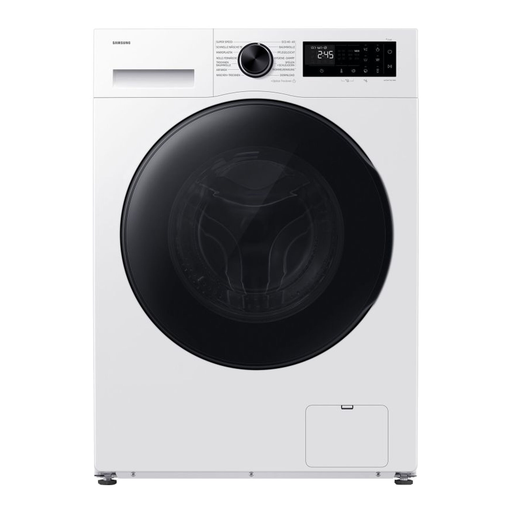
Samsung WD9BHG5U34BEEG washer-dryer, 9 kg / 6 kg
For loads washed and dried in one cycle, bear in mind the stated drying capacity of 6 kg.
AI Ecobubble; Super-Speed wash programme; AI Energy Mode; QuickDrive; 1400 rpm; White.
View at Joybuy
 No image available
Samsung washer-dryer, 9 kg / 6 kg, energy rating A/D
For bedding when you don’t have a separate place to dry it, this freestanding appliance combines washing and drying. Its stated drying capacity is 6 kg.
1400 rpm; energy rating A for washing and D overall; Wi-Fi and voice control; White.
View at Joybuy
 No image available
Beko BM3DT4944W washer-dryer, 9 kg / 6 kg
Bear in mind the stated drying capacity of 6 kg when planning to wash a bedding load together.
1400 rpm; SteamCure; ProSmart Inverter Motor; freestanding; White; energy rating D.
View at Joybuy
 No image available
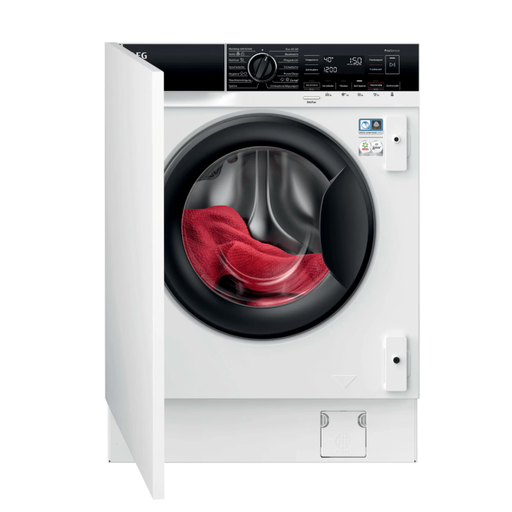
AEG LWR8WI7680 8000 PowerCare integrated washer-dryer, 8 kg / 4 kg
This integrated model could suit a built-in installation if the planned load stays within its 4 kg drying capacity.
1600 rpm; Wi-Fi; ProSense; ProSteam; energy rating A/D.
View at Joybuy
Frequently asked questions
Is a 9 kg washing capacity enough for a full load of bedding?
Not necessarily. The Bosch WNG24442 and Beko BM3DT4944W have a 9 kg washing capacity, but are rated for only 6 kg when washing and drying. Weigh the intended dry load and check the limit for the programme you plan to use.
Can every duvet cover go in the tumble dryer afterwards?
No. Always follow the care label on the individual cover. The tumble-drying symbol indicates whether normal or low heat is suitable, or whether tumble-drying is not allowed. Bosch also recommends fastening zips before washing.
What should you consider when space for installation is tight?
Compare the full appliance and connection dimensions with your available space, and follow the instructions for the specific model. AEG advises that the ventilation slots on its heat pump washer-dryers must remain clear; installation requirements vary by model.
How can you prevent odours after washing and drying?
Don’t leave wet laundry in the machine for long, and let the appliance dry out after use. The Verbraucherzentrale recommends wiping the door seal grooves; clean the filters as instructed in the manual. For heat pump washer-dryers, also follow the model-specific guidance on air filters.


