
Lieferung heute & morgen

Qualitätsgarantie

Willkommens-Angebote freischalten: KOSTENLOSE Lieferung | Bis zu 80 % RABATT | Kostenlose 30-Tage-JoyPlus-Testphase
App herunterladen
In many households, space for appliances is limited. Setting up a separate washing machine and dryer is often not feasible. A washer-dryer, which combines both functions in a single unit, is a practical solution. It not only saves space but also eliminates the hassle of transferring laundry between two machines.
This guide is designed to help you understand the key features of washer-dryers and make an informed decision. We will introduce a selection of models with different specialities to make it easier for you to find the right appliance for your needs.
Choosing the right appliance depends on your individual requirements. You should consider three key aspects in your decision.
A crucial factor for operating costs is the drying technology. Most washer-dryers are condenser models that use a heating element and require water for cooling during the drying process. This leads to higher energy and water consumption.
A more advanced and economical alternative is a washer-dryer with a heat pump. These appliances use a heat pump to warm the air, drying laundry at significantly lower temperatures. This not only protects fabrics but also considerably reduces energy consumption. Although the initial purchase price is higher, an energy-efficient washer-dryer with this technology can pay for itself with frequent use through lower electricity costs. Pay attention to the energy efficiency classes for the combined wash and dry cycle, which are indicated on the EU energy label.
The capacity is listed separately for washing and drying. For example, a washer-dryer with a 9 kg washing capacity often has a drying capacity of 5 to 6 kg. This means that for a continuous wash-and-dry cycle, the drum cannot be fully loaded. A large capacity is advisable for families or households with high volumes of laundry.
Modern appliances also offer a range of useful features:
The noise level, measured in decibels (dB), is particularly important if the appliance will be placed in an open-plan kitchen or near living areas or bedrooms. Models with brushless inverter motors (often marketed as "EcoSilence Drive" or similar) generally operate more quietly and with less wear. Pay attention to the dB value for the spin cycle, as this is the loudest phase of operation.
Here is a selection of three models that cater to different needs—from a solid all-rounder for families to a high-tech appliance for demanding users.
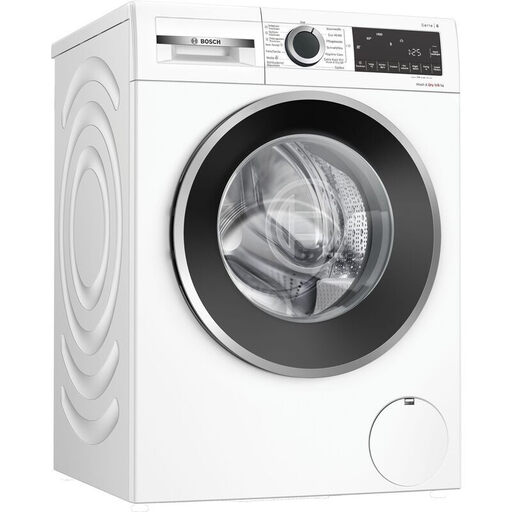
What makes it stand out The Bosch washer-dryer WNG24442 is a versatile appliance well-suited for families. With a 9 kg washing and 6 kg drying capacity, it can handle larger laundry loads. The Iron Assist steam function reduces creases and makes ironing easier. The automatic stain removal system targets four common types of stains, adjusting the wash cycle accordingly without the need for manual pre-treatment.
Advantages
Who is it for? For households looking for a reliable and spacious appliance with practical, time-saving features like automatic stain treatment and steam refresh.
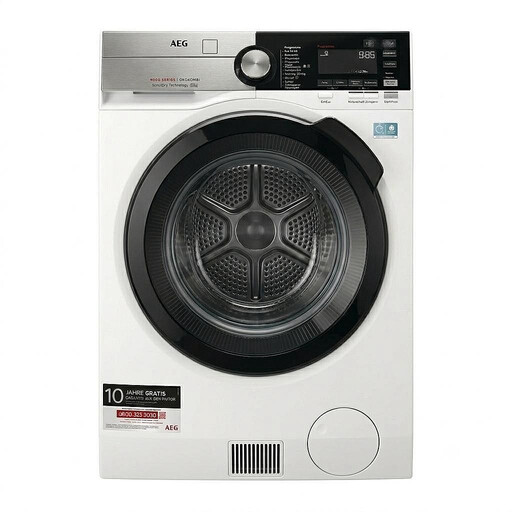
What makes it stand out This model from AEG is one of the few washer-dryers with heat pump technology on the market. Its SensiDry technology dries laundry at temperatures half as high as conventional condenser dryers. This protects delicate fabrics like wool or outdoor wear and significantly lowers energy consumption. The appliance was rated 2.0 by Stiftung Warentest in its 11/2023 issue, highlighting its technical sophistication.
Advantages
Who is it for? For eco- and cost-conscious users who dry laundry frequently and are willing to invest in advanced heat pump technology to save on long-term energy costs and provide optimal care for their clothes.
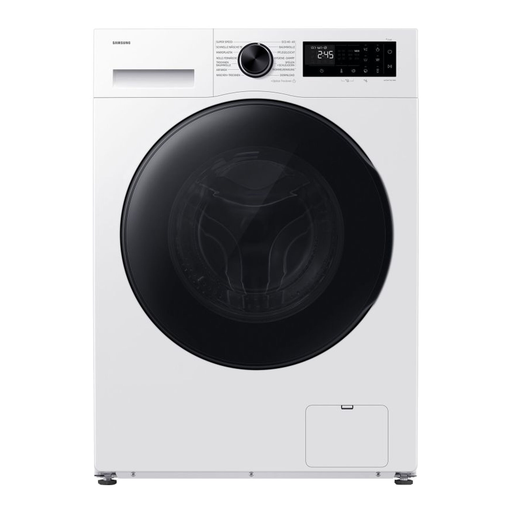
What makes it stand out The Samsung WD9BHG5U34BEEG is a smart washer-dryer packed with intelligent technologies. Its AI Ecobubble technology ensures a thorough clean even at low temperatures by transforming detergent into bubbles. Via the SmartThings App, you can activate AI Energy Mode, which, according to the manufacturer, can reduce energy consumption by up to 70%. The Super Speed programme washes a 5 kg load in just 39 minutes.
Advantages
Who is it for? For tech-savvy users who value smart features, app control, and innovative washing technologies. Ideal for anyone looking to speed up their laundry routine and integrate it into a connected home.
The models presented here are front-loaders, the most common design. If your space requires a different solution, alternatives are available.
Looking for an appliance that loads from the top? Discover more models in our Top-Loading Washer-Dryer Combination category.
1. How much laundry actually fits in a washer-dryer? Pay attention to the two different capacity specifications: one for washing (e.g., 9 kg) and one for drying (e.g., 6 kg). For a continuous wash-and-dry cycle, you can only load the drum up to the maximum drying capacity. If you wash a full 9 kg load, you will need to remove some of the laundry before starting the drying cycle.
2. Is a washer-dryer with a heat pump always the better choice? Not necessarily. A washer-dryer with a heat pump is more expensive to purchase. The investment is primarily worthwhile if you use the dryer function very frequently, as the savings in electricity costs can offset the higher purchase price over time. For users who only dry laundry occasionally, a conventional condenser washer-dryer may be the more economical option.
3. Can you use a washer-dryer for just washing or just drying? Yes, all washer-dryers can be used as a standalone washing machine or a standalone tumble dryer. You can select separate wash or dry programmes, offering full flexibility in your daily routine.