
Lieferung heute & morgen

Qualitätsgarantie

Willkommens-Angebote freischalten: KOSTENLOSE Lieferung | Bis zu 80 % RABATT | Kostenlose 30-Tage-JoyPlus-Testphase
App herunterladen
By Joybuy, your Product Recommendation Specialist | Published on July 19, 2026
In many homes, space is limited, but the desire for freshly washed and dried laundry remains. A washer-dryer offers a practical 2-in-1 solution, making a separate washing machine and tumble dryer redundant. This all-in-one appliance for washing and drying not only saves valuable space but also simplifies the entire laundry process.
However, the market offers a vast selection with significant technical differences. This guide is designed to help you understand the various models and features. We will introduce a selection of appliances and provide objective information so you can make an informed decision that meets your needs.
Before you decide on a model, several fundamental criteria should be considered. These factors determine how well the appliance fits into your daily life and how efficiently it operates.
The drying technology is one of the most critical aspects. Most washer-dryers are condenser dryers, which require cold water to cool the moist, warm air. This leads to higher water consumption during the drying cycle.
A more advanced and increasingly popular alternative is the washer-dryer with a heat pump. These appliances use a closed-loop refrigeration circuit to dehumidify and reheat the air. This makes them significantly more energy-efficient and lowers operating costs. Additionally, they dry at lower temperatures, which is gentler on delicate textiles. Pay attention to the EU energy label, which provides information on consumption for washing alone and for the combined washing and drying cycle.
Capacity is specified in kilograms (kg) and refers to dry laundry. For washer-dryers, there are two values: one for washing and one for drying. The drying capacity is always lower. For example, a typical 9 kg washer-dryer can only dry 5 to 6 kg of laundry in a single cycle.
Modern appliances often offer more than just washing and drying. A smart washer-dryer with Wi-Fi can be controlled via an app. This allows you to start the wash cycle remotely, check its status, or download special programs. Features like automatic detergent dosing or load detection optimise water and detergent consumption.
For open-plan living spaces or if the appliance needs to run at night, quiet operation is crucial. The noise emission is indicated in decibels (dB) for the spin cycle. Values below 72 dB are considered relatively quiet.
Here is a selection of models that cater to different requirements and household sizes.
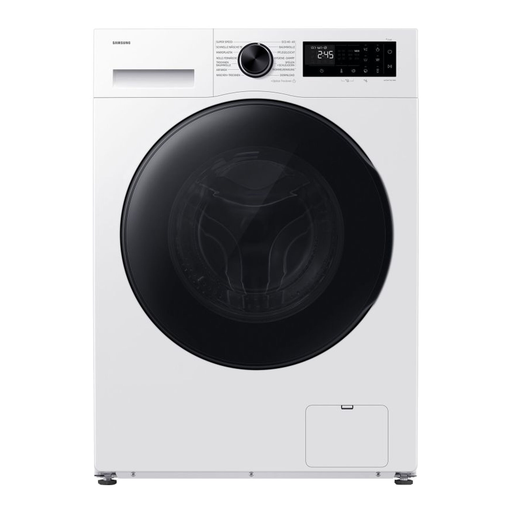
Why This Model Stands Out The Samsung washer-dryer combines intelligent technologies with practical everyday features. According to the manufacturer, the AI Ecobubble technology ensures thorough cleaning even at low temperatures. With the AI Energy Mode via the SmartThings App, energy consumption can be reduced by up to 70% by adjusting the temperature and cycle duration.
Advantages
Who It's For This model is ideal for tech-savvy households and families who value fast cycles, smart energy control, and eco-conscious features. The capacity of 9 kg for washing and 6 kg for drying is well-suited for a 3- to 4-person household.
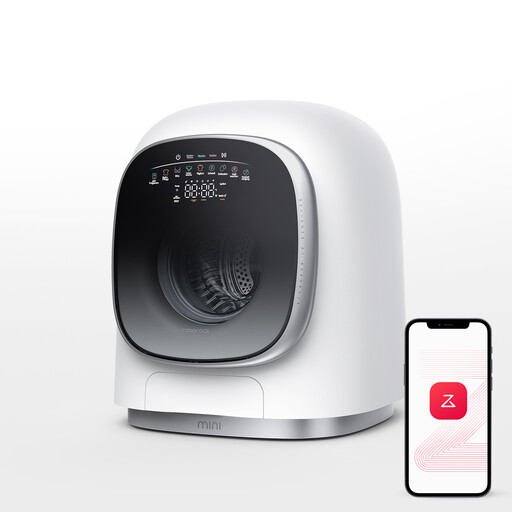
Why This Model Stands Out The Roborock Zeo Mini is a compact, specialised solution for small laundry loads. It is not intended as a replacement for a full-sized machine but as a supplement for delicate textiles like baby clothes, underwear, or sportswear. The Zeo-cycle low-temperature drying protects fibres and prevents shrinkage.
Advantages
Who It's For Perfect for singles, couples, or families looking for a separate, gentle solution for small and delicate laundry items. Ideal for anyone who frequently needs to wash and dry sportswear, silk, or baby items.
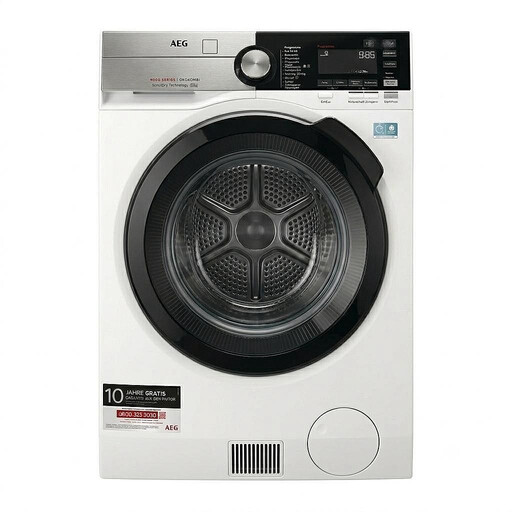
Why This Model Stands Out This model from AEG is one of the few washer-dryers with heat pump technology. As a result, it consumes significantly less energy for drying and operates more gently than conventional condenser units. The DualSense technology adjusts the temperature and drum movement to the specific textile type. In the 11/2023 issue of the German consumer testing organisation Stiftung Warentest, this appliance received an overall score of 2.0 (Good).
Advantages
Who It's For For environmentally and quality-conscious households willing to invest in an advanced and energy-efficient technology. The capacity of 9 kg for washing and 6 kg for drying is well-sized for families.
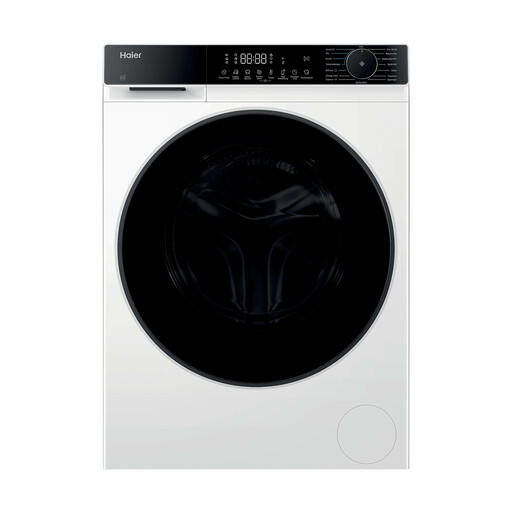
Why This Model Stands Out The Haier X5 Series washer-dryer stands out with its enormous capacity of 12 kg for washing and 8 kg for drying. This makes it perfect for large families or households with a high volume of laundry. The brushless direct drive motor ensures very quiet operation at just 72 dB during the spin cycle.
Advantages
Who It's For This appliance is aimed at large families and anyone who regularly washes bulky textiles. If you're looking for a powerful, quiet, and large washing machine with a dryer function, this is a fitting solution.
Washer-dryers are not only available as front-loaders. For particularly narrow niches or specific installation situations, a top-loader might be the better choice.
? Discover our selection of top-load washer-dryers for more space-saving alternatives.
A washer-dryer with a heat pump is significantly more energy-efficient than a conventional condenser washer-dryer. It recycles heat during the drying process instead of releasing it, and it doesn't require additional water for cooling. This considerably lowers operating costs. Furthermore, it dries at lower temperatures, which is gentler on clothes and extends the lifespan of textiles.
The drying capacity of a washer-dryer is always less than its washing capacity. An appliance that can wash 9 kg will typically only dry 5-6 kg. This is because laundry needs more space in the drum to dry effectively, allowing warm air to circulate. For a continuous wash-and-dry cycle without removing any items, the machine must only be loaded up to its maximum drying capacity.
The energy efficiency of washer-dryers varies greatly. The EU energy label provides two values: one for the wash cycle only and one for the combined wash and dry cycle. The combined cycle naturally consumes more energy. Models with heat pump technology achieve much better efficiency during drying than condenser units. Look at the energy efficiency class (e.g., A for washing, D for washing & drying) to objectively compare the consumption of different models.