
Lieferung heute & morgen

Qualitätsgarantie
App herunterladen
Kategorien
A washer-dryer, also known as a washer-dryer combo, integrates the functions of a washing machine and a tumble dryer into a single unit. This solution is designed especially for households in urban areas where space for home appliances is at a premium. Instead of accommodating two separate machines, a combo unit lets you wash and subsequently dry your laundry in one continuous cycle, eliminating the need to transfer clothes between appliances. This not only saves space but also streamlines your laundry routine.
Choosing the right model should be based on an analysis of objective technical parameters. The following criteria are essential for making an informed decision.
A key characteristic of washer-dryers is their different capacities for washing and drying. While the drum can be filled completely with laundry and water for washing, the drying process requires additional space. This allows warm air to circulate and effectively remove moisture from the textiles.
Since 1 March 2021, new EU energy labels use a scale from A (most efficient) to G (least efficient). For washer-dryers, the label displays two separate values:
The combined cycle naturally has higher energy and water consumption. Modern condenser dryers in these combo units use cold water to cool the condenser, which increases water consumption compared to a wash-only cycle.
For apartments with open-plan living spaces or for overnight operation, a quiet washer-dryer is essential. Noise emission is indicated in decibels (dB) for the washing and spinning phases. Models with spin cycle ratings below 72 dB are considered relatively quiet.
The motor is a key factor in both noise level and durability. Brushless inverter motors, often marketed as Direct Drive (DD) or under proprietary names like EcoSilence Drive, operate without the friction of carbon brushes. This results in quieter operation, less wear and tear, and greater energy efficiency.
Modern appliances offer a range of additional features that enhance their practical value.
Based on an analysis of technical specifications and feature sets, we present two models that cater to different user profiles.
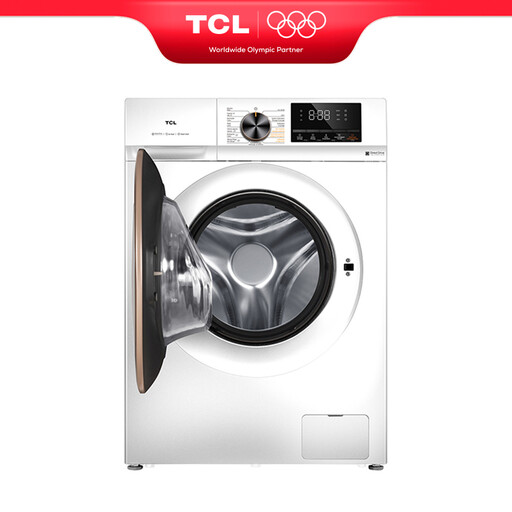
Why We Recommend This Product
The TCL CP1210WA0 stands out with its large capacity of 10 kg for washing and 6 kg for drying. Its brushless Smart DD Motor ensures quiet and efficient operation. A special focus is placed on hygiene features like the EBS (Eliminating Bacteria System) and the Steam Wash function, which are designed to reduce bacteria.
Pros
Who It's For
This model is ideal for larger families or households with a high laundry volume who value large capacity, quiet operation, and advanced hygiene features.
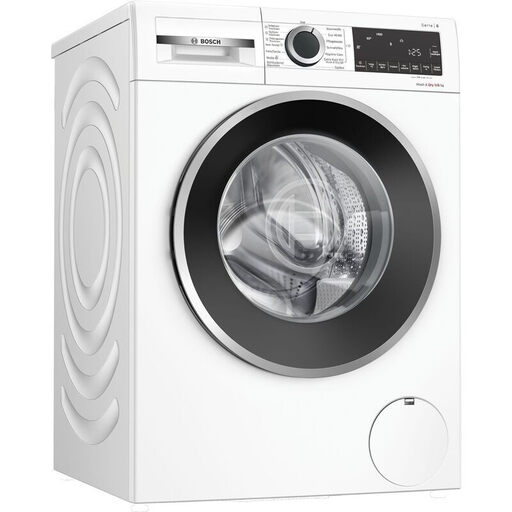
Why We Recommend This Product
The Bosch WNG24442 from Serie 6 is a washing machine with a dryer designed for efficiency and convenience. The Iron Assist steam function significantly reduces creases and minimises the need for ironing. Features like AutoDry and ActiveWater Plus ensure resource-efficient operation through precise sensor control.
Pros
Who It's For
This appliance is suitable for households that place a high value on convenience features like reduced ironing and precise, gentle drying. Its proven technologies and moderate capacity make it a solid choice for families.
While washer-dryers offer great versatility for everyday textiles, certain materials like high-performance technical fabrics or leather require specialised care. For cleaning and maintaining such demanding materials, you can find suitable solutions in our Leather Care category.
1. How much laundry fits in a washer-dryer? The capacity is twofold: the washing capacity (e.g., 9 kg) is higher than the drying capacity (e.g., 6 kg). To run a combined cycle without interruption, the machine should only be loaded up to its maximum drying capacity. Alternatively, you can remove a portion of the laundry after the wash cycle before starting the dryer.
2. Does a washer-dryer use more water than two separate appliances? For a wash-only cycle, the water consumption is comparable to that of a standard washing machine. However, in a combined wash and dry cycle, the water consumption is higher. This is because most washer-dryers are condenser dryers that use cold tap water to cool the moist, warm air stream. A separate heat pump dryer does not require water for this process and is more energy-efficient, but it is a second appliance.
3. Can you use a washer-dryer for just washing or just drying? Yes, all washer-dryers can be used as a washing machine only or as a dryer only. You can select a wash programme without a subsequent drying cycle, or a dry-only programme for already washed, damp laundry. This flexibility is a key advantage of these combo units.