Households with muddy outdoor clothing
If you have dirty clothes as well as everyday shirts to wash, separate loads help you account for different levels of soiling and care requirements.


A washer-dryer is worth considering if you’re short on space for an appliance or somewhere to dry clothes, and your loads fit its usually different washing and drying capacities. Don’t automatically wash muddy clothes with shirts or delicate technical clothing: always check the care labels and choose a suitable programme. If you dry clothes frequently, compare a complete wash-and-dry cycle with air-drying or two separate appliances; the Verbraucherzentrale highlights the electricity and water consumption of washer-dryers.
If you have dirty clothes as well as everyday shirts to wash, separate loads help you account for different levels of soiling and care requirements.
For garments with membranes or water-repellent treatments, the care instructions are important. In particular, check whether each item can be tumble-dried.
A washer-dryer may be a good option if you don’t have room for a separate appliance or somewhere to hang clothes. Make sure you account for the capacity and consumption of a complete wash-and-dry cycle.
First, check which fabrics need to be washed separately and what their care labels allow. Then compare the capacity for a complete cycle, the space available and the consumption figures for the way you plan to use the appliance.
| What you need | What to check before buying | Who should pay particular attention? |
|---|---|---|
| Separating mud and laundry | Check care labels and look for suitable pre-wash or stain-removal options. A feature advertised for removing stains is no guarantee that it will remove specific mud stains. | If I have hard-wearing, muddy clothes as well as shirts, separating them appropriately is my priority. Around 33% of consumers say muddy everyday laundry is their top buying priority. |
| Caring for technical clothing | Check the fabric and care label, the outdoor programme and the permitted drying method. For GORE-TEX outerwear, the material manufacturer advises against washing it with heavily soiled clothing. | If a technical jacket is made from delicate materials or has a water-repellent treatment, I want to follow its care instructions. Around 27% of consumers put caring for delicate outdoor clothing first. |
| Getting shirts fully dry | Compare the washing and wash-and-dry capacities in kg, along with the duration of a complete cycle. A quick wash is not the same as a complete wash-and-dry cycle. | If I need shirts dry straight after washing, I want to know how much laundry can actually be dried in one go. Around 20% of consumers prioritise having dry shirts straight away. |
| Balancing space and consumption | Check the appliance dimensions, access and connections. Compare the kWh and water consumption for a complete wash-and-dry cycle shown on the label with suitable alternatives. | If space is limited or I dry clothes often, I need to weigh up the space saved against running costs. Around 20% of consumers put this balance first. |
The stated washing capacity may be higher than the amount you can wash and dry in one go. So a full wash load won’t necessarily fit into a complete wash-and-dry cycle.
Compare the kg figures for washing and washing/drying with your usual shirt and outdoor clothing loads.
A wash programme doesn’t override the care instructions for a garment. For GORE-TEX outerwear, the material manufacturer also advises against washing it with heavily soiled clothing.
Check the washing and tumble-drying symbols on each item before starting a complete cycle.
The energy label distinguishes between the wash cycle alone and a complete wash-and-dry cycle. If you dry clothes frequently, the washing figure alone won’t tell you how much energy and water you’ll use.
Compare the figures for complete cycles on a like-for-like basis. If you have enough space, consider air-drying or separate appliances. The Verbraucherzentrale highlights the electricity and water consumption of washer-dryers compared with separate appliances.
The WN44G243 is a useful model to compare if having a specifically listed Outdoor/Impregnate programme is important to you.
The WNG24442 is a useful model to compare for stain-removal options and everyday cotton washing.
The L9WEF80690 is a useful model to compare if you’re considering a heat-pump washer-dryer.
The WD9BHG5U34BXEG is a useful model to compare if you’re looking at steam and quick-wash options.
The WT1 range offers models with different washing and drying capacities to compare.
The following Joybuy products are washer-dryers designed for combined washing and drying loads. Compare their washing and drying capacities with the laundry you actually want to process in one go.
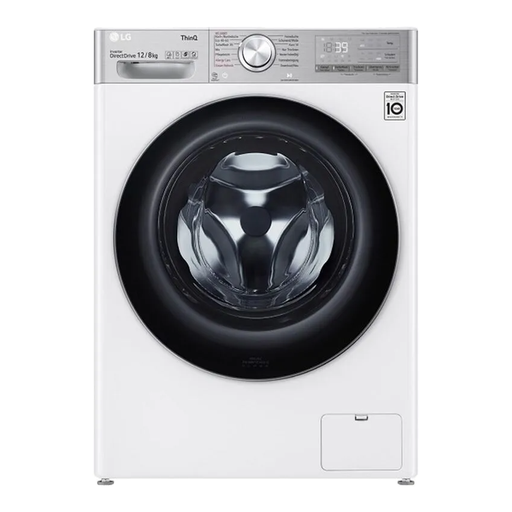 No image available
If you want to combine washing and drying in one appliance, a washer-dryer could be a good fit. Check its drying capacity against the load you plan to wash.
Washing capacity: 12 kg.
 No image available
If you don’t want to dry a larger wash load in full, checking both capacities can help you plan the combined cycle.
Washing: 12 kg; drying: 10 kg. Dual Inverter heat pump; AI DD.
 No image available
For a combined wash-and-dry cycle, remember to allow for the lower drying capacity when putting your load together.
Washing: 9 kg; drying: 6 kg. 1400 U/min; AI EcoBubble; Energy Class A (Wash)/D (Overall); Load & Stain Detection.
 No image available
If you plan to wash and dry in one appliance, compare the drying capacity with the amount you want to dry in the same cycle.
Washing: 10 kg; drying: 6 kg. Energy Class E.
 No image available
For shirts and other items that need to be treated separately, check whether the available capacity suits your usual washing and drying loads.
Washing: 9 kg; drying: 6 kg. 1400 U/min; SteamCure.
Not as a general rule: sort items according to their care labels and how dirty they are. For GORE-TEX outerwear, the material manufacturer specifically advises against washing it with heavily soiled clothing; this doesn’t automatically apply to every outdoor jacket.
No, not necessarily. For GORE-TEX outerwear, the material manufacturer recommends air-drying or tumble-drying at a warm temperature and low spin speed, provided the care label for the item allows it. Avoid high temperatures.
Compare the figures for a complete wash-and-dry cycle, particularly kWh per 100 cycles and the corresponding load capacity. The washing figure alone relates to a different type of use.
At the intended installation space, check the power supply, water inlet, drain and appliance dimensions, including the clearance needed for access. Samsung describes these as the usual requirements for its washer-dryers; the installation instructions for the specific model are what matter.
Under the size and sales conditions set out in § 17 ElektroG, retailers must take back an old appliance of the same type free of charge when you buy a corresponding new one. If the new appliance is delivered to a private household, the law also provides for free collection in certain circumstances. Check the arrangements and conditions with the seller before buying.